sport


24
Jun 26

The adidas Foundation’s ‘Power of Sport Talks’

Got up this morning and drove to the train station. It’s about an hour drive to where we wanted to be and for the first half hour we were right on the cusp of arriving in time to catch our train, or miss it. But after that first bit the road opened up and we made good time, arriving with four whole minutes to spare. Destination: the big city.

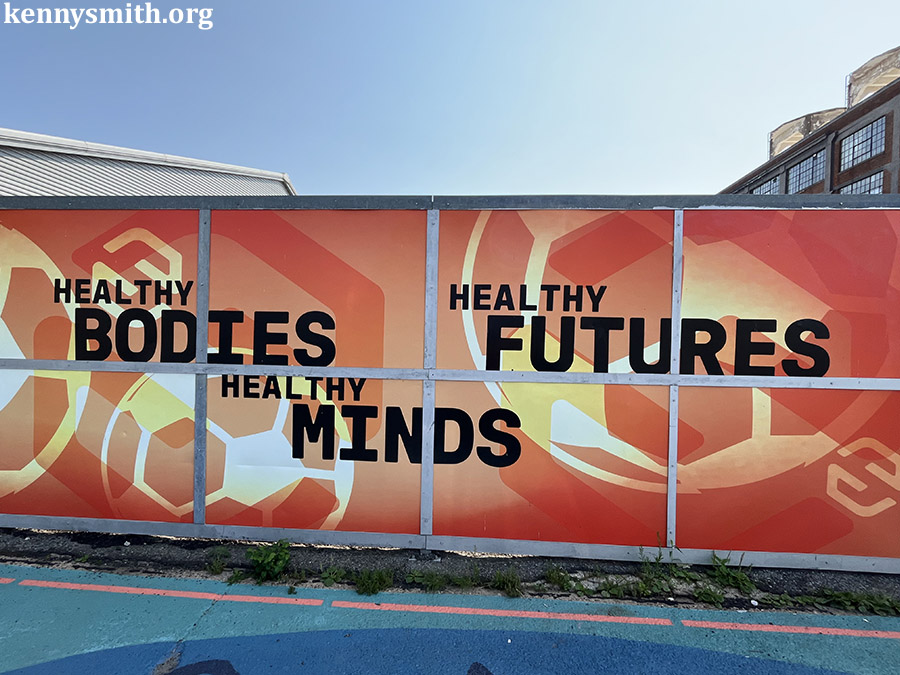
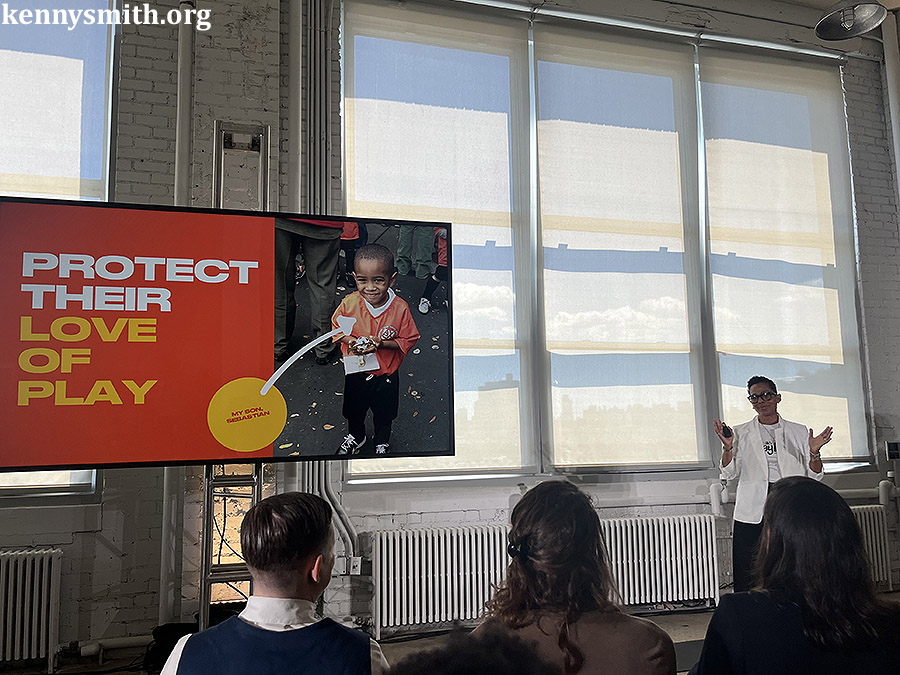
The adidas Foundation was holding a series of presentations that they called “The Power of Sport Talks.” It was an ideas forum, in the United States with a wide array of speakers focusing on how sport can drive “meaningful social change.” They put together a nice program of nine speakers. It was well done. Here are a few highlights.

Renata Simril, president and CEO of the LA84 Foundation which funds youth sport programs, infrastructure projects, commissions research, and creates educational initiatives. The power of the playground, and sport, are great equalizers, she said, but it is at risk for today’s youth. That power, she said, is only transformational if ALL kids can access it. If children continue to play, she said, they can learn the lessons and skills that the game provides. That, she said, was how children can “develop the habits of civic life.”

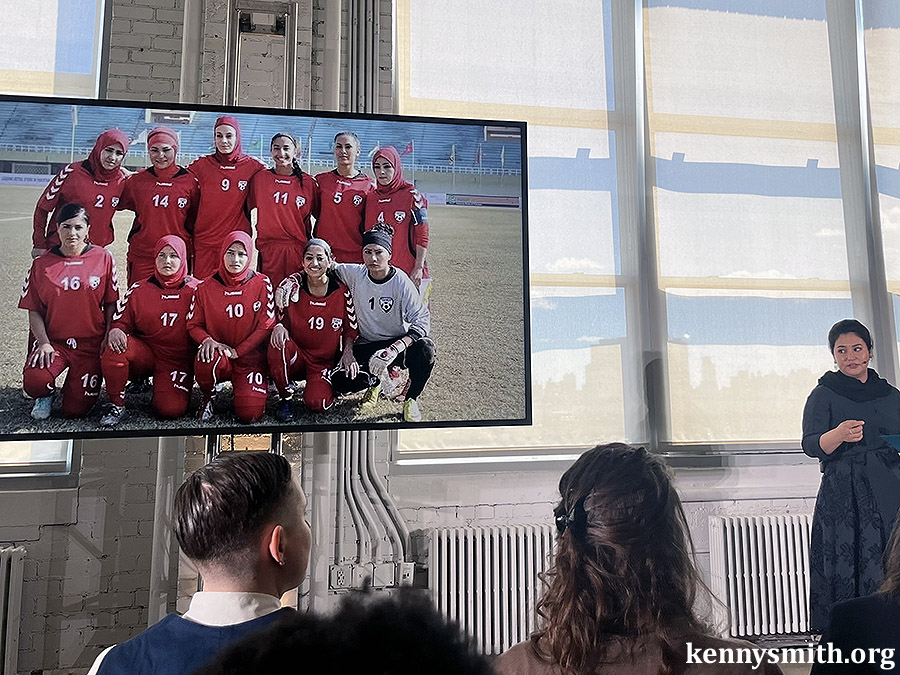
Dr. Hajar Abulfazl‘s talk approached youth sport from a different perspective. She grew up playing soccer player in Kabul. Playing as a little girl in Afghanistan, she says, was an act of defiance, and her purpose. She made the national team, and became the captain, but ultimately saw the squad dissolved by national policy and her teammates fleeing the country. Abulfazl then led a national program for youth soccer, going door-to-door, creating a new league, enrolling thousands of girls across seven provinces. The success, she said, was watching teenaged girls walk onto the pitch, knowing they belonged there. It was a fight she’d waged within her own family, as well. She moved to the US in 2017, discovered Soccer Without Borders and now works with immigrants and refugees from more than a dozen nations.

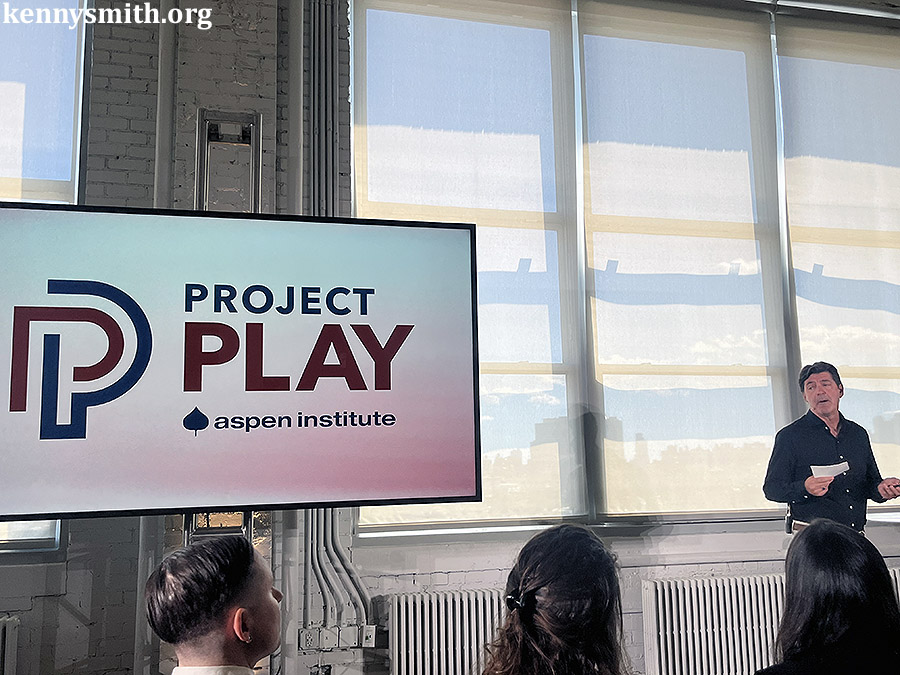
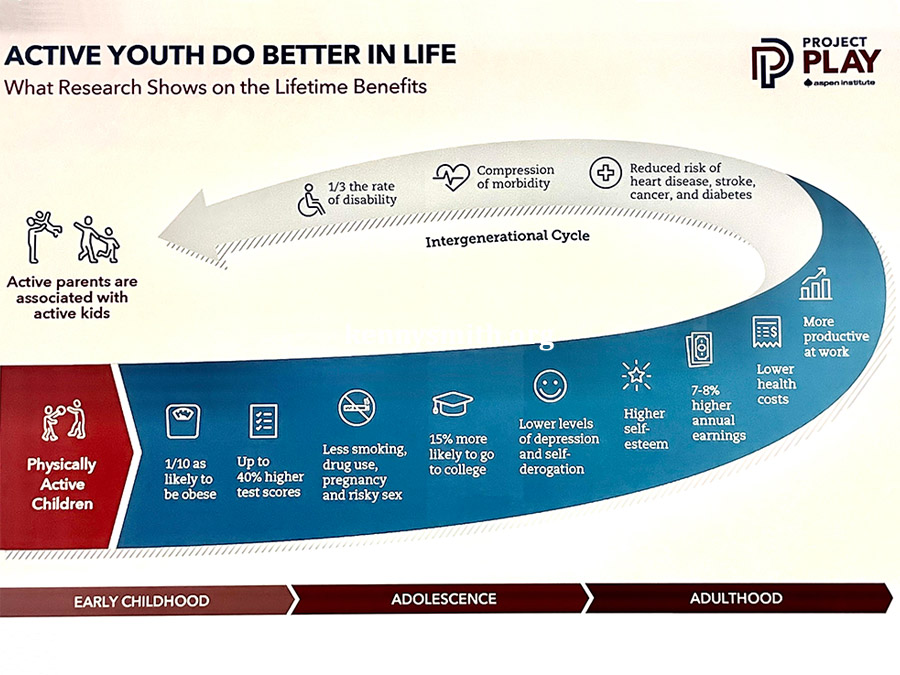
Tom Farrey, from The Aspen Institute, talk about the power of sport to do nothing less than save democracy. Government, he notes, is the ultimate form of “We.” Farrey points out that sport teaches people to collaborate across differences, teaches competition, rules, consequences, develop people capable of leading, and as venues to learn how to bring people together and develop shared solutions.

He touches on The Playground Movement that led to thousands of municipal playgrounds, many still open today across the country. He also talked about the negatives that we can encounter in youth sport, tribalism ultimately leading to nationalism, financial inequities and so on. Here, he points out that sport is not guaranteed to do the things we’d like, it’s how we use them.

“Democracy is about relationships and sport is about relationships in action,” Farrey said.

Mary Connor, a former first round WUSA draft pick, told a poignant and powerful story about a non-profit failure, and how it changed her personal life and her work ever since. Connor, now the CEO of Common Goal, a nonprofit using soccer to shape a world where every young person has the opportunity to play, learn, and thrive. Her challenge: to turn toward hard things.

“Are you designing for belonging? Or are you just hoping it shows up? It won’t show up on its own.”

It was a powerful presentation. The adidas Foundation said they’ll be publishing these talks soon. That means you’ll also hear from Jasmyne Spencer, who spent 12 years in the NWSL and last year won the inaugural Northern Super League Championship with the Vancouver Rise. She talked about togetherness as “the real beauty of sport,” which perhaps we all have some inkling of, even if only in enjoying a win in a crowd.

Carly Heinz, director of development at Beyond Sport talked about discovering tennis during Serena Williams’ first grand slam run. After moving on from competitive collegiate tennis, and the identity that comes with being an athlete, Heinz realized that the lessons from sport can apply to all of the seasons of life, that sport has a power to draw things out of us and can provide safe spaces for people to grow.

Sport, Heinz says, shows us the value of authenticity, “and gives us the opportunity to return to ourselves, fully, courageously, and honestly.”

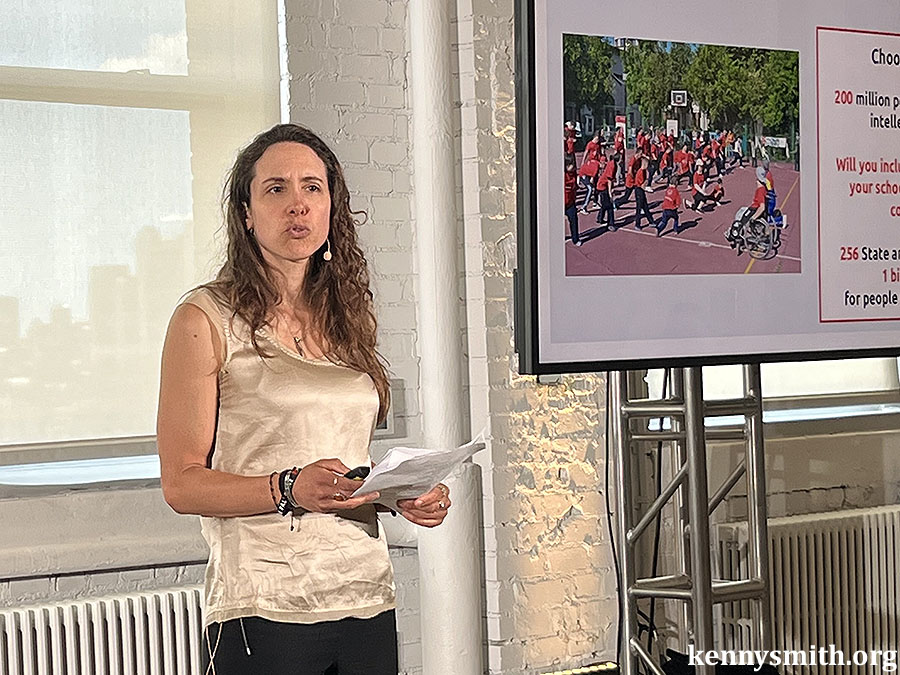
Melissa Otterbein, director of fitness and healthy lifestyles for Special Olympics International discussed the health disparities of people with intellectual disabilities (shorter life, higher risk of diabetes, heart health and depression) and encouraged participation.

Rachele Pojednic, of Stanford University and also the Chief Science Officer at Restore, studies longevity, and talks about how we live, how we die, and what the heart really is.

“Muscle is the tissue of longevity,” she said. “The question isn’t whether you’ll lose it, you will. The question is whether you’re building reserve now.”

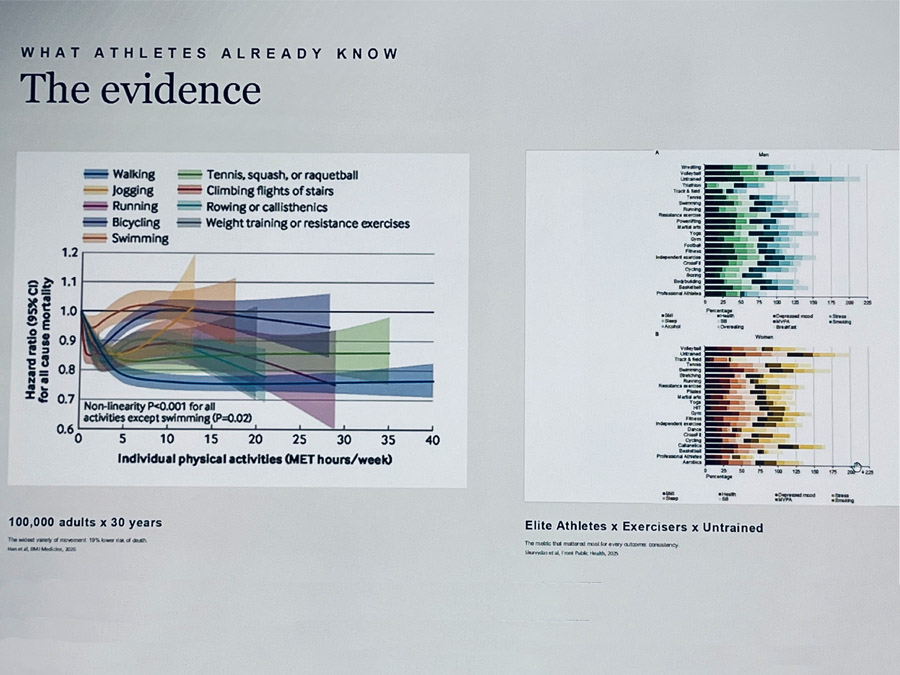
Pojednic said muscle buys you time, and the ability to move through your own life on your terms. Pojednic talked about scholarship that shows “The most important metric for heart muscle outcomes, not heavy weights, not Pilates, not Zone 2 … consistency. Consistency, diligence is the whole game. None of this requires you are an athlete. It requires you act like one.”

“You need the discipline of a sport,” Pojednic said.

This was the adidas Foundation’s first such effort in the United States, and it was a terrific program beyond these few highlights, but there is always a lot more to discuss – and a lot more to move us – in these areas. Hopefully the next “Power of Sport Talks” isn’t too far away.

After the event we got to go on the roof to take in a nice view of the city. We met some of the speakers, some other sport leaders and other scholars.

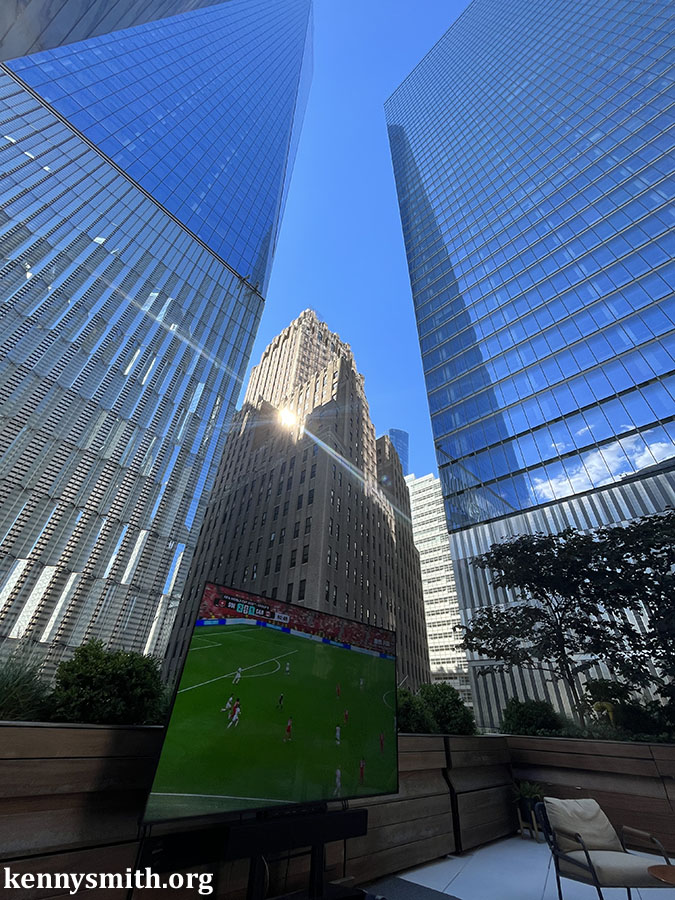
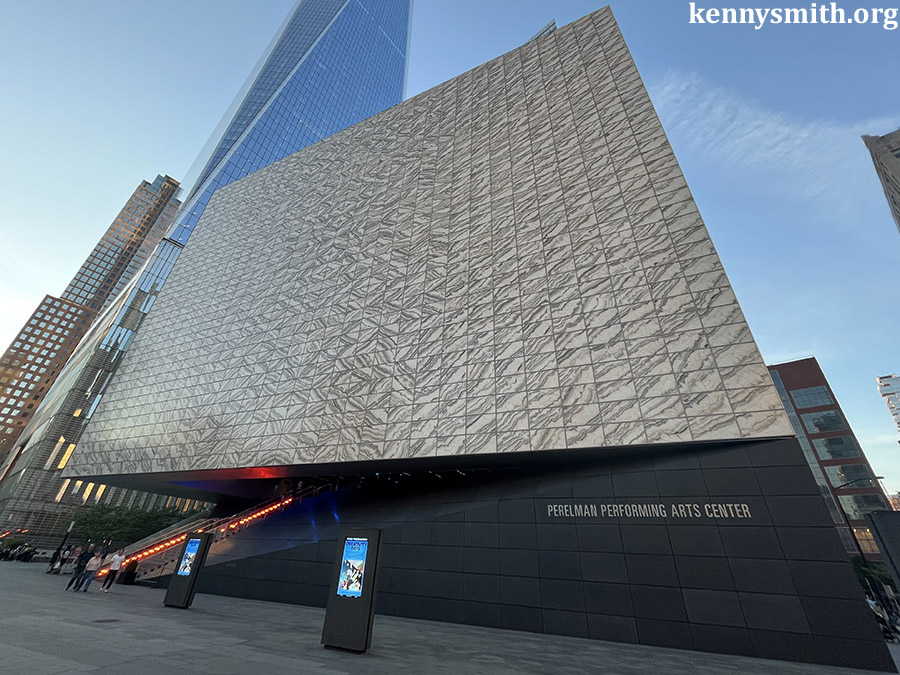
It was a nice event, and we’re lucky to have gone to it. After, we sought out a place to watch some of the World Cup. I chose the World Cup on the Terrace, at the Perelman Performing Arts Center. They promised two screens and their view did not disappoint.

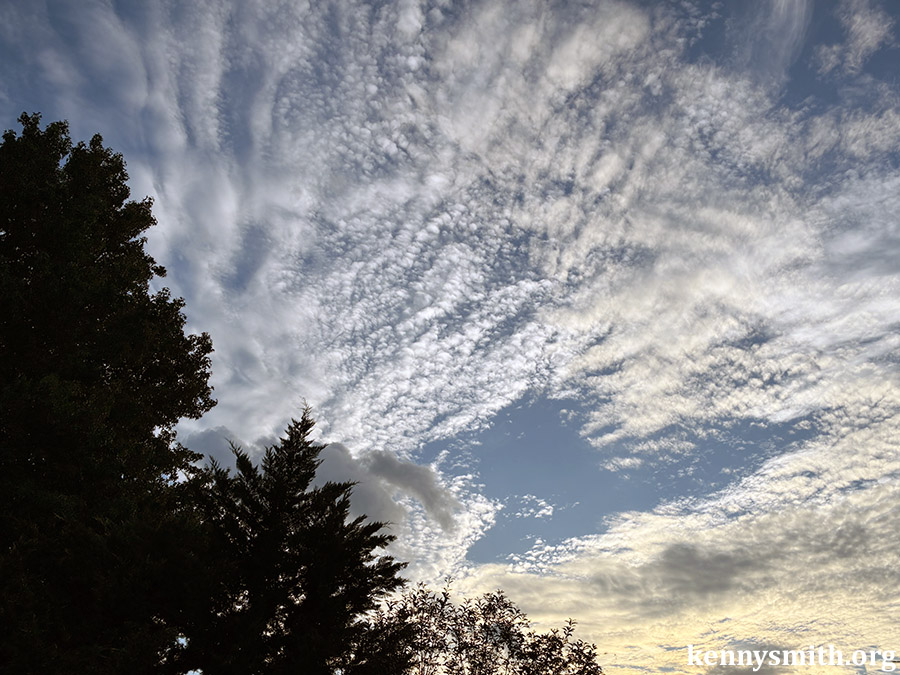
Food and drinks from a welcoming staff and you could look up at this during lulls in the game. Who needs two big screens when you’ve got this to stare at?

We watched two games and a bit of a third one there, enjoyed over-cooked hamburgers and the company of a small crowd of people also there to enjoy a perfect and low key evening.

Caught the subway to the train, the train to the car, and the car home.

By which point I was itchy. Couldn’t wait to get off my sports coat. Couldn’t wait to pull off my long sleeved button down. Couldn’t wait to see the poison ivy. I grabbed some yesterday while weeding. Didn’t realize it until it was too late. Didn’t wash it all off well, or quickly enough, or both. And now I’ll itch for a few weeks.

I’m not going to dwell on it here, I’m just going to be miserable, or pitiful, or both.


8
May 26

A few steps closer to summer

Canvas, the platform the university uses for its online coursework, has returned to form. Came back late last night. This was only a problem because we’re in the middle of finals. Canvas died right in the middle of one of my final windows, in fact. The real problem was that the platform was hacked. There are secondary concerns. Did Instructure pay off the hackers? What got inserted into the code? Why did it just come back? Why didn’t the university’s IT people caution caution with returning to the thing? Why do we submit ourselves to annual training, and daily dual authentication processes, if as soon as this primary platform comes back the email just says, “It’s back!”

It said a little more, that email, but not much.

Anyway, I received the last few exams — they’re exams, but I’ve been calling them papers, my apologies — from the class that had their final window interrupted. I gave my online class an extra day to get their final projects and their exams in. Canvas was down for about eight hours, they got a 24-hour extension. Seemed fair.

It’ll all be fine, the finals I mean. Those are important IT questions that, hopefully, someone is answering.

It’s been a full day of it, but I’m hoping that, before tonight is done, I’ll have finished assessing 48 of those finals. Just 96 to go. (Guess what I’ll be doing this weekend!)

The cats are, helpfully, not helping with the grading. Sometimes they very much want to be involved. But, lately, Phoebe has been working on a new skill.

Poseidon climbs down to hit, or he muscles and claws his way up it. I’m not sure if he’s jumped to it. Phoebe has learned to climb onto now too. And where Poe looks so proud, Phoebe shifts into “So what? Now what?” pretty quickly.

Poe, for his part, has been taking seriously his new role as weatherproofing.

That’s the door to the garage, which we use a fair amount. When he doesn’t want you to go, you get a whole routine out of this now. It’s adorable. You just have to build in an additional 30 seconds of prep time to deal with him.

I wrote a little something, highlighting 10 Sports stories worth watching:

If your team isn’t in the thick of a postseason run you might be up for a little change of pace. Or, if the playoffs are too much, this could be just what you need to break the tension. Watch these 10 sports documentaries celebrating their 10th anniversary this year. See them for the first time. See them again for the first time. In chronological order, they are …

Keepers of the Game is about the members of an all-Native American girls lacrosse team fighting for acceptance on every level: within the tribe, at their school, and in the larger community. They want to play a game that was historically a boys’ and men’s game, they do this with no financial support from their school system, and against a heated rival who looms large on the schedule. It starts slow, but it becomes downright cinematic. Keepers of the Game was an official selection at the Tribeca Film Festival. It was nominated for an Emmy, won an award at Cannes and, in just 88 minutes allows us to see sometimes hesitant kids become confident athletes. Isn’t that what we want out of youth sports?

The Cleveland sports curse persisted for 52 years, a dry spell running from 1964 to 2016. (So if your teams aren’t in playoff contention right now, it could be worse.) Believeland aired in May of 2016. ESPN was hoping to cash in before King James inevitably rendered all the footage obsolete. The Cavs won the 2016 NBA Finals just 32 days later after it aired. A few weeks later, ESPN aired a version with a new ending, the exciting 3-1 come-from-behind series win. Between Believeland and the Cavs triumph, though, local man Stipe Miocic won the UFC Heavyweight Championship and the American Hockey League’s Lake Erie Monsters won the Calder Cup. We leave it to you to decide which was the greater inspiration for the Cavaliers.

There are eight more documentaries in that piece, all of them are good, several of them are truly great.

I’m still living in the happy memories of our wonderful Irish vacation. So, I’m sharing extra videos that we didn’t get to at the time. It was a great vacation. I have a lot of footage. This will go on for some time. Enjoy it with me, won’t you?

That’s Fanad Head. It’s a real treat.


30
Apr 26

Suddenly the last day of class

I mentioned, Tuesday, my new custom-made lapel pin. Today I wore the second one I made and ordered. This is what I say at the end of each class, and it’s the last thing I say in my last lecture, which I build to all semester long.

Thanks for coming today. See you next time. Until then …

If that’s the way people think of me in the final analysis, then it’s worth repeating it.

And so I did it twice today, for the last two times. Weird, I always feel like I’m just getting to know the students, and that we’re all starting to feel comfortable in the room, when it’s time for the semester to end.

But it ended in a big way! In Rituals and Traditions we were joined by a colleague, the assistant athletic director for compliance and academic support, and the deputy athletic director for strategic initiatives and external engagement. They heard from five groups who have been working all semester on proposals for things that our athletic department to build traditions, increase student and community buy-in and improve the gameday experience. Those people were not prepared for how well the students did. Everyone was impressed, even the other students. One person said, “I thought our project was pretty good, but I wasn’t expecting everyone else’s to be so great.” No disrespect to that project, but that was a fair read.

I was proud to see their work come to fruition, and excited to see all of this come together in the context of this class I conceived out of my own interests, and then found plenty of literature to draw from will designing and implementing this class which I invented from whole cloth.

The athletic department people learned a lot because of their work, and because of their hustle. We conducted a survey and got 252 responses on the thing. The instrument told our students a lot and they leveraged that well, today.

Perhaps some thing or things that were said today will provide an inspiration or an impetus to the athletic department. That’s the idea. For certain the people that came to visit were impressed by what they heard and saw, which is great. I’m doing this class again in the fall. I hope to make the class even better.

In Criticism we closed the term by watching the almost avant-garde June 17, 1994.

We had just enough time at the end to talk about a few elements of the doc, and I gave them the final lecture, and someone came in to proctor evaluations.

In both classes I asked them, one more time, to be safe and be kind.

Outside tonight I was looking up at the moon and the clouds thinking about how fortunate I am to get to say that to groups of young people, over and over, for three months.

It was 9:22 when I took that photo. And after that I started thinking about how fortunate I am to have, now, the next couple of weeks to wrap up the semester’s work.

I’m still living in the happy memories of our wonderful Irish vacation. So, I’m sharing extra videos that we didn’t get to at the time. It was a great vacation. I have a lot of footage. This will go on for some time. Enjoy it with me, won’t you?

We watched that sunset at Downpatrick Head.


28
Apr 26

A unique piece

I wanted to add to my small lapel pin collection. I have 15 of them, most of which I’ve just collected over the years. About half of them were given to me. I have little case to display them in, and lapels on which to wear them. And so it seemed a good time to add a few to the rotation. This is tricky, I figured, because they should have some sort of meaning to the wearer. How many meaningful lapel pins can you be autobiographical about?

It turns out you can get custom made lapel pins for pretty cheap. So I made and purchased two of them. They arrived late last week, and I’m slapping one on today.

I like the old logos. And the quality of these is pretty good. So it is probably a good thing that lapel pins ought to mean something, otherwise I might be adding more to a medium-sized and growing collection.

But no one needs that. Least of all me.

Today in Rituals and Traditions I wrapped up the last of our lectures. I shared this video, which is all kinds of great. It has just the right amount of spiteful, prideful, “Make me.” What’s more, FIFA deserves attitude, at the very, very least. It’s a shame they won’t get more.

We also talked about the future of stadium design. No one in my class is in architecture or engineering, so they’ll never do that themselves, but you never know where you’ll wind up working, or what the facility circumstances will be. So today we discussed a recent trend of removing the cheap seats from venues, in favor of more lounges and escalators and clubs and restrooms. The cheap seats are important. They are typically thought of as a gateway into the sport. And we have discussed how fans spend more money inside the stadium — food, souvenirs, etc. — than they do to get in the place. So I asked them to think about how all of these changes might effect the fan experience and stadium choreographies and everything downstream of such changes.

I had a colleague come in to proctor the student evaluation process. I summed up the semester, gave my last little lecture and handed over the room. We’ll get together one last time, Thursday, for their presentations.

In Criticism we talked about this story, Suns’ Devin Booker calls out ref by name in furious NBA playoff rant after baffling call, which allowed us to talk about sources and source credibility. It doesn’t really seem to figure into this particular story, but it is the Post, and it should figure into every bit of their copy.

We also talked about Hailed as a ‘football goddess’ by many, yet sexism, hate and misogyny remain for this soccer trailblazer:

Marie-Louise Eta received a typical German welcome at Union Berlin’s Stadion An der Altern Försterei on Saturday.

“Fußballgöttin!” (“football goddess”) they bellowed in deafening unison.

Eta, 34, was named interim manager of the Bundesliga club last week after the sacking of the under-performing Steffan Baumgart. As a result, her unexpected appointment became a historic milestone as the club smashed through a glass ceiling in men’s professional soccer.

In the April 18 match against Wolfsburg, Eta became the first woman to take charge of a men’s soccer team in any of Europe’s top-five leagues (England, France, Germany, Italy and Spain).

Here, we talked, obviously, about representation. This example also let us consider a great deal about the notion and value of context, for the CNN copy omits a lot.

(Update: She was successful. Union Berlin finished 11th of 18th after going 2-2-1 under Eta’s tenure. She will coach the Union’s women side next year, as planned. Tapping Mauro Lustrinelli to run the men’s team returns the club to the old European boy’s club. Pretty much everyone expected that.)

We also talked again about watching out for fake stories. There’s a set of skills involved in that, and we were due a refresher. So we discussed psychological literacy, basically understanding our own psychological biases so that we might be, hopefully, less at risk of manipulation. We also talked lateral reading (check up on the source you’re reading and read others besides, basically).

It sounds better in the lecture. Maybe it sticks with people.

And for me, two more classes to go for the semester.

I’m still living in the happy memories of our wonderful Irish vacation. So, I’m sharing extra videos that we didn’t get to at the time. It was a great vacation. I have a lot of footage. This will go on for some time. Enjoy it with me, won’t you?

This amazing video is from An Bhinn Bhuí.


23
Apr 26

Counting down

On campus today, the students in my Rituals and Traditions class enjoyed a group day. Next Thursday they’ll be presenting their work and recommendations to the athletic department, and we used the time to start putting together the first few finishing touches on their work. Everyone looks calm about it, which both pleases me and makes me just a little bit nervous.

In Criticism, I reacted to last week’s student suggestions. Someone said we should watch a gymnastics documentary. I searched around and settled on the first episode of “Simone Biles Rising.”

It has, for my money, one of the better cliffhangers in a documentary. The class actually groaned, almost as one, when the credits rolled. This was a good example of some of the media aesthetics we’ve been talking about, and also gets into some other mediated effects, and editorial choices.

We got home just in time for a quick ride. We did our first river run of the year. Down and back is 15 miles, and you can get back in time to clean up for dinner at an almost reasonable hour and, happily, we’re not even racing the daylight on that route at the moment.

You can tell this is when we are on the back from the river because my lovely bride is riding from the left to right.

That’s how web browsers work, right?

I’m still living in the happy memories of our wonderful Irish vacation. So, I’m sharing extra videos that we didn’t get to at the time. It was a great vacation. I have a lot of footage. This will go on for some time. Enjoy it with me, won’t you?

This is at Dún na mBó.