


I have fired up the wayback machine and we are going way back, or a reasonably moderate distance back, depending on your perception of these things, to see the people at my alma mater in 1936. We are once again jumping in the time machine, heading back 90 years, to see what the ol’ alma mater was like in 1936. (Part one is here. Part two is here.) The Great Depression was fulling depressing things, but the students were determined to make their memories and live their young lives. In many respect, there’s is a different place than the one I knew, but it is awfully familiar.
This is hardly a complete look, but there’s a lot to find in 1936. Let’s see what is inside.

The senior class section includes 336 students and, alongside their headshots we learn their names, their hometowns, what they’re studying and some of their extracurriculars. There are also some vertical photos of some of the high profile students to fill up the margins. We’ll wrap up our look at those today. These are vertical photos, and include a little too much negative space. If I ever meet the young man who designed this — he’d be a very old man by now — I will express my dismay that something he did a century ago hurts the layout to my website. He’d probably wonder why I was hassling him. The photos are fine, he’d say. He’d be right.
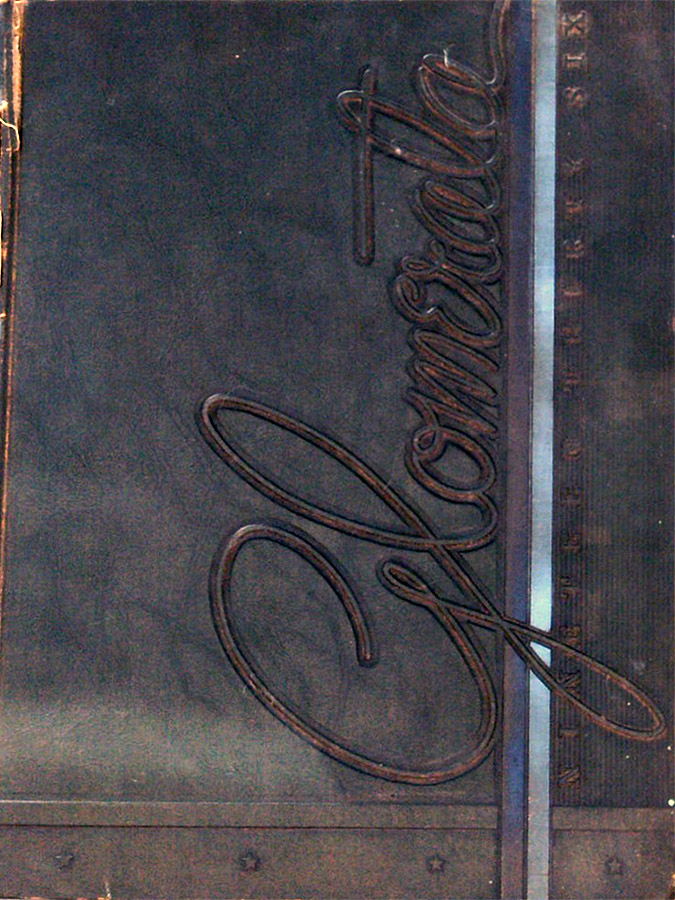
But, first, here’s the cover.
Allow me to introduce you to Gilbert McMillan, a chemical engineering student. In addition to being a baseball captain he was in one of the secret societies, and also a ranking officer in the ROTC. He was born in Malvern, and grew up in Alabama, just down the road, in Tuskegee. He married a Jersey girl. And you can not predict his future from this one photo.
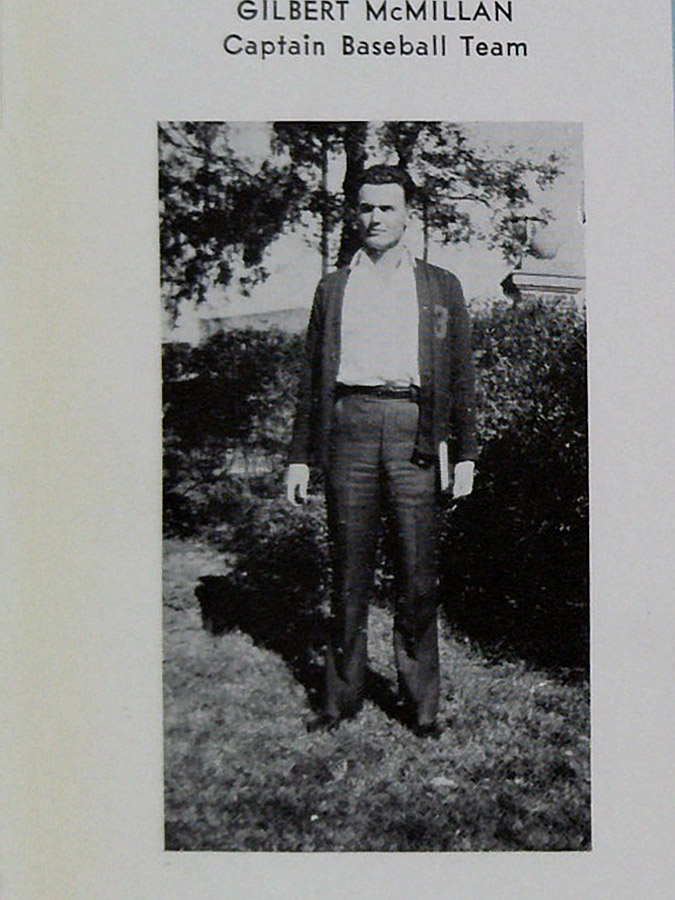
He went to work for DuPont, where he worked for 33 years, helping to start nuclear reactors at the Savannah River Site in South Carolina. That seems reasonable for a man that had worked on the Manhattan Project. He was a tree farmer, a city councilman, and then a state senator in South Carolina for decade, leaving that body in 1979. He was the sort of state lawmaker that did not want to spend any money on anything. He’d been a vocal ultra-conservative, in a legislature that doesn’t like loud members. He was apparently instrumental in getting the state to vote for the 19th Amendment. (This was in 1969, and was purely a formality. The amendment had been in the constitution for almost 50 years by then.) The South Carolina Senate honored him with a resolution upon his death, in 1998, aged 83. His wife survived him by a decade. They’d had two daughters. And when his wife passed she could count four grand children and five great-grandchildren.
The head cheerleader was a mechanical engineering major from Birmingham. In his four years on campus he’d been a part of almost everything. Class officer three years in a row, executive cabinet, Spades, Greek this and Greek that, an ROTC captain. One wonders how he had time to study.
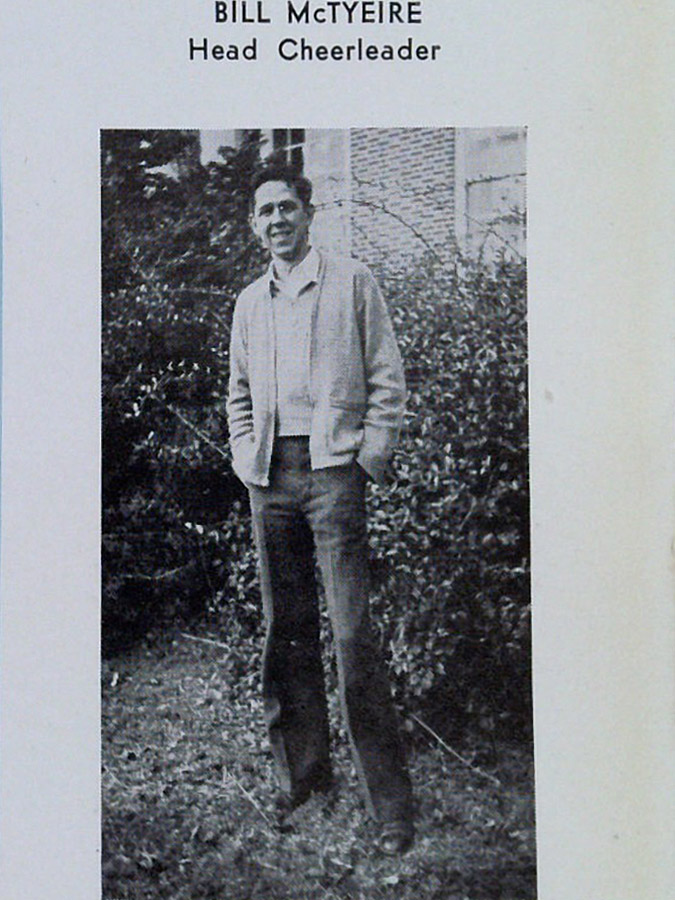
After school he caught on with Goodyear Tire and Rubber, then went into the war as a captain in the Pacific. He spent much of his career after the war at at the Birmingham Ornamental Iron Company, where he established Meadowcraft, a furniture division that would, one-day, be one of the successful casual furniture makers in the country. (We have some Meadowcraft furniture in our home.) He was incredibly successful in his business ventures, which led to time as a general chairman of the United Way, and participation in many of the prominent civic and social organizations in his hometown. (I’d list them, but it is excessive.) He was also on the board of some of the largest business concerns in the state. I just found a newspaper clipping from 1998 that talks about how he was teaching fans cheers from 60 years prior. He died, at 90, in 2003. He was survived by his wife of 61 years. They had five children and eight grand-children.
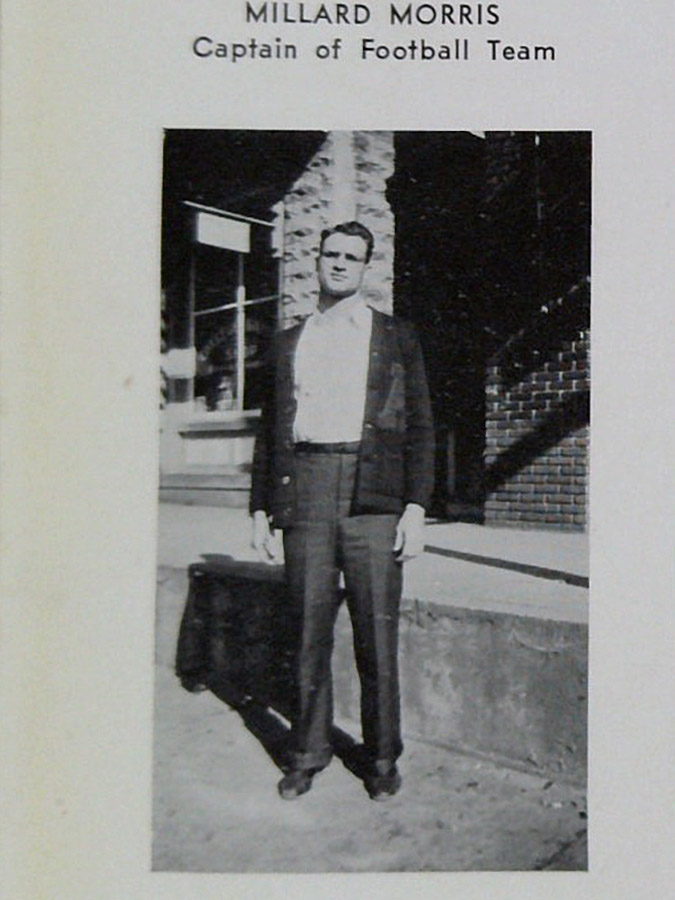
Millard Morris was captain of the football team, but he was also a dynamite baseball player. He threw the first recorded no hitter in school history in 1936 and was named team MVP. He spent a year in the minors, going 2-6 with Columbus and Cordele. He threw four complete games, but that seems to be the end of his athletic career. He shows up in the society pages like a lot of the young people did for a while. He grew bananas in Panama for a spell. He was the father of five sons. He died in 1987 at 75.
John Haygood Paterson was well known for his football prowess. A 1960 Sports Illustrated feature named him a Silver Anniversary All American. He was an all-conference lineman in his day.
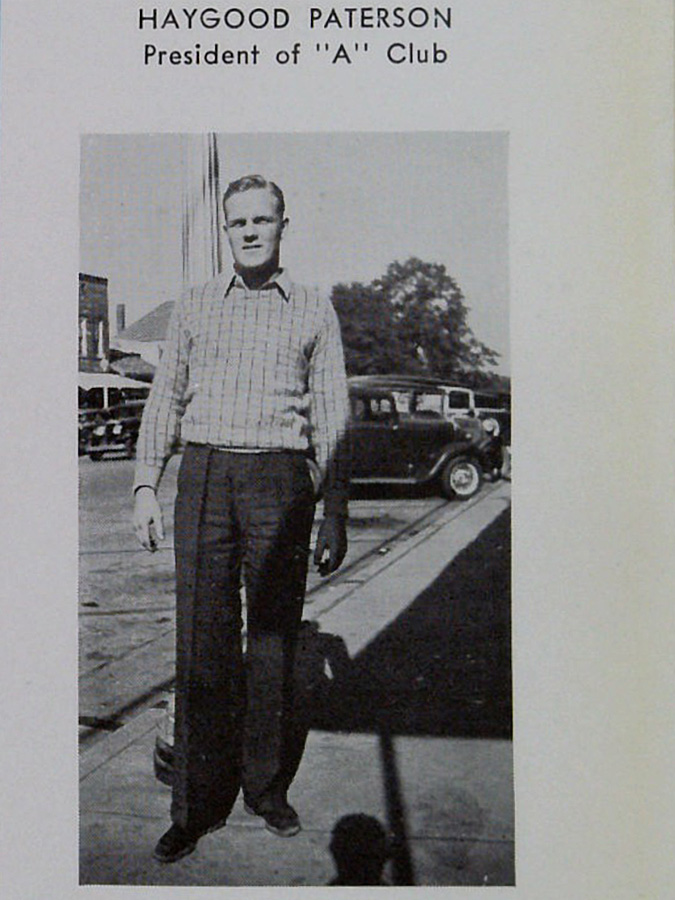
He went into the family business, where he was part of the third generation to run a huge floral business. He’d served as a county official in central Alabama, as a member of the state’s Agricultural Center Board, the Rotary and more. He died in 1988, aged 74. He had two daughters and four grandchildren. Extra fact, his grandfather, William Burns Paterson, made the boat ride from Scotland in 1869 or so, and a few years later moved to Montgomery, built up the flower business and started what is now Alabama State University. William died when John was young, I wonder if he had any memories of him.
It’d be a shame to draw conclusions about a person from just one photograph, but George Quinney looks like he was ready to be the archetype of a certain sepia-toned way of live, doesn’t it?
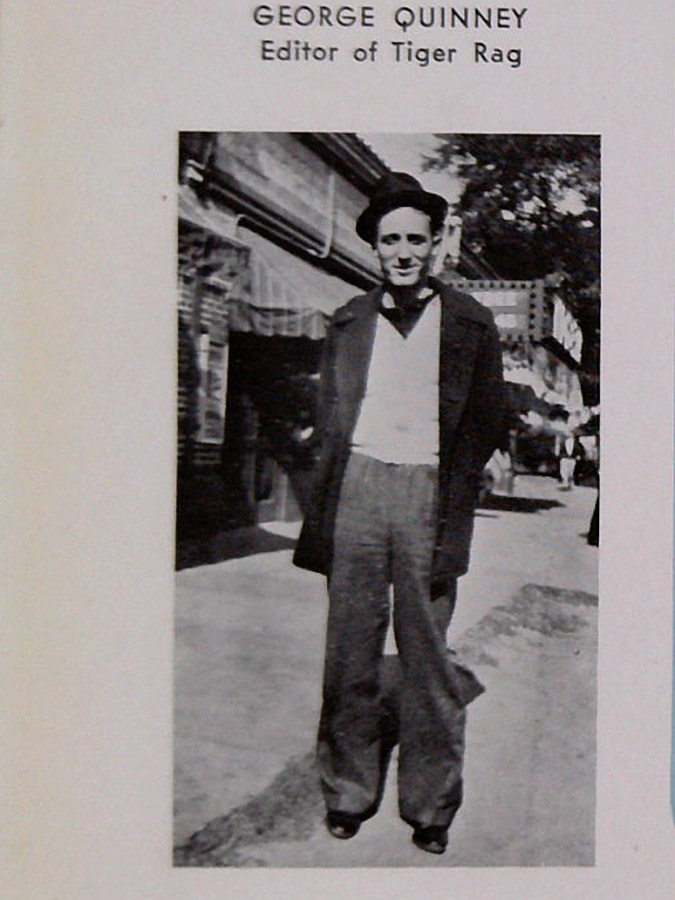
He was from Columbus, Georgia, but would later spend 40 years in Jacksonville, Florida. He worked for Blue Cross-Blue Shield. He was a big part of the alumni organization down later well into his later years. He died in 1989, at 77, the father of two sons and four grandchildren.
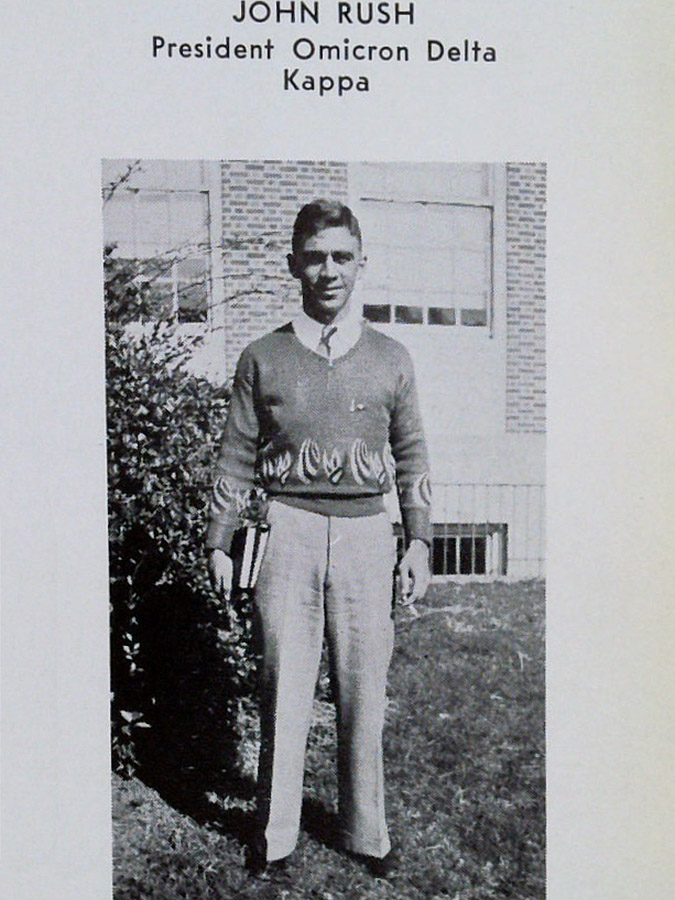
We met John Rush a few weeks ago in the first installment. His is a sad story, but that sweater … I need one of those.
He was from Mobile, the class president, majoring in aeronautical engineering. He became a naval aviator. He died just before his 27th birthday, in June of 1941. He’d been conducting a test flight of the Curtiss SNC-1 Falcon when he got caught in a squall off Pensacola. He and his co-pilot were killed. Rush was buried at Arlington. His father, John Sr., was also an Auburn man. He died when Junior was a freshman in school.
Jane Slack was Miss Auburn, a little pageant vote contest that doesn’t mean much off campus, but is one of those things that sits prominently on the school calendar. It got a few mentions for her in newspapers late that winter, all using the same contributed headshot, which is a tightly cropped shot of her senior portrait.
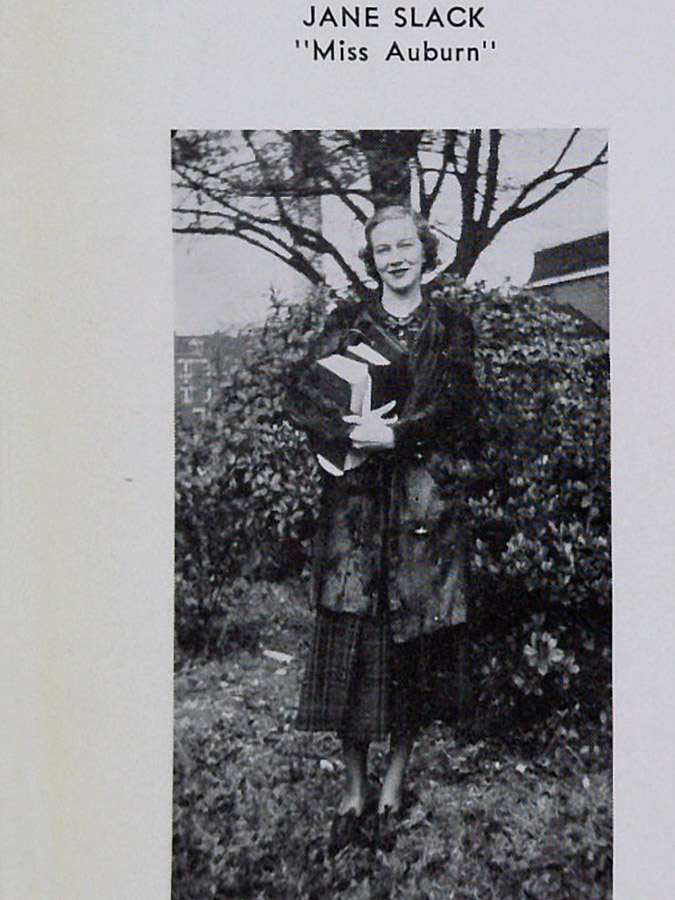
In 1937 she married her college sweetheart, Bobbie Black. I can find more about him than her. They met their first year in school. He was a local boy, and a serious athlete, playing basketball, throwing the javelin, football. He was, in fact, a part of the school’s first bowl team.
When his playing days were over, he coached for a bit, but soon moved into banking. He’d served in the Mule Pack Corps and artillery during the war. When he retired in 1981 they moved to Florida. They’d been married 60 years and had five children, seven grandchildren and six great-grandchildren when she passed away, in 1997. She’s buried in her hometown, Birmingham. He moved back home after that. Her husband lived for four more years. He’s buried in Auburn.
I wonder if they were friends with James Vance. He was from Gadsden, studying business. He’d been the president of the sophomore class. He played in the marching band and the jazz band.
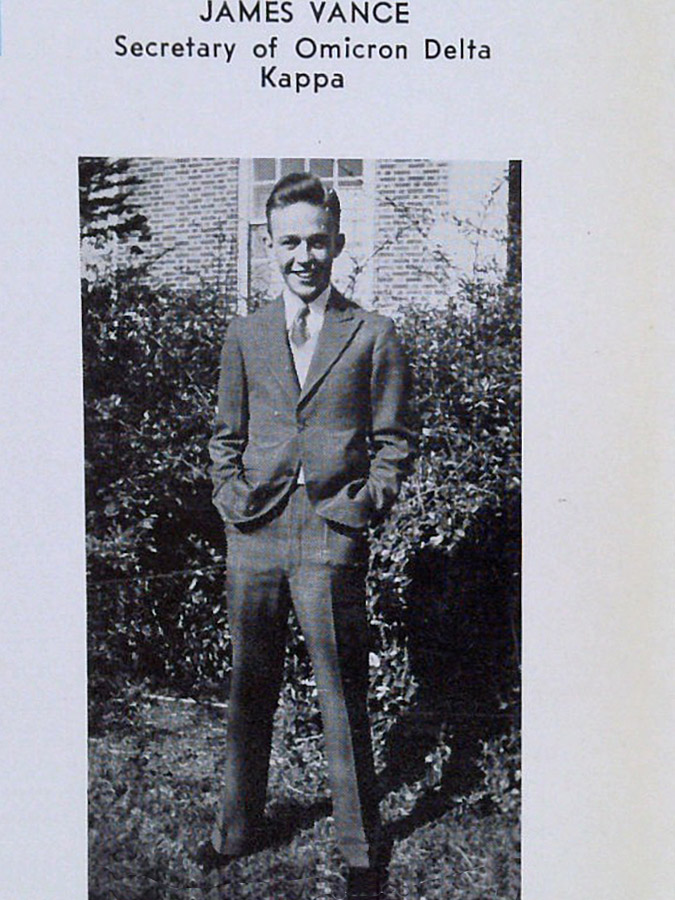
After school, he went to Birmingham and worked at First National Bank. He’d become vice chair of the local medical clinic board and was a president of Alabama Goodwill, and the treasurer of his church. He worked with the local Junior Achievement program, serviced on some city commissions and the local lung association, among several other civic groups. He died at 69 in 1984, survived by his wife and a son and daughter.
Here’s an ink-stained wretch, Doug Wallace of Minneapolis, who was studying science and literature. In addition to running the paper, he was in Spades, ROTC, and a member of the Auburn Players, which was a band, as I recall. He was destined to become a legend.
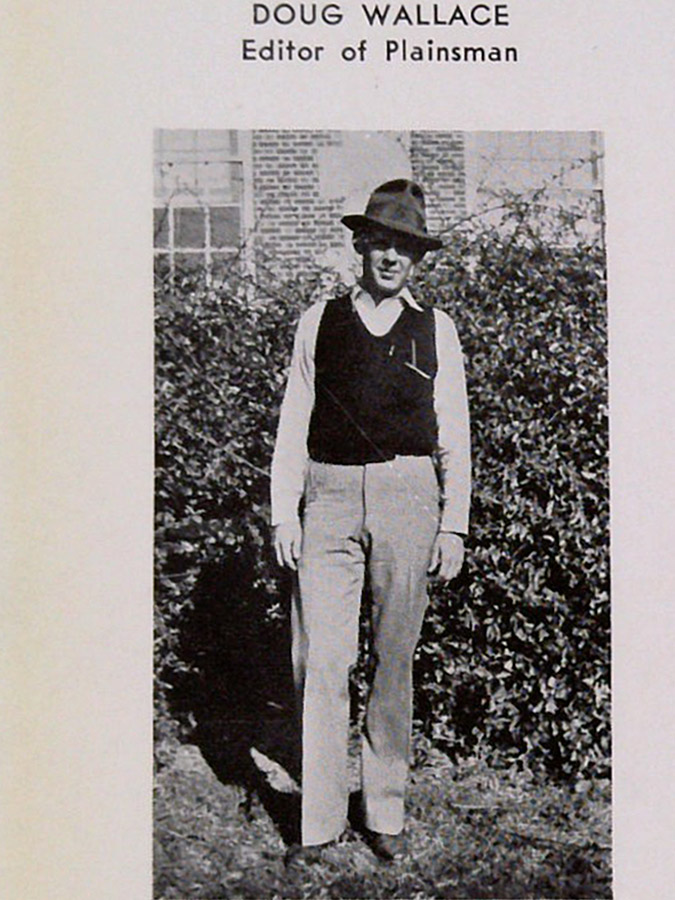
He served for five years in artillery with the Second Armored. They fought in North Africa, Sicily, and landed in Normandy, crossing into Germany late in 1944. He earned the silver and bronze stars. When peace came, but before he could return home, he ran a division newspaper, the editor of the first ever English language newspaper published in Berlin. When he finally made it back to the States he worked at the Columbus Ledger-Enquirer, and prior to their manager he was a big part of both papers. He wrote comlumns. And, in 1953, WRBL took to the air in Columbus. He was their weatherman. (He was not a meteorologist.) There are quite a few photos of him giving forecasts off a chalkboard, which would have been peak technology in those days, I guess. He stayed in that role until 1985, retiring at 70. By then, of course, he was a local legend. He wrote a three-volume history of his church and was a big time gardener. When he died, at 90, in 2005, he was survived by his wife of 63 years, two children, five grandchildren and three great-grandchildren.
Charles Whitten Walter was a business major from Birmingham. When he died in 1986, at 72, the second sentence of his obituary gave readers the details of his college life, half-a-century prior. Isn’t it interesting how that’s the priority? He’d been in Sigma Nu, Spades, and an honor society.
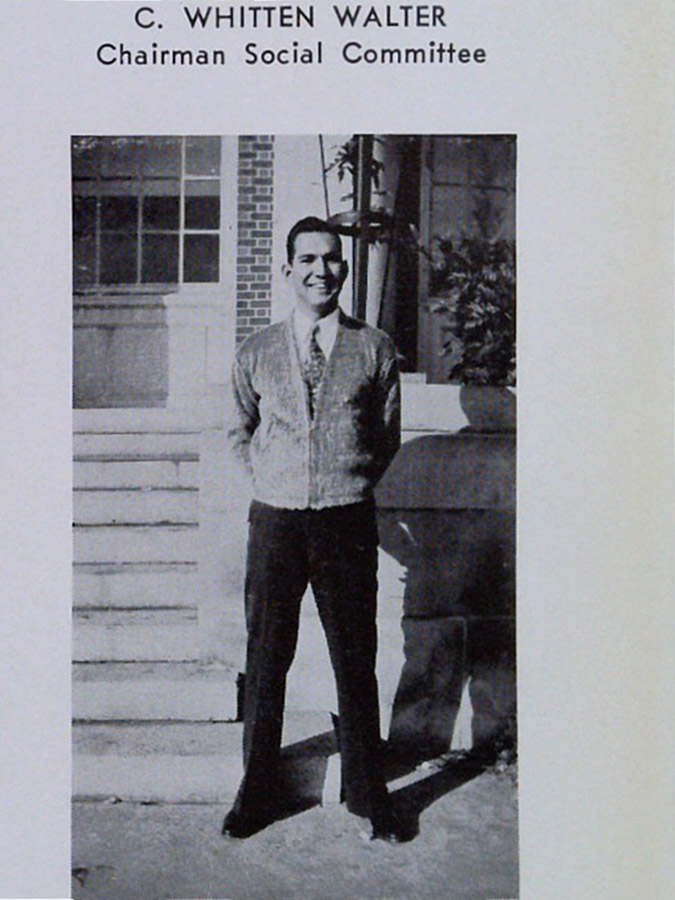
Like so many of his classmates, he also served in the war. He was also in the Second Armored. Back home, he became a board member of the Birmingham Botanical Society and helped renovate the Botanical Gardens (Which is a great visit.) He ran the parks and rec board for Mountain Brook, the richest Birmingham suburb. I don’t know that he was one of the Big Mules, but the rest of his obit lines up with it. If he wasn’t, he was buddies with all of them. He and his wife had a daughter and son.
Billy Wingo was a chemical engineering student from Birmingham. He was high up in the ROTC, in all the secret societys, and somehow a part of three different organizations that use Greek letters. I assume two of those are academic and honorary.
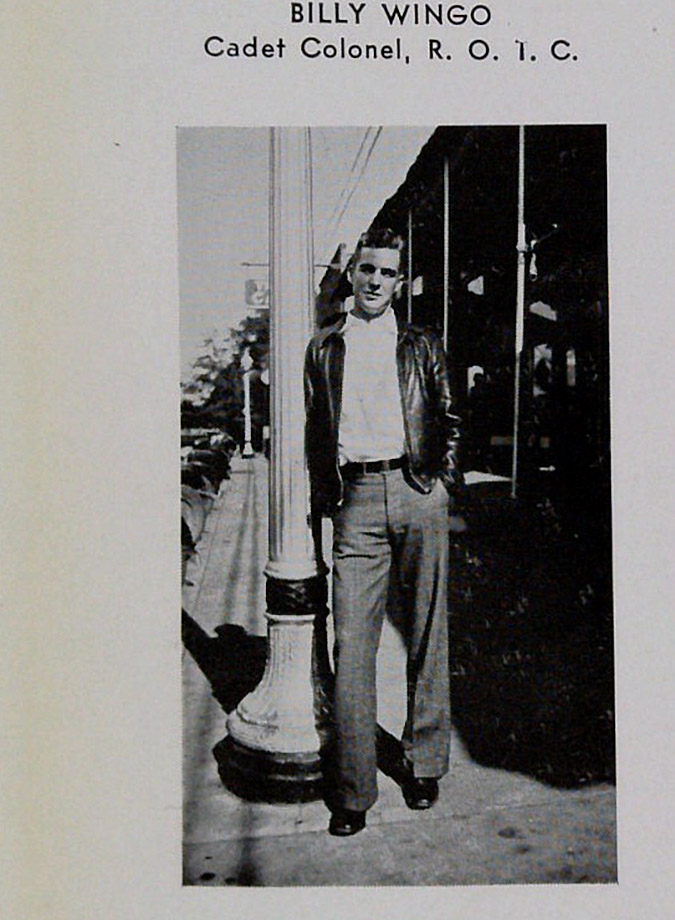
His given name was William Taylor Wingo, and after school he went into the Marines. By 1942 he was one of the Corps’ youngest majors. He fell ill in Samoa. They flew him to California, but he died there, apparently of pneumonia. All over the Christmas newspapers there were stories about his death. He had a wife and a young daughter. Just horrible.
Merwin York was a south Alabama boy, a business major from Monroeville. He played in all three bands on campus.
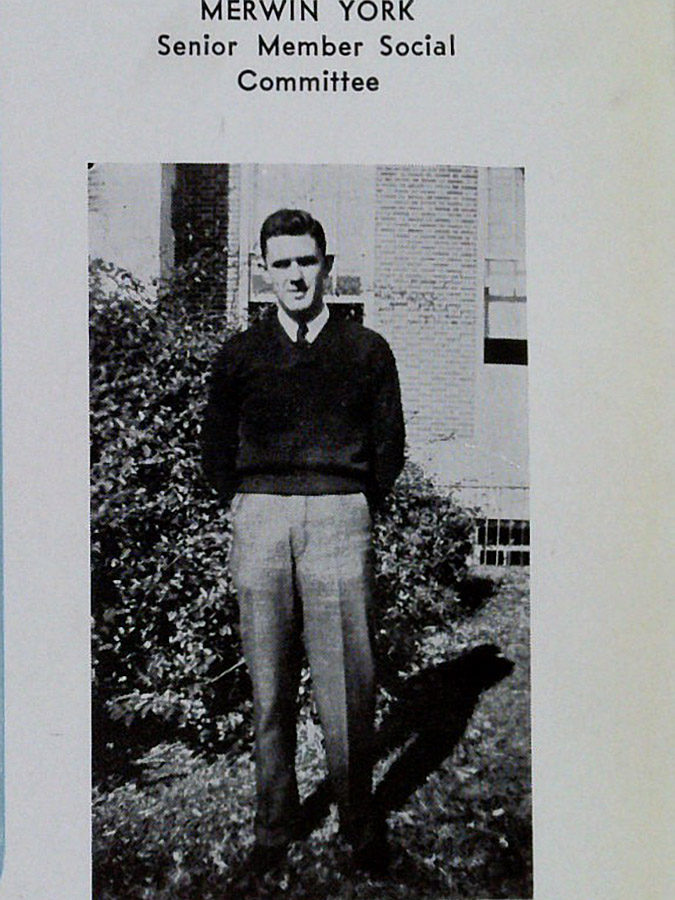
Later in life, he was the chairman of his local hospital board for 16 years. He’d also been the fire chief and a town councilman. He was in the American Legion, the Chamber of Commerce, and was a lay leader of his church. (It’s a very small town, but still.) He was a manager for a construction supply company. He did all that and still had time to raise a family. He and his wife had two daughters. He died in 2000, at 85.
Yes, that’s a lot of men. I’m just sharing the people the Glomerata staff (also a lot of men) highlighted. Take it up with the 1930s patriarchy. But here are two of the women who were graduating seniors. This is Lois Bailey, who was an education major from neighboring Opelika.
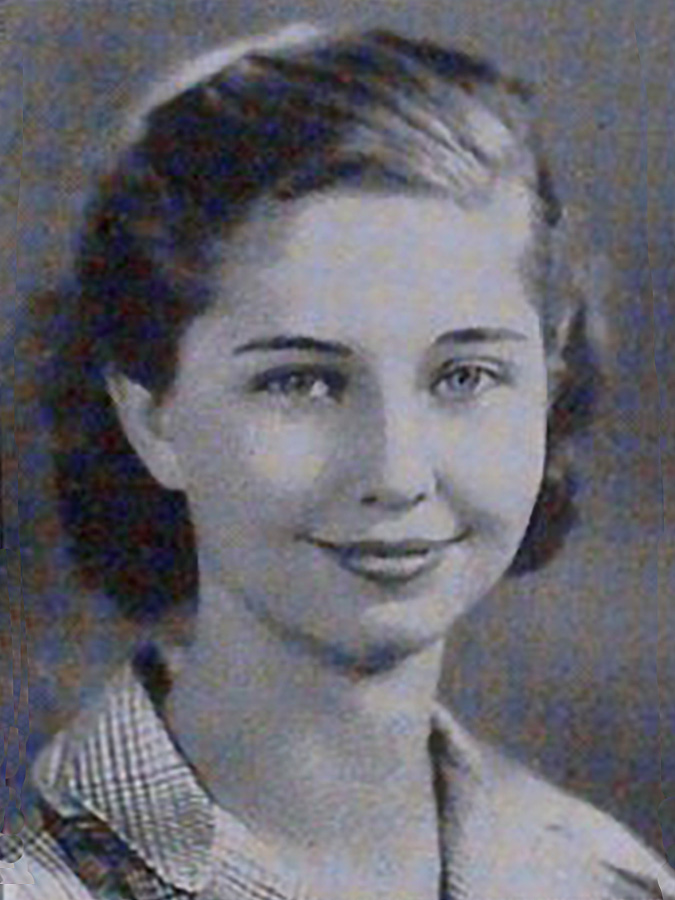
She moved down to the Gu’f in 1946. She was in all sorts of clubs and organizations down there. She also worked with the Red Cross, taught Sunday School and played piano at her church for more than 30 years. She taught special education. Lois died at 89, survived by two daughters, her second husband (having lost her first after 56 years of marriage), six grandchildren and eight great-grandchildren.
It’s amazing, but none of these things are in these kids minds when these photos were taken. How could they be?
Like Luella Botsford. She was also from Opelika. Also studying education. Perhaps these two were close friends. Luella wrote for the campus paper, the Plainsman.
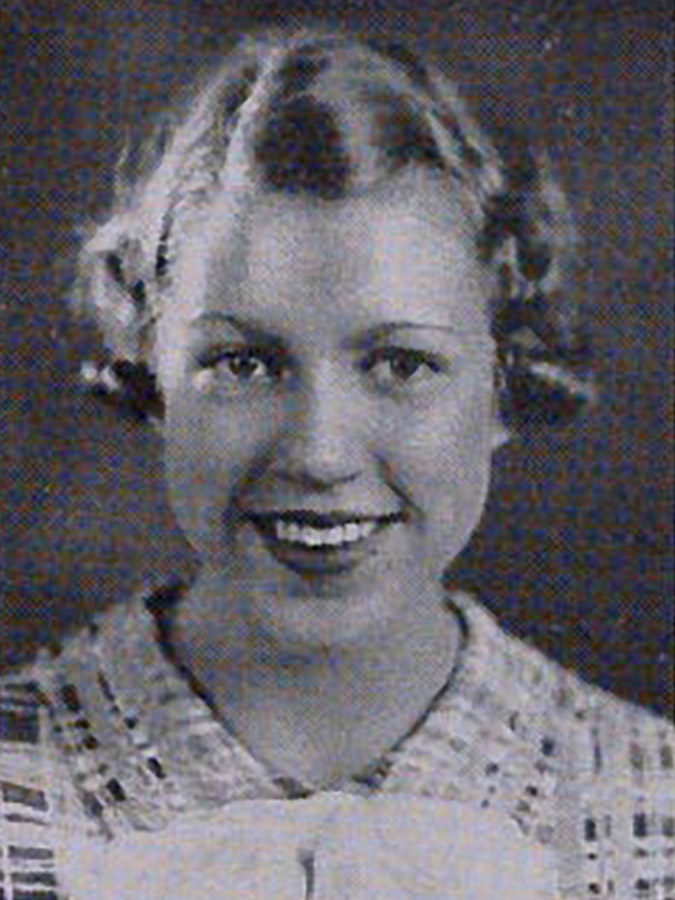
She moved south in 1946, and settling in for a nice life in Enterprise. She founded the first Girl Scout troop in that city, and served on the Scouts’ state executive board for a long while. She was active in the arts, and received an award from the governor for that part of her civic life. She was a Sunday school teacher. She’d been a member of the university’s College of Liberal Arts advisory council. She and her husband had one child that died as an infant. Her husband died in 2000. She lived to see 86, passing away in 2002, survived by four daughters, a son, and nine grandchildren.
Next week, we’ll start our glimpse into some of the classic student life photos, so do come check it out.
All of this will wind up in the Glomerata section (eventually). You can see others, here. Or maybe you’d like to click through to see all the covers. The university hosts their collection here.

