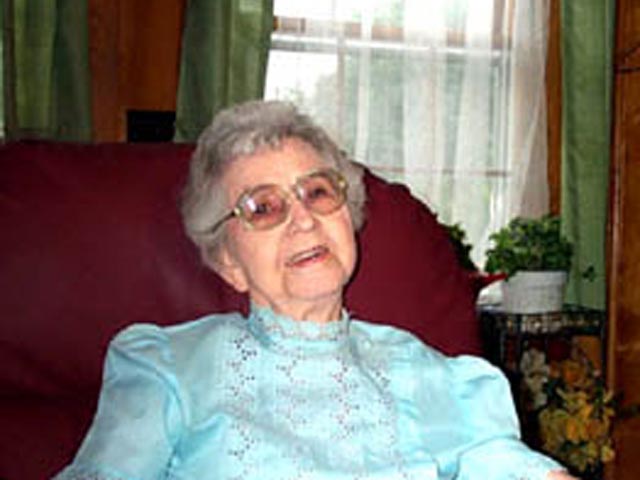
I think we’re going to make this our online Christmas card. If you receive this in your inbox just know we ran out of stamps.
That’s in Savannah’s City Market. I saw some pictures of this area in a museum earlier in the day. The modern place looks a bit different than the 19th and turn-of-the-20th century market. There is less cotton and other crops and far more tourists now.
Still have horses, though they now are part of the tourist trade, carrying around people in carriages. And also eating ducks. Who knew?
Savannah, it seems to us, feels less festively decorated this year. We’ve been walking through the historic districts under overcast skies and in several layers of clothing wondering where all of the extra lights and garland are. My guess is that they cut back on the manpower budget to hang it all.
Still a lovely city. Always is. At least in our experience. For a place that sells so much of itself on ghosts and deaths and the more sordid parts of its history you can’t find a much more charming place, even if the Christmas atmosphere is down.
There are less people here right now, too, it seems. We mind this less than most of the local merchants, I’m sure. We’ve walked in to every restaurant with no wait. We haven’t had to dodge people, even on the tourist trap River Street. Part of that is the weather, the mid-week visit and probably the economy. Maybe everyone has been here and is off exploring a new place.
Here is the monument to the Chasseurs Volontaires, the Haitians who fought in Savannah during the Revolutionary War:
It is apparently the first such monument in the U.S. It was installed in Franklin Square in 2009. And because this happened in the modern age, there was outrage and money and indignation:
Here’s the Mercer House. We’ve been in this square before. I don’t recall actually noticing the house, though:
The Mercer House was designed by New York architect John S. Norris for General Hugh W. Mercer, great grandfather of Johnny Mercer. Construction of the house began in 1860, was interrupted by the Civil War and was later completed, circa 1868, by the new owner, John Wilder.
In 1969, Jim Williams, one of Savannah’s earliest and most dedicated private restorationists, bought the then vacant house and began a two-year restoration.
You have your origin story and your Midnight in the Garden of Good and Evil story. There is a 100-year blank space in between. Makes you wonder what you’re missing out on, doesn’t it?
So we wandered around. We took shots in Forsyth Park as the sun went down. Here’s the big fountain:
We had dinner at 700 Drayton, which was where we had our dinner reception the night we got married. Delicious.
On those rare occasions when we order a dessert we split one between us. Our waiter brought us a second dessert because, he said, in his estimation the chef took too long to prepare our cake.
We walked next door to the Mansion, where we got married.
As we noted it was much cooler today than it was on that steamy, sunny June day in 2009:
About 80 degrees cooler once you consider the heat index.
By the time we walked back to our hotel, though, I’d have taken anything in between.
We made it to Savannah just in time to change clothes and walk over from our hotel to the restaurant. The Yankee had the almond encrusted tilapia. I had the crispy duck. Also, try the she crab soup, and definitely enjoy the praline basket with vanilla bean ice cream, berries and chocolate sauce for dessert.
We did not see Mr. Habersham. James Habersham Jr., an important financial player during the Revolutionary War, built the house in the late-1700s. He’s said to be one of the spirits in the house, straightening things up, helping people to tables (according to the ghost tour folklore) and so on.
There are videos on YouTube. There are always videos on YouTube.
On the subject of food, we had a late breakfast at Clary’s, which we always visit:
For the first time in all of our visits here over the years Ms. Maggie wasn’t working.
I don’t take pictures every visit, but I do this one when I remember:
This is our first visit to Clary’s, more than seven years ago.
Here’s another visit, just five years ago. You’ll notice the paintings change, but the paint doesn’t. And that green orb lamp is still in the background.
We’ll go back again tomorrow.
It has rained on us most of the day. And it has been cold. I left my camera behind, so all of my shots from the day were on my phone. We visited the Cathedral of St. John the Baptist, where we saw the most involved nativity scene ever — rabbits, ducks, sheep, lambs, Optimus a pink turtle, floating angels from central casting, dogs and cats. You had to look hard to find the Optimus Prime. We shopped. We enjoyed the day without any plan whatsoever, which is an unusually rare experience, but altogether lovely.
We took the ferry across the channel of the Savannah River to see the gingerbread houses on display at the Westin. There were almost 100 there, including some amazing work.
Here are a few of them, many floating in an ethereal cotton cloud city. The winner is in here, as are most of the houses that will take home ribbons. At the end you’ll find my favorite, The Yankee’s favorite and the hotel general manager’s favorite. Of course it was a giant replica of their hotel, so it was a ringer:
For dinner we drove through the rain out to Tybee Island and ate at a sleepy little crab shack called The Crab Shack, which we’ve never seen sleepy before. We watched the wind blow on the windows and stared at the giant Christmas tree lights floating out in the water. It was topped by a tremendous yellow light crab, who no doubt was incensed by our eating his delicious actual crab brethren.
Tomorrow the rain will be gone. It’ll just be a bit colder. We’ll have no plan and a great time, same as today.
Some days you spend all day locked away in your office trying to get things done. And when you finally come out you find it is just the perfect time of day.
The Christmas season is now fully on campus:
The moment I began to see my great-grandmother as a poet: “I never know what the day may bring – it might even bring my favorite dreams.”
That was from her memoir, which she wrote in 1980, at around 75 years old. Some of it is prosaic. Some of it is art. I’m just reading it again, because I haven’t read it in several years and then I only skimmed it.
She was a neat lady. She became a rural teacher at a young age. Her first year in the classroom she had students older than she was. She went to school, taught school, brought in the crops. By 1925, was being courted by two young men. One she liked, of whom her father didn’t approve, and one that really liked her that she “really didn’t care for.”
She decided to write them each a loving letter and mail them in the wrong envelopes to see which one of the boys quit visiting first.
Her conscience, she wrote in her memoirs, got the better of her.
“I could never endure seeing Kelsie with some other girl.”
That story is in her memoir. They got married in 1927, had three kids and eight grandkids. She said she never found out why her father disproved. But life moved on. She became a mother, a grandmother, a sales manager, she ran an electronics store and became a secretary, which was work she wrote that she always wanted to do.
Her husband died in the 1970s, and she buried her son soon after. She turned to crafts and hobbies. She learned to paint, practiced all of her many sewing techniques, returned to her poetry. (Everyone in her family was a poet, it seems.) When her mind still turned to her grief she focused for a while on her memoirs, which she finished in 1981, in her mid-70s.
In 1996 she called me and asked me to come to her graduation. She’d been secretly taking classes again, picking up her education where she left it off when it was time to raise a family. Now, decades later, she became the oldest graduate of the University of North Alabama. (One of her daughters is believed to be the youngest graduate at UNA.) I made a phone call and had the governor declare it Flavil Q. Rogers day.
She made the section front in the Times Daily, her local paper:
The mind and body are amazing things, really. I complained yesterday, a day when I felt as bad as have since, I dunno, let’s call it the end of August. There have been a few other unfortunate days as I recovered from the crash and the helmet and the medication and the surgery and more medication. Yesterday was high up on the list of lowlights. My mood was off; I hurt. It was generally lousy.
I woke up today a new guy, which is to say, like myself again.
This is important because it remins me how I should feel. For the first time since July I felt like myself again. There I was tapping out miles in Orange Beach and now here I am, finally, me again. In between I’ve just been a fraction of myself, perhaps.
The amazing thing, the mind-and-body-are-amazing-things part, is that it took feeling so much more like myself today to realize how far off I’ve been since July. You have an accident and get acclimated to your new condition so quickly, subtly, that you just accept that this is how you are and forget how you are supposed to, in fact, actually feel.
I still hurt some, mind you. That’s improving on its own slow schedule. I finally learned how to not overdo it. I still have painkillers, but they stay in the medicine cabinet and I don’t have that foggy miserable feeling that I’ve come to associate with modern chemistry.
All of this sounds pitiful, but I mean it to say I feel like me again. And while I can’t move furniture or anything just yet — maybe next year — my discomfort doesn’t dictate every thing I do now. Just some of the things. Most important, I feel like myself again.
Samford is getting ready for the Hanging of the Green and the Lighting of the Way. This marks the beginning of the Christmas season here. The tree in Reid Chapel will be decorated. Garlands will be displayed. There will be hymns and prayers and carols. It is beautiful, really.
And then everyone will go out into the crisp night air for a message from the university’s president, more carols, a concert, Silent Night and then then, in the dark, the Christmas lights will come alive, the Lighting of the Way.
Prior to that, just lots of luminaries:
When you go into Reid Chapel there are just the little white bags. During the Hanging of the Green every one of these on the long quad will be lit. Whoever does that knows how to hustle. There are hundreds of them:
And then everyone goes back to studying, or home, or into Harry’s for hot chocolate. Finals are coming up fast.
Everybody has them, some are better than others. Some can be told to illustrate a point. Some can be told just to be told. I try not to share too many “war stories” in class because they are usually disturbing or pointless or sound like bragging. But I told some stories today. It is a trip down memory lane for me, some of these things I’d all but forgotten.
Once I was called on my off day to go stand outside in the bitter, freezing cold and watch a hostage standoff. Seems a man and a woman had gotten into a fight. He displayed a knife. She got out of their house, but the three kids were stuck inside. I remember stamping my feet for warmth, wishing for a bigger jacket, watching the SWAT team rehearse down the block and then this kid, maybe seven or eight, dangling from a window in his home. It was just a bit too high for him and he was having trouble letting go. There was a police officer in body armor right under the window and he was reaching to get the kid and his shirt was riding up and then he was on the wrong, in the officer’s arms and being trotted away. All the kids got out safely and we reported from there for the better part of a day.
Not every story is a happy one, of course.
I talked about the guy so cranked out on drugs that he used the toddler in his arms as a weapon to ward off police officers. I always thought watching the police sit on their cruisers crying after that was the best part of the story.
Sometimes, I say a lot about any format, the story is about timing. You turn away, you miss it. You leave early, arrive late, you miss it. Really talented reporters can see everything, hear of everything and are apparently everywhere. Or at least they can make it seem like that. For mere mortals, chance plays into it.
I think I was just driving by when I saw a big scene in this one apartment complex. Stopped in there to find out a police officer had just been shot. Jack Cooper was his name, I remember that a decade later. The guy he was dealing with was worried about vampires and demons and pepper spray didn’t bother him. Somehow he got Cooper’s weapon and got off a shot before being killed himself. That was a pretty neighborhood, and I stood around those cruisers and ambulances for hours talking to and about the neighbors. I got back to the studio that day and received probably the nicest compliment I’ve ever gotten professionally. I described things with words, someone whom I greatly respected said, better than the television cameras did.
I didn’t talk today about covering stories where babies were found in the garbage or molested dogs or bodies found in car washes on Christmas morning. Some of that stuff is too depressing.
So we talked about broadcast news writing today, from which I have several years of stories and experience to draw. Some of my best writing was probably done in a studio somewhere, rewriting something I’d written three times before because I needed to get three more seconds cut from the source time. Perhaps nothing makes a print writer a stronger writer than considering the broadcast style.
Of course perhaps two-thirds of this class was interested in public relations, but still. The lesson plan called for broadcasting, so that’s what we talked about.
I miss it, but only a little. I don’t miss being at work at 4 a.m. Don’t miss that at all. That was my last broadcasting job. When I went online in 2004 and that job called for me to show up at 6 a.m. I thought I’d really earned a step up in life.
Now I stay on campus all night watching students put their newspaper together so, really, I’ve finally found the night owl schedule my circadian rhythms have always demanded.
I don’t have quite the same pool of war stories, because our campus is a beautiful little serene place and I now tell tales of improper pronouns and misspelled building names and warning off plagiarism, but it is a great tradeoff.
And now a very mellow tune performed on a frozen pond that, beyond the name, has absolutely nothing to do with the Joe Walsh standard:
I like the kitchen shots. They’re cute.
That is a band about which you can find little information, called Eden’s Empire. On their Bandcamp page they write:
This is an anthem for hope.
We are the sound of Jimi Hendrix strapped to the front of a run-away freight train with Dylan feeding the fire.
We are not rock stars. We’re not selling sex, angst, or anarchy. We’re giving away songs about how hard it is for our generation to find love, purpose, and truth in a world that just wants us to buy more of what put our parents in this situation.
We are over educated, underpaid, and unsatisfied.
We are James Dean with a guitar.
We are twenty something’s and we’re restless.
Hurricanes, diplomas, love, and big ideas have pulled us from all corners of the country and dropped us together in the Midwest.
We have no money, no map, and no desire to just dream anymore.
We are on an odyssey, we don’t know what were looking for, but so far all we’ve found is rock n’ roll.
The share of Americans living in multigenerational households reached the highest level since the 1950s, after rising significantly over the past five years, according to Pew.
In the never-ending quest for story ideas and opportunities to prove my entrepreneurial prescience I am always looking for a hook or an angle. And, forgive me if this is just the Ken Burns talking …
But I think there’s some modern John Steinbeck story waiting to emerge. This being a tectonic type of tale on the scale of ultimate stories. Of course there will be WiFi and cable television and hipsters and even more politics this time around, but there might be something to it.
I rambled on here for awhile about Franklin Roosevelt, James Bond and YouTube propaganda. Those paragraphs didn’t add much and I discovered the delete button still works; you’re welcome.
It started out, though, with the idea that the Dust Bowl changed a lot of lives, not just in the short term, but generationally. People who lived in Oklahoma moved to California or Arizona, if they were lucky enough to get in, or back east and they had children and grandchildren and those people live in those places, or at least started in those places and where are they now and what got them there? These are the plates of life, right? So I say it is tectonic. I look at my family history and wonder what were the reasons they moved down from the mountains? I found several strands of the tree that ventured to Texas or Oklahoma, probably be cause they knew a cousin there who told them times were good and your parents aren’t here, anyway. And what prompted them to go there?
If you spend time in one of the genealogy books of my extended family you find they came from Germany in the early 18th century. It is written somewhere that generally people of that place and era moved to recapture something in a new place. Then, according to this family book, some of those particular people fought in Pennsylvania regiments in “the Sectional War” and later moved to north Alabama in the 1880s. The why is left to your imagination.
Another side of my family moved down from Tennessee before the Civil War. They were in a part of the state that typically stayed out of the war and some of the young men finally only joined up when the Union all but pressed them into service.
This is all in my mother’s family. On the Smith side of things, well the Smiths are hard, but I found an old newspaper mention early this year that led me to a new name on a genealogy site which led all the way back to the Netherlands in the 16th century. Those people moved to North Carolina before the Revolutionary War, and eventually worked into Tennessee, Alabama and Oklahoma, probably just in time for the Dust Bowl.
They, like the other branch in the book above, were all just farmers for the most part, poor in a hardscrabble world during a challenging time. The whys died with them, but they are probably straightforward and logical. Or fantastical beyond belief. Maybe life was good to them. Who knows what war stories they had?