I woke up, I read the news. I did some work. I had an early lunch. I got ready to go to work. I sighed at all of the things I need to do. This, I thought to myself today, is where I wrestle this week into control. And also tomorrow. Also, let’s not think about all of the things I should do around the house. It’s that time of the semester already.
And so we hopped in the car.

On campus I had a chat with a colleague around the copy machine. The water cooler is just around the corner, but that seemed a little too on-the-nose. I sent a thank you note to another colleague. I replied to roughly half a dozen student emails. I took care of a small task upon which I was overdue by an egregious 13 hours. I finished my notes for class. Right on time, too. As I scribbled out the outline of the last things I wanted to say today — I use a very small notebook and 75 minutes usually works out to about three pages of outline-stye notes. Today, comparing thoughts to my prepared slide deck, I turned it into four pages and offered a little silent prayer that the class would have a conversation with me.
They did! We sat in that super hot room, which is now baking at about 82 degrees, a remarkable improvement from a few sessions ago when I sweated completely through a sport coat while sitting still.
Today we talked about the social part of our techno-social lives. How the technology influences the culture and vice versa. I successfully resisted the urge to make any Star Trek references. We talked about how technology changes our expectations of things. I stumbled upon a great question … who have you talked to already today that is out-of-state, and how did you communicate with them. People dropped all sorts of states, one student talked to a relative in Jamaica. I had deliberately sent notes to people in a variety of places already this morning, just so I could make my point if they did not. But they did!
They’re becoming a class of talkers and that’s going to make all the difference.
Anyway, the first half hour flew by and then the second half hour did a slow crawl and then accelerated unexpectedly. It’s a 75 minute class and I think we wrapped up at 74 today. Just as I hoped and hoped as I planned.
They have to read a great paper for class next week and I hope a few of them like it. It can inspire great conversations, and in our techno-social lives that’s going to be key. Three students stood around and talked about that with me after class for a few minutes.
Also one student whipped out an iPod on cue, as if she knew where the class was going. She later told me she had a cassette tape Walkman that she’d discovered in her mom’s old things. And that she and her roommate go buy records. People are full of wonderful surprises.

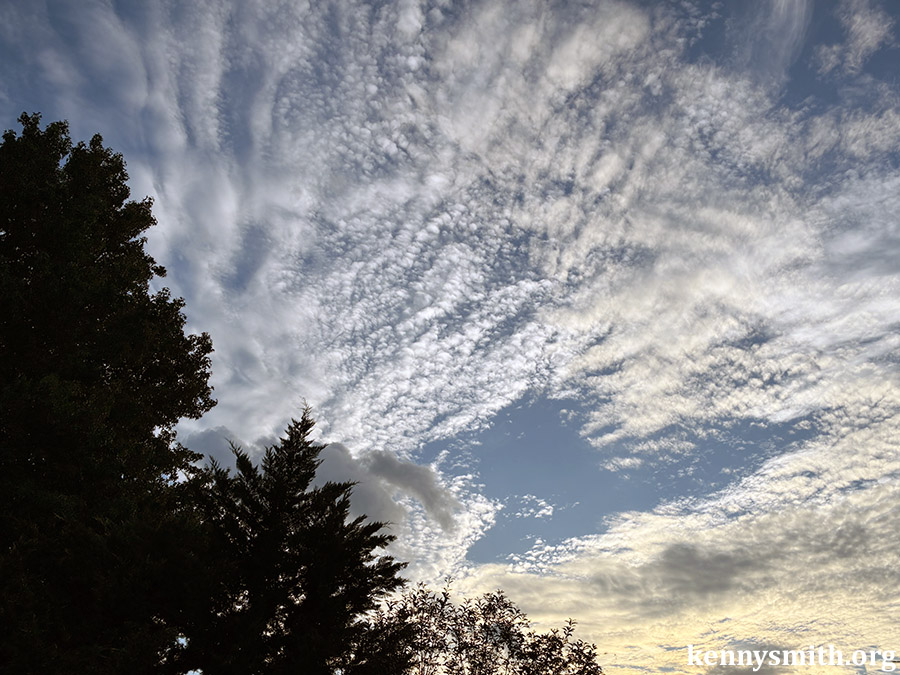
After class I picked up my lovely bride and we drove home. We took part in the relative new ritual of sitting outside to read on Thursday evenings, because we know how to party. At about 6 p.m. she had to go inside for a meeting, and I stayed out for a bit longer to catch up on all of the ink that has been spilled today. This plane flew over head.
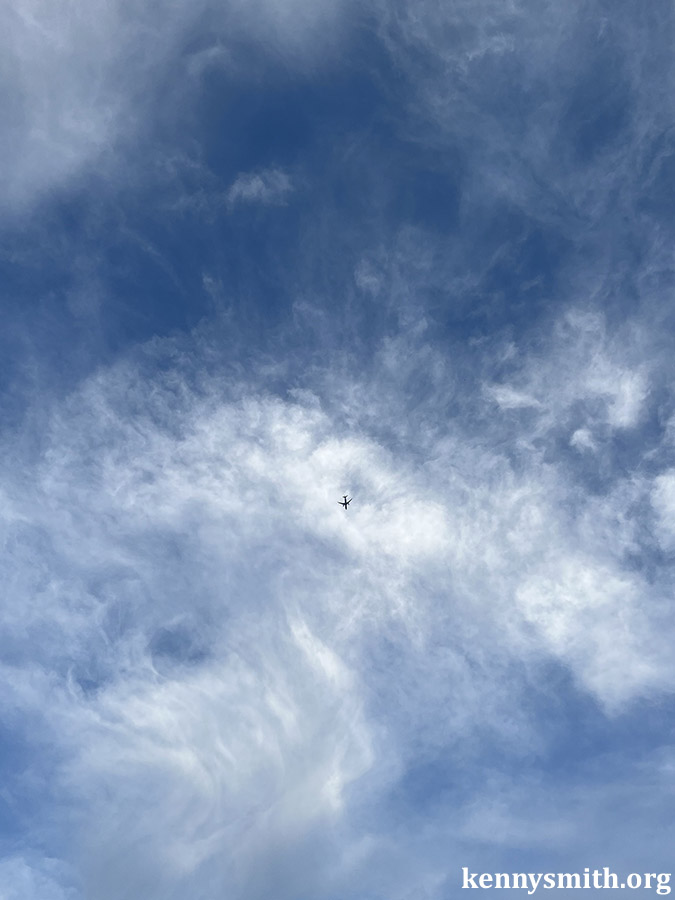
I didn’t look it up on the flight tracker app, because sometimes the mystery is better. This plane is on the usual route for airlines going to Europe, though, and I wonder where all of those people will wake up in the morning. I wonder if it is somewhere fun. I wonder if anyone looked out the windows and glanced down at the little places they are flying over and leaving behind to go somewhere fun. Let’s say Venice. Why not?
I went inside. Got cleaned up. Sat down at my computer to check the work email one last time, and do a few quick work related things that were on my mind. Set a fantasy team, checked the address of a meeting I have tomorrow. Attempted, once more, to wrestle this week into control. Succeeded, for half a second, in not thinking about the things I should be doing around here. Utterly failed at ignoring the work required of me next week or the week after. Then I recited the usual ritual: after that, there will be less today, and it will be easier.
Dear reader, this is a lie we tell ourselves every week. And already, my calendar is piling up into mid-October.
I was called down to dinner. We had barbecue chicken baked potatoes. We had barbecue chicken baked potatoes because my lovely bride had picked up some scallions. She doesn’t care about them, but I think scallions are a wonderful addition to most any plate.
Also, I do not have a good grasp of scallion-to-plate ratios. There’s a whole bag in the crisper. I retrieved it, found the good knife, pulled some onions out of the bag, considered what was in my hand, put some back, and started cutting. This was what I wound up with.
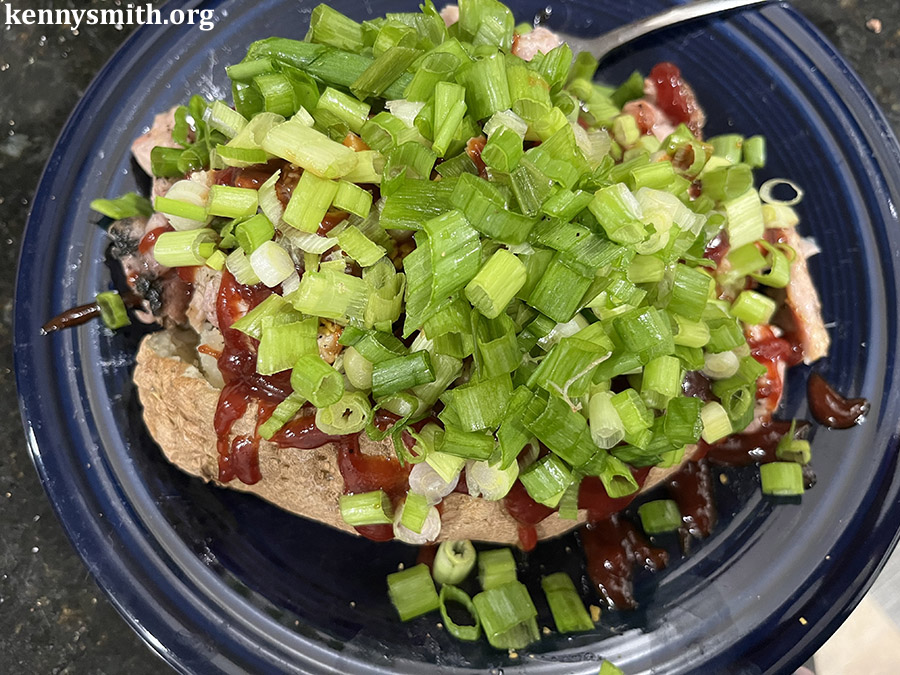
Note to self: four scallions is a lot of scallions.
They’re presented here for maximum comedic effect, but no matter how I pile and photograph them, that’s a lot of scallions. I was able to move things while cutting and eating so it didn’t seem like I was having a potato with my scallion plate. But there was a bite or two, right at the end, where it seemed no better than just pulling a handful right of the ground and eating it in your garden.
If you grow scallions I may come by and do just that. Not tonight. I’m good for tonight. But in the future.