


We go back once again to 1936 to see some of the people from the yearbook of my alma mater. (Part one is here. Part two is here. Part three is here. Part four is right here.) This is hardly a complete look, but there’s a lot to see from 1936.

Today, Auburn fields 21 varsity teams in 15 sports and competes in the Southeastern Conference. If I’ve counted right, they can boast 102 conference champions over the years, with their most recent titles captured by the women’s tennis team. They count 31 national championships ranging from football to swimming and diving to equestrian to track and field to golf. Sports are a lot different now, of course.
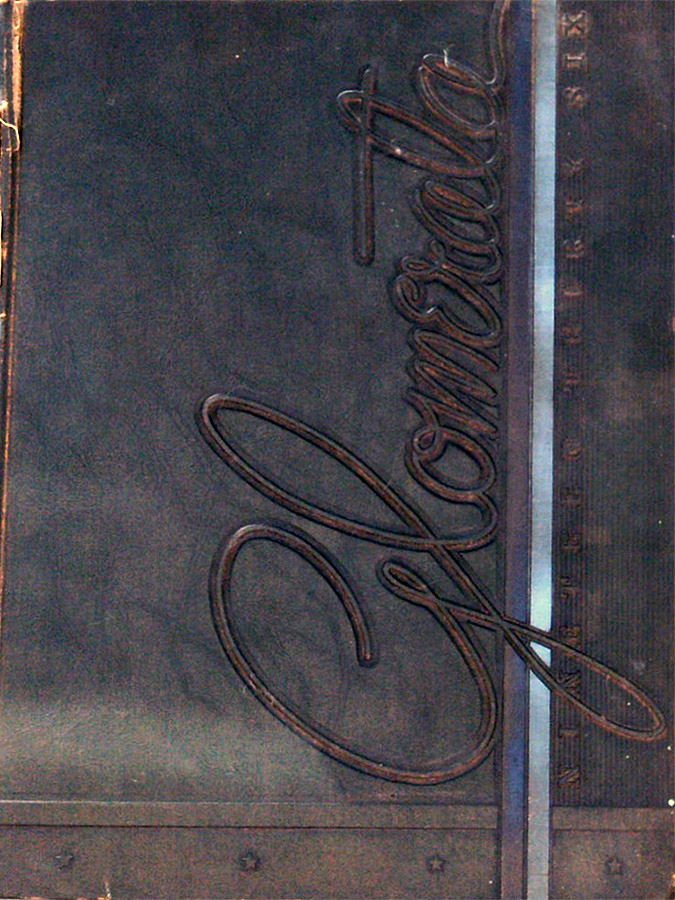
But, first, here’s the cover.
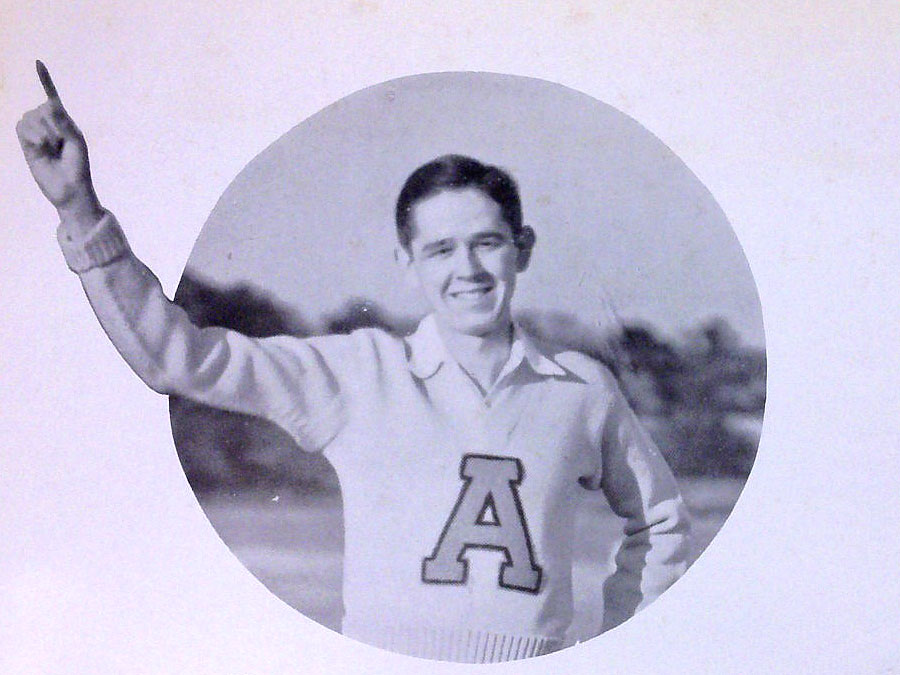
Here’s the head cheer leader, Bill McTyeire. He was studying mechanical engineering. He married Katherine, served as an engineer in World War II in Germany and the PTO. He spent much of his career after that at the Birmingham Ornamental Iron Company, where he established Meadowcraft, a furniture division that would, one-day, be one of the successful casual furniture makers in the country. He served as a general chairman of the United Way, was very active in many of the prominent civic and social organizations in his hometown. (I’d list them, but it is excessive.) He was also on the board of some of the largest business concerns in the state. He died, at 90, in 2003. He was survived by his wife of 61 years. They had five children and eight grand-children.
I include this just because it still feels creative all these years later. They wrote a cutline to accompany it.
The fact that the Auburn Spirit has continued unceasingly throughout the year may be contributed to the Cheer Leaders. This year Auburn has been represented by four outstanding Cheer Leaders in Bill McTyeire, Bill Lee, Jack Adams, and Alfred O’Donnell. It is fitting that we express our appreciation for the untiring efforts of these four.
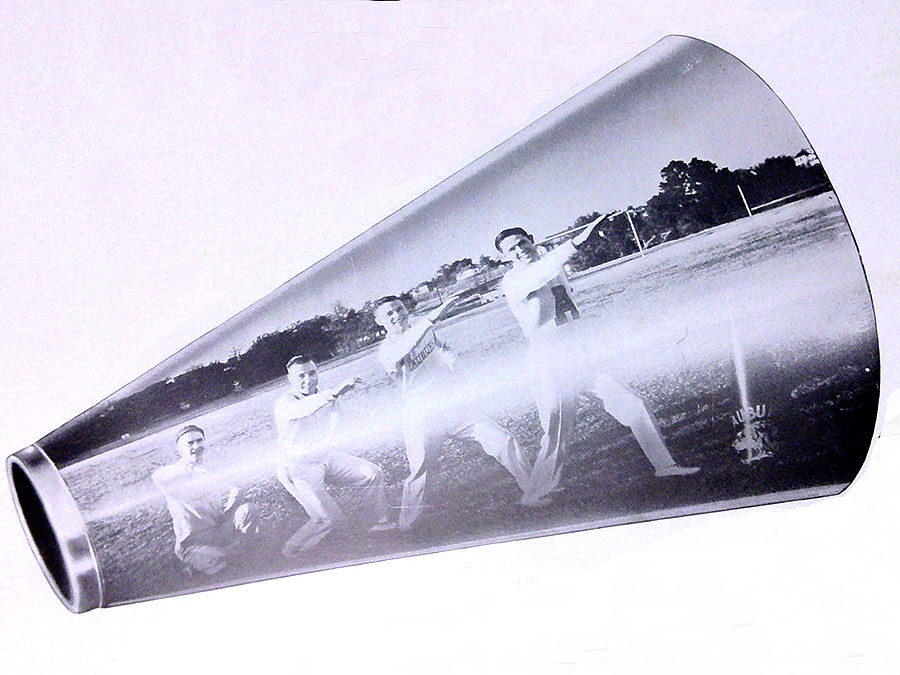
Bill Lee was a pharmacy student, a junior from a tiny town in Georgia. He went into the army after he graduated, then went home to Newnan and joined the family pharmacy. He was the second generation in their two stores. His son would also go to Auburn, study pharmacy, and return home to join the family business. It’s still in operation today, under new ownership. Jack Adams was a sophomore business major. He became a B-25 pilot, a major in the 823rd bomber squadron of the 38th Bomber Group. In March of 1945 he ditched his plane just outside of Formosa, the modern Taiwan. He and one of his crew members died. Three others survived. His body was never recovered. He left behind a wife in Pennsylvania. Alfred O’Donnell was a business student from a small town in northern Ohio. Alfie was a junior, he had two sons, one of them was the third to share the name, and also a daughter. He went home after the war, ran a paint and wallpaper concern with his brothers. He ran for, and won, a city council seat. He ran for mayor, but was not elected. He also ran for the state legislature. He died in 1984, survived by his wife, and is buried right there in his Ohio hometown.
Jack Meagher was the head football coach. He’d been on campus for two years when this book came out. He played his college ball at Notre Dame, served with the Marines in France during World War I and had a brief dalliance with professional football in the NFL’s first year, back in 1920.
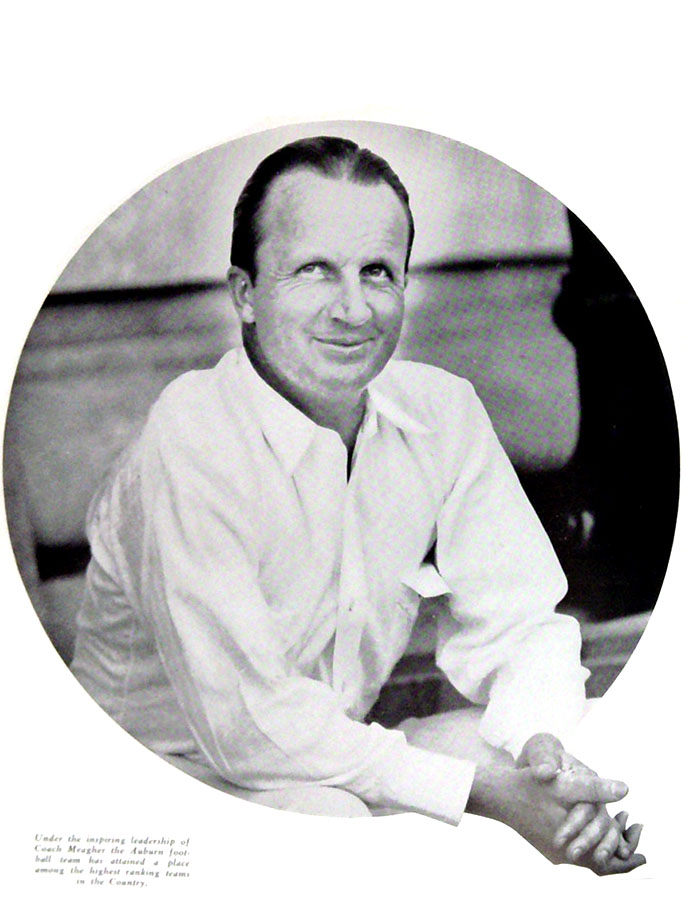
Notice how someone who was working on this yearbook has figured out darkroom dodge and burning techniques.
He coached at a small Catholic school in Texas, and then spent five years running things at Rice. He led Auburn to their first two bowl games, the Bacardi Bowl in 1936 and the Orange Bowl in 1937. He’s a critical part of the university’s sports history because he helped get the stadium built on campus (seating capacity 7,500). He was tired of traveling. In his first six years on the plains, he played only three home games.
The great Wilbur Hutsell was born in Missouri, attended Mizzou and was a quarter-miler there. He coached track at his alma mater, and then became Auburn’s first track and field coach in 1921. He stayed on until he retired, in 1963. In between, he won three conference titles, won 140 dual meets, losing only 25. He coached five Olympians: Snitz Snider, Percy Beard, Whitey Overton, and Jim Dillon. He also coached three NCAA champions, five AAU champions, and saw five of his high hurdlers win national championships.
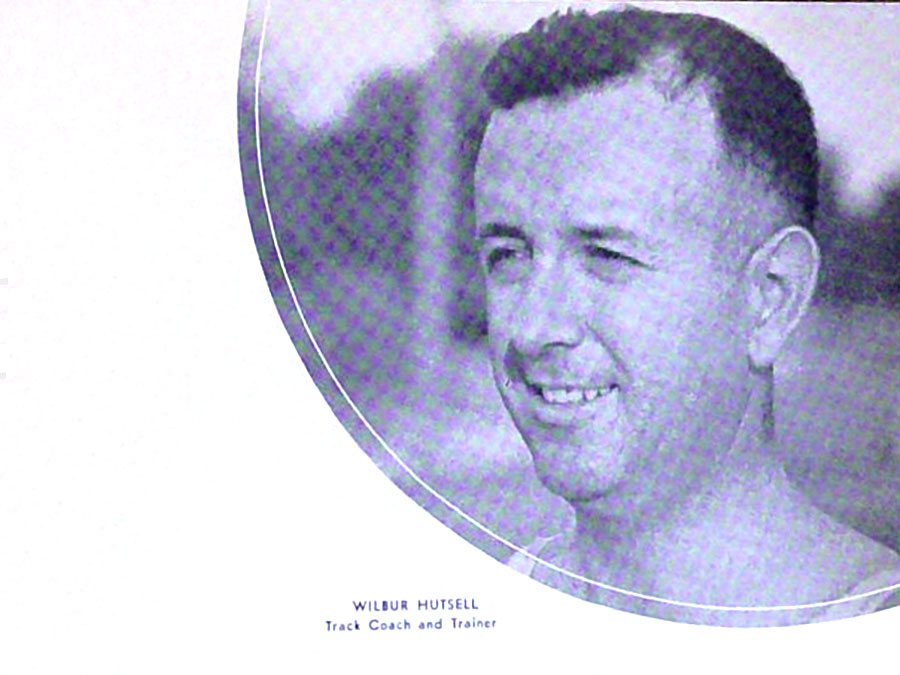
He also served as the trainer for the 1924 Olympic wrestling team and was an assistant track coach at the 1928 Olympic Games. He was the university’s athletic director, twice. Hutsell is honored in the Helms Track & Field Hall of Fame, the University of Missouri Hall of Fame, the Alabama Hall of Fame and the USA Track & Field Hall of Fame. The track on campus is named after him (and also the coach who succeeded him).
Here’s the freshman coach, the basketball coach and, eventually, the head man. Ralph “Shug” Jordan had just finished his third year as the freshman boss.
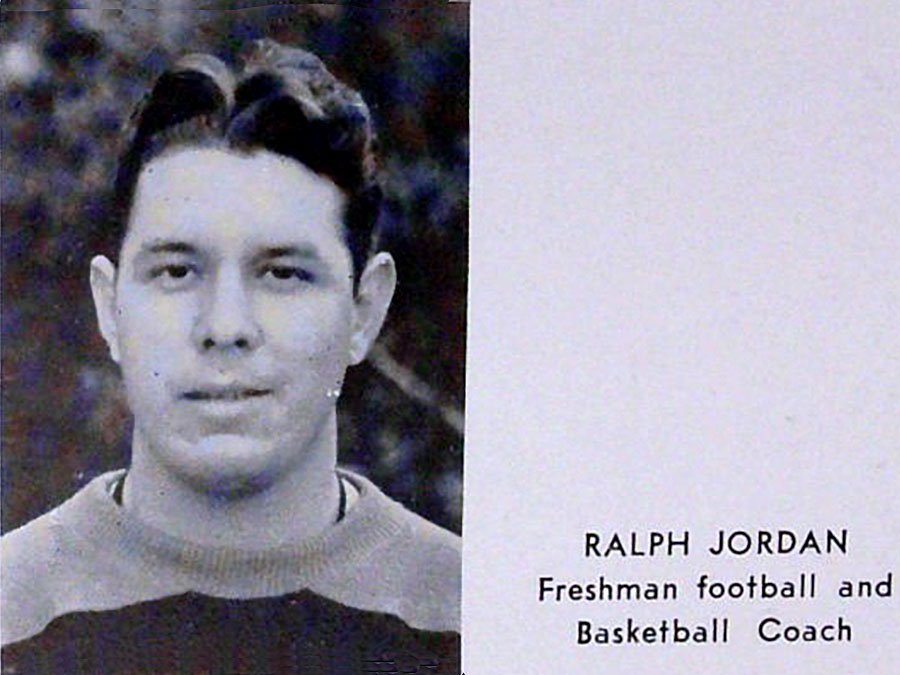
He would win his first of four SEC Coach of the Year award for the 1953 season. In 1957 he’d win a national championship. In his long career, which ended in 1975, Jordan went finished with a record of 176–83–6 in football, including a Heisman Trophy winner in the great Pat Sullivan. All of that overshadows his respectable basketball coaching career, where he amassed a 136–103 record.
He sat near the head of the good ol’ boy network, eventually coming to serve on the university’s board of trustees, in retirement. He helped expand the seating capacity of the stadium with his name on it to seat 72,000. He died of leukemia in 1980. Six of his former football players were his pallbearers.
Posthumously inducted into the National Football Foundation Hall of Fame in 1982, he is remembered as a coach today, but he was also a father of three, and a World War II veteran. Ralph Jordan saw action in North Africa and Sicily before being wounded in the shoulder and arm in Normandy as a part of the D-Day invasion. After recovering from his wounds, he was shipped to the Pacific theater, serving at Okinawa.
A 1950s Auburn grad wrote a great piece on him.
Dell Morgan was born John O’Dell Morgan. looks like he’s seen some things.
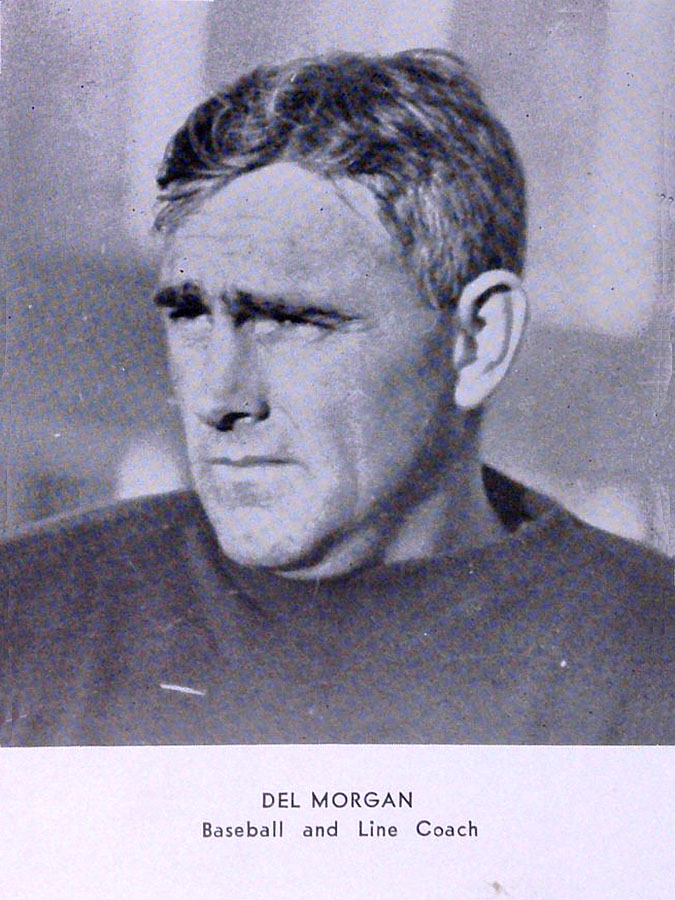
He coached at Auburn from 1934 to 1939. The The Texas boy went home in 1940, where he’d work at Rice, coach Texas Tech for a decade. There’s a little gap in his coaching record, but he found himself back at Rice coaching baseball from 1953 to 1961. Dell Morgan died in a car accident, in Texas, in 1962. He’d spent the day watching his Rice players practice, and was headed out to go fishing with a buddy when another car crossed the center line. Four people were killed.
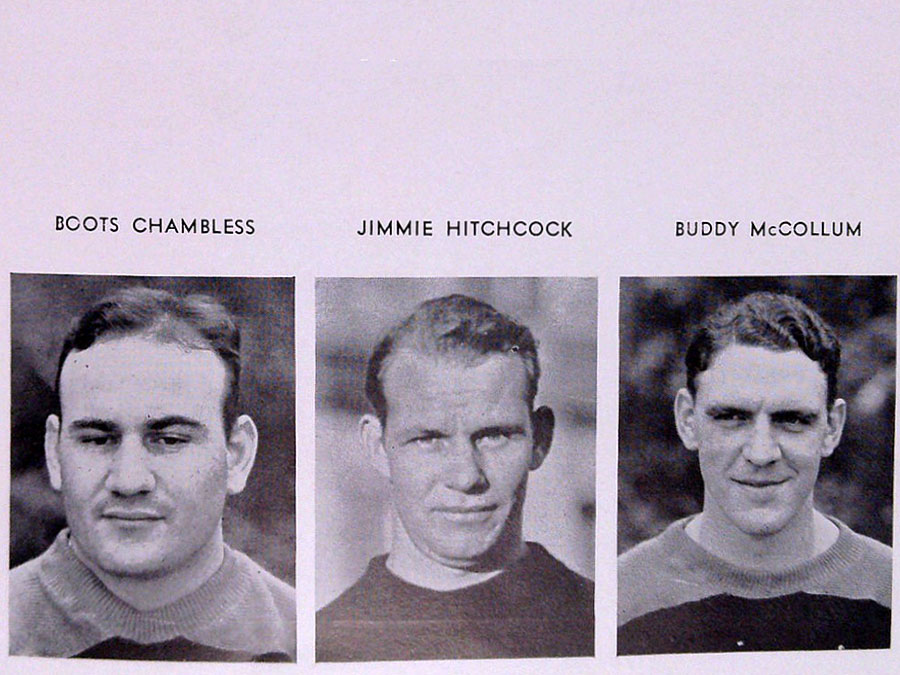
Boots Chambless was given the name William, and I’d love to know where Boots came from. He was one of those former players that became a coach. For the rest of his life he would be remembered as one of the best players in school history. After service during World War II he coached at LSU. He became an insurance man, and then a teacher in Florida. He died in 1977, survived by his wife, who died in 2004, and a son, William Jr., who became an All-American at Miami, earned a PhD in chemistry and traveled the world for work.
Jim Hitchcock is another of the Auburn greats. He was inducted into the National Football Foundation’s College Football Hall of Fame in 1954.
Jim Hitchcock became Auburn’s first All-America player following a brilliant senior season in 1932. A triple-threat halfback, Hitchcock led the Southern Conference in scoring that year, handled the Tiger punting and tacked baseball All-America laurels onto his credits. In three varsity seasons, Jim compiled an incredible record as a punter, kicking 232 times without having a single punt blocked. During a 1932 game against Tulane, Hitchcock flashed his ball-carrying brilliance with a 60-yard touchdown return of an intercepted pass, followed quickly by a 63-yard TD run out of his punting formation. Tulane was demoralized and Hitchcock was racing toward one of the finest seasons the South had ever witnessed. That same season, after Auburn had defeated coach Wallace Wade’s Duke eleven, Wade commented: “I have never seen a finer all-around back play against one of my teams.” The 5-11, 172-pound native of Inverness, Alabama, turned to a professional baseball career for seven seasons after his graduation, coaching the Tiger backfield during the off-season. Hitchcock spent 39 months as an athletic instructor in the Naval Aviation Physical Training Programs during World War II and was elected to the Alabama Public Service Commission for several terms after the war.
The Phantom of Union Springs was listed as 5-11 and 165 pounds in college. He was a letterman in three sports in college, and had a cup of coffee in Major League Baseball. (For more, see the Society for American Baseball Research.) He is in the Alabama Sports Hall of Fame, served on the Board of Trustees at the university. The baseball field on campus is named after him and his younger brother. For a brief time he was the head coach of the baseball team. He also served in the Navy during the war, and on the state Public Service Commission after that, until his death in 1959 at just 47 years old. He was survived by his wife and two sons.
Buddy McCollum played for Auburn earlier in the decade as a lineman. He coached the team he once played for until he was called to active duty. After the war, serving as a lieutenant colonel, he caught on as the head football coach at Livingston State (the modern University of West Alabama) and then Troy State leading them to their first bowl game in 1948. He died in Georgia in 1978, survived by his wife and a son, which they named Buddy Jr. That guy was a defensive line stud at Duke, and served as a career member of the Air Force.
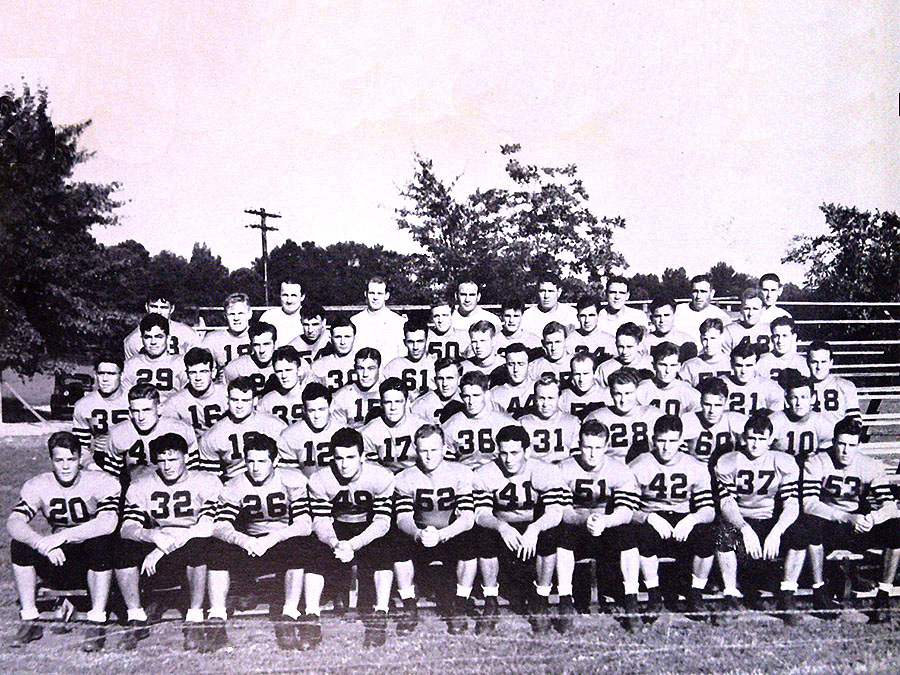
Here’s the whole 1935 football team. They went 8-2 overall, 5-2 in conference, losing two close games against Tennessee and LSU. Millard Morris, who we met in the last installment was the team captain. This next year, though, the 1936 season, Meagher would get his Tigers into their first bowl game, the Bacardi Bowl, in Havana.
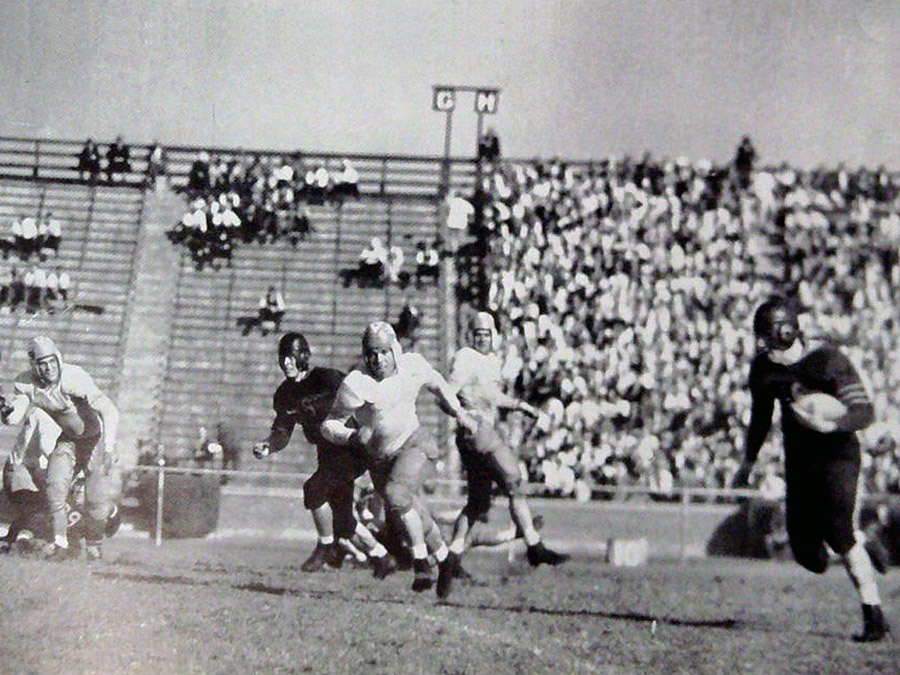
The action photos were beginning to improve just a bit, though a few, like this one, were printed backward. I flipped it to the proper orientation for your enjoyment. The good guys are in the dark uniforms. I think.
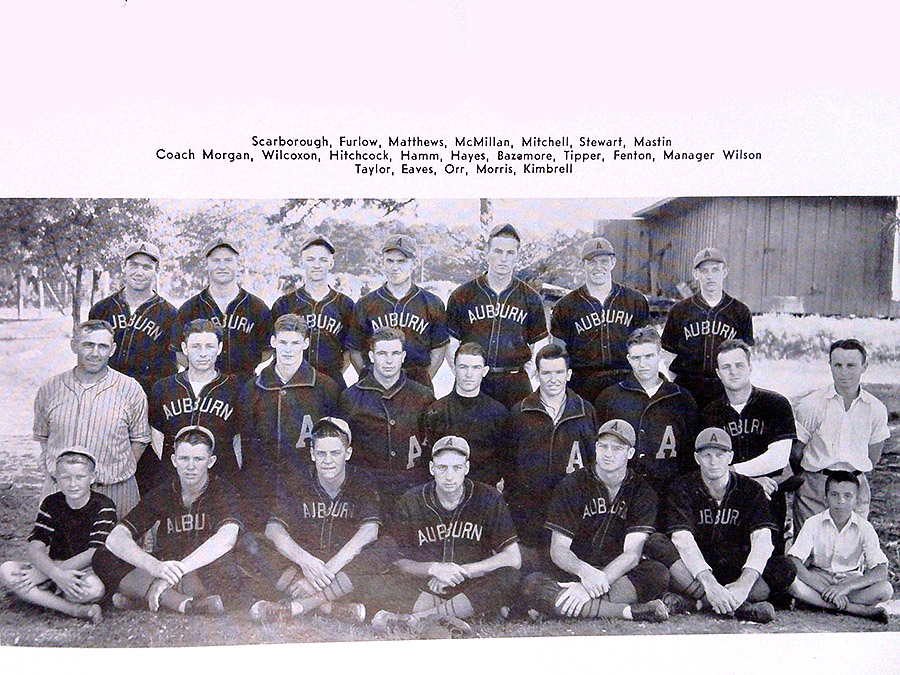
The baseball team was sporting some classic wool uniforms. They went 9-12 over all, and an even .500 in the conference. They also played World Series champion St. Louis in an exhibition.
This wiry looking fellow is team captain Gilbert McMillan, a chemical engineering student who looks like he means to send one right back to the pitcher.
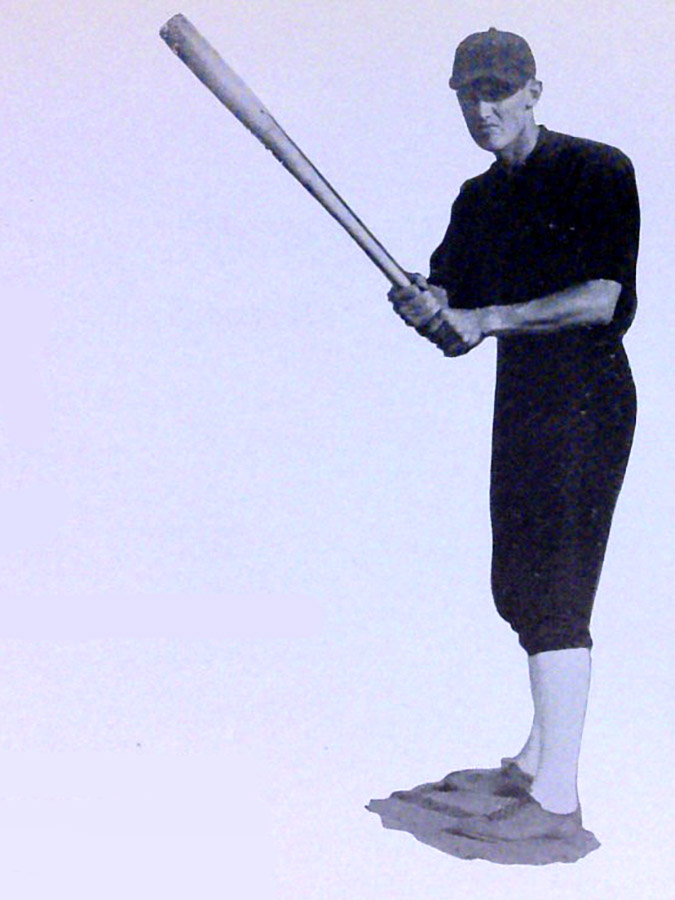
After school he worked for DuPont for 33 years, helping to start nuclear reactors at the Savannah River Site in South Carolina. He’d also worked on the Manhattan Project. He was a tree farmer, a city councilman, and then an ultra-conservative state senator in South Carolina for decade. He died in 1998, aged 83. His wife survived him by a decade. They’d had two daughters. And when his wife passed she could count four grand children and five great-grandchildren.
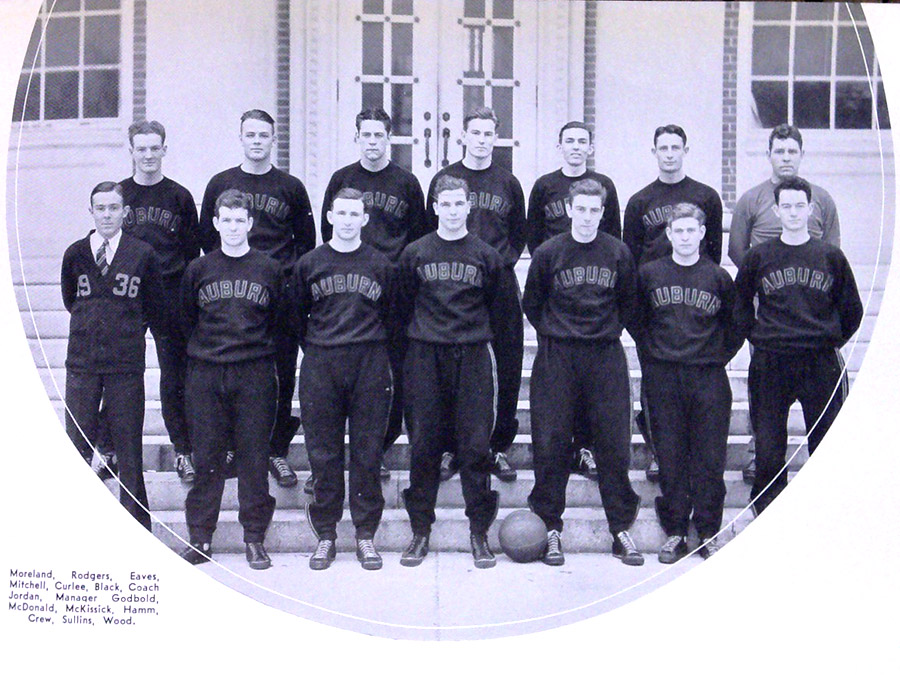
Here’s the basketball team, which was coached by Shug Jordan, standing on the back right. He was rebuilding the team. They’d gone 10-33 in the last three years. But this season, they were turning it around. They went 10-7 this year and had winning seasons for the next four years.
Bruce McGehee, was a junior studying business and jumping high on the track team. He would have graduated in 1937 or so. He also earned a master’s degree. He served in the Pacific during the war, came home and got married in 1947 and honeymooned in Savannah. He was teaching economics at Auburn at the time. He stayed on the faculty from 1946-1949.
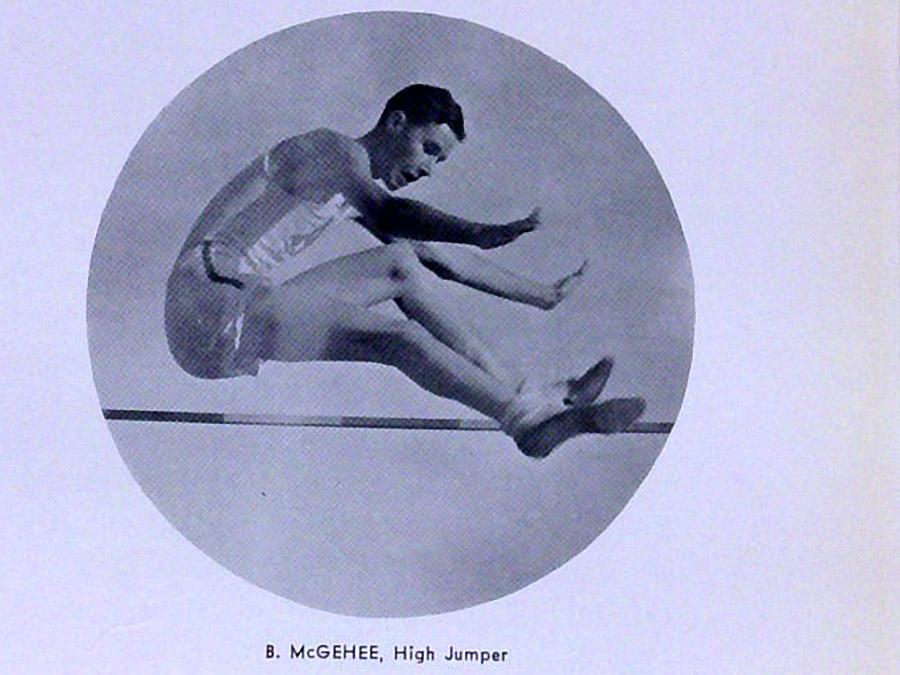
At some point they moved to Tennessee, had at least one child, who they also sent to Auburn, a son, and four grandchildren. He retired from TVA. He passed away in 1988.
If you want really arcane sports trivia, it was Bruce’s brother, Coleman, scored the first touchdown in what was inaugurated as Auburn Stadium, and has of course since been expanded and named Jordan-Hare Stadium. This little factoid is so important to the McGehee family that it is also listed in his son’s 2013 obituary. Coleman flew a bomber during the war, came home and opened a printing business. Among other things, he was responsible for printing the famous interlocking AU for the football helmets. (That was a design compromise, but that’s a story for a different day.)
Their father, Bruce McGehee Sr. was a prominent minister who died at just 55. Everywhere that man went in his life he filled an important local role. Their mother, Frances, died in 1974. She’d lived in Auburn for 35 years when she passed, at 89.
Bobby Blake has the best javelin form of the three, and so that’s who we are looking up.
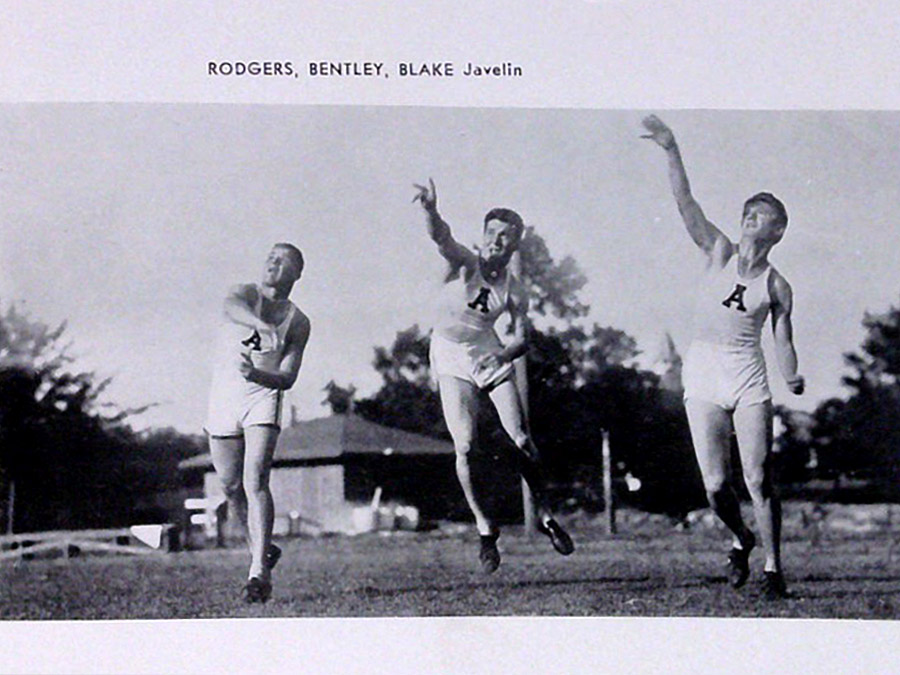
He was a senior, a local boy, studying science and literature. He, too, served in the war, but he came back to Auburn, where he woud live most of his life. In addition to hurling a pointed stick he also played in that first bowl game, the Bacardi Bowl, in Cuba. He married Jane Slack, Miss Auburn, who we’ve already met. He coached football a bit, and then went into banking, retiring in 1981. Jane died in 1997, and so he moved back home from their retirement place in Florida. They had five children, seven grandchildren and six great-grandchildren when he died in 2001.
James Karam was from Arkansas. He was a sprinter, and also a running back on the football team.
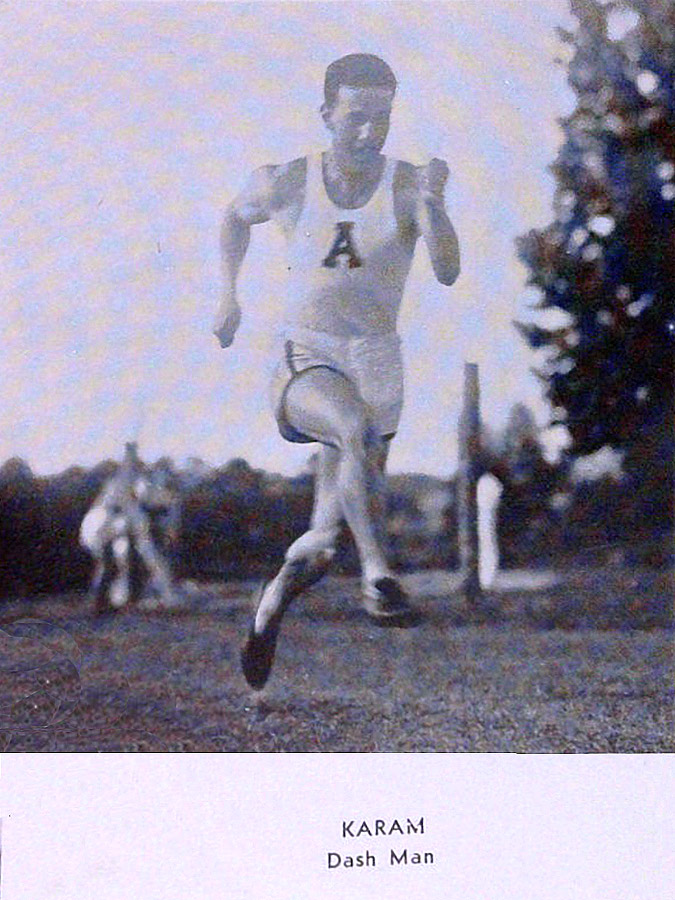
He got in a little bit of trouble trying to break up a union meeting. This was in 1937, when he’d just left school. That same year some people plotted to blow up his car. That had something to do with unions, too. The newspaper coverage of the courtroom testimony is not especially flattering. He’s accused of being part of a strong arm squad at Goodyear, who would intimidate and beat up union workers. (He was in a different union, it seems.)
Karam returned to Arkansas a few years later, became a labor leader and built what they called a vigilance committee. By ’46 he was saying his group was like the Klan, but without the masks. He’d become a successful junior college football coach, stepping away from the sport in 1949 to run a men’s clothing store. He was, soon, a prominent business man, incredibly active in the American Legion, and tied to a lot of civil rights incidents across several states. He hung out with the segregationist governor of Arkansas, Orval Faubus, and Paul Bryant. (I’ll let you decide which one of those he bragged on most.) He said he had a religious experience in April of 1959, after which he became a big speaker on the Southern Baptist circuit. It looks like he might have changed his ways, at least somewhat. There’s always a bit of doublespeak in the rhetoric of southern newspapers of the time. Let’s take it as a positive, though. He died before his wife. When she passed, in 2019, she left $2.7 million to the University of Arkansas for Medical Sciences.
Mostly, I think we should bring back the term “dash man.”
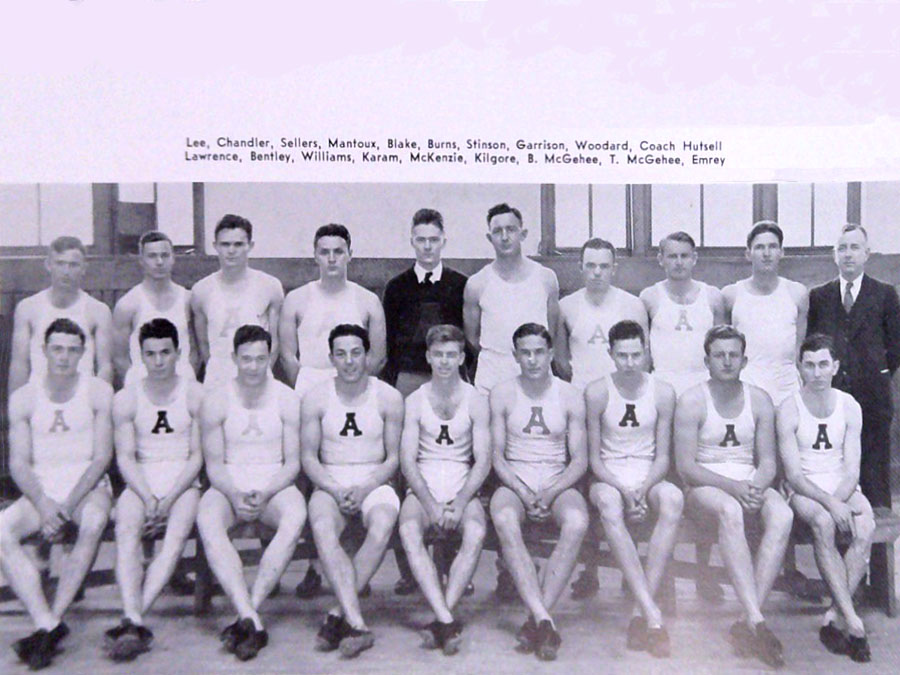
Here’s a team back for track and field. I wonder why the A looks different on the shirts.
Speaking of sports clothing, check out the swim team’s get up.
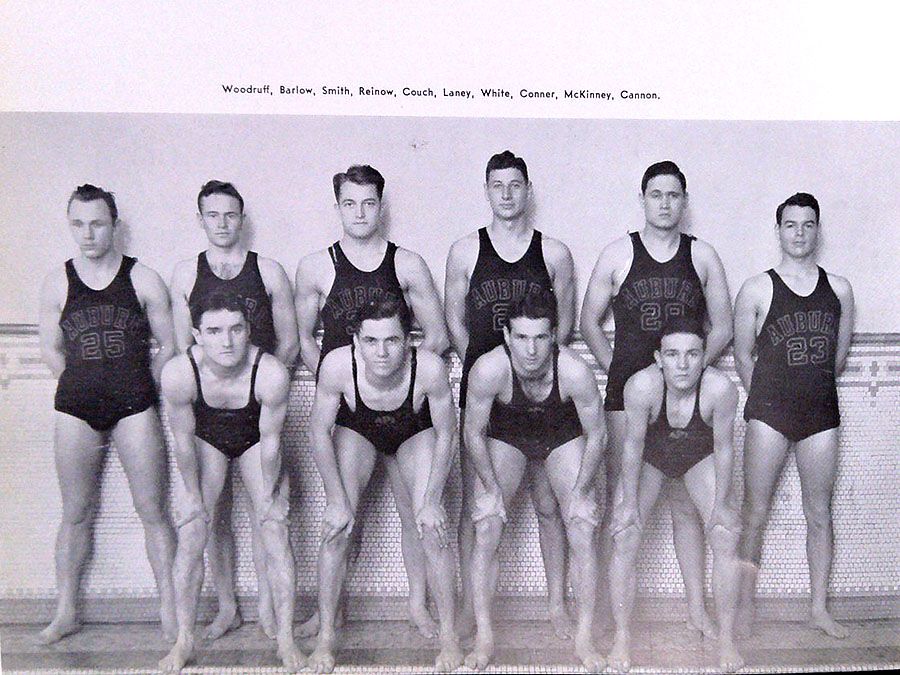
This team was self-coached. One of the co-coaches and captains was Gordon McKinney. He’s not easy to track down. The other was Mims Howard Conner. Some 30 years from now his family home would be a feature photo in a local newspaper because they cooled and heated it the modern, all-electric way. This was still a newsworthy thing in 1965.
We are, of course, a long way from that. Back here in 1936, one of the talks of campus was the polo team. The sport of kings galloped onto campus in 1932, via the ROTC. The War Department thought polo promoted :skill in horsemanship and daring.” It stayed on campus until 1939. Tanks and war were presumably the reasons it disap”eared, despite being a fan favorite.
Tank polo never took off, for reasons unknown.
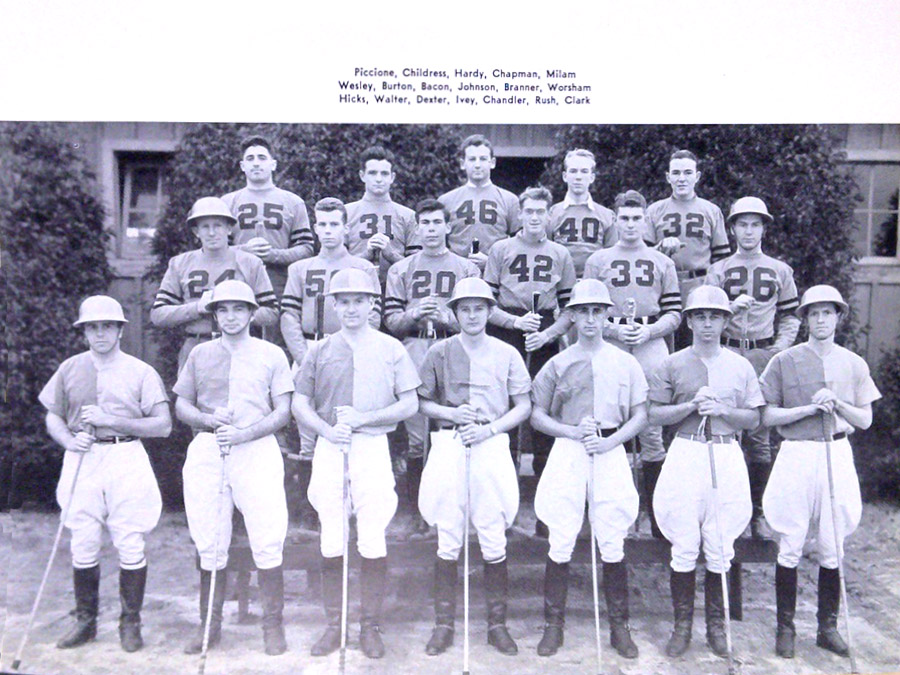
They had one of the few polo teams on southern college campuses, so most of their competitions were with nearby military installations, or universities far away. You can read more about the era of horsies and mallets right here.
All of this will wind up in the Glomerata section (eventually). You can see others, here. Or maybe you’d like to click through to see all the covers. The university hosts their collection here.

