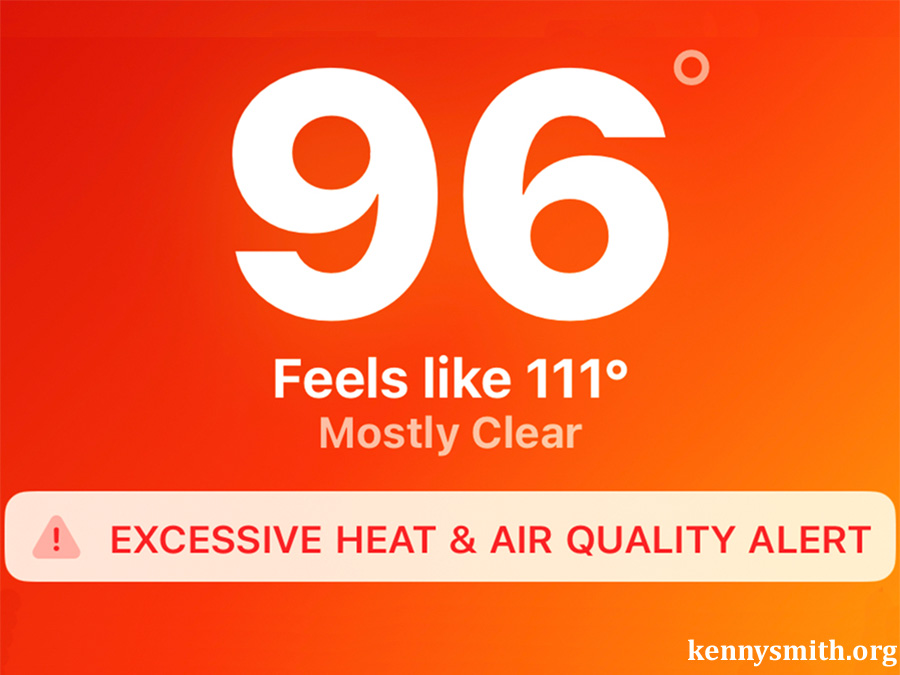
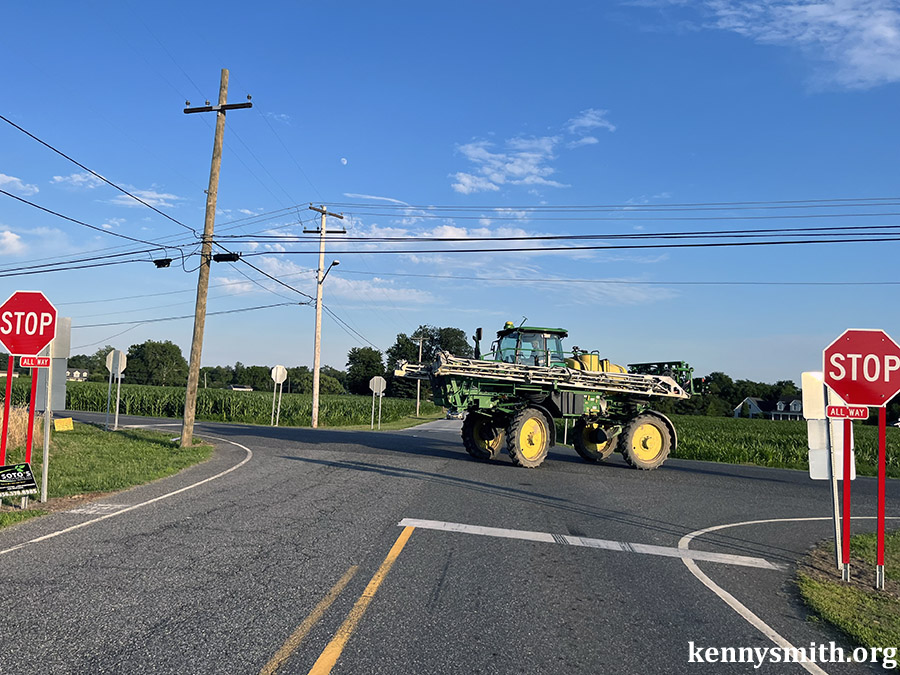
However hot it was yesterday, and the heat index reached 110 degrees, it felt much the same today. The heat index reached 108 today. I am of the opinion that anything over 106 is just pain, anyway. The rest is semantics.

Except for this, those poor electricians were back at it today, running wires and cables and connections this way and that, all so that we might one day have a generator operational. They sweated and melted and crusted over and sweated again. They had to turn the power off today, which they did one minute after their projected time. They predicted we would be without power for four or five hours. And after five-some hours they restored power. We stayed in the house, stayed still and read. For most of the time it was fine; the ambient temperature inside served us well as the sun baked us. I was still handing out water, checking on my guys, trying to stay positive and encouraging them to come inside from time to time. They never really would, but they did enjoy working in the basement the best.
We hired these guys, and their company needs to make money and they need to make money, and we’d booked this however far in advance, but sending these fellows out this week, during another intense heatwave, seemed rude.
I poured them water, scooped them ice, offered every little solution I could think of. When it felt like inside of the house was getting too warm I thought to go check in with them again for the fourth or fifth time. When I came back in, the house, which had felt warm a few moments ago, felt absolutely delightful. And that, friends, is relativity.
Still a third man, a gas man, came to the house this afternoon, too. His job was to run a bit of gas line from the new gas meter to the new generator. I think we’ve exhausted the electricians with the conditions and the demands of the job. They will come back again in a week or so to finish up the work. And then the final connections will be made. And then some municipal inspections of their work must be done. And then we will have a generator. Wouldn’t it be hilarious if we lost power sometime between now and then?
Anyway, near the end of the month, sometime in the very early part of next month, we should be set. One less thing to worry about, which we don’t worry about.
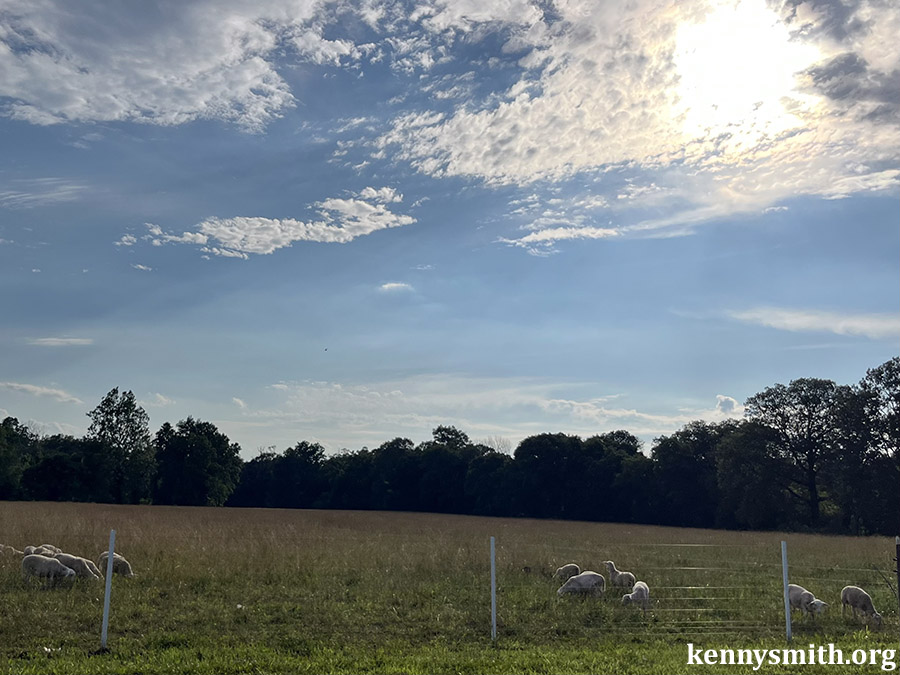
But, you know, different people have told us how many of our neighbors have gotten generators around here. Apparently it’s been a big acquisition since 2020. Indeed, as we stood outside looking at the latest work today you could see two of them sitting patiently next to neighboring houses. And, soon, we’ll be set up just so, too.
May we never need them. And may those guys get re-hydrated this evening.

Speaking of books, I finished Carry Me Home. I’ve been putting my observations on Bluesky, for some reason. Here’s the first batch. And so here’s most of the rest of them. I have one or two more that I’ll put here tomorrow.
That footnote, though.
— Kenny Smith (@kennysmith.org) July 8, 2026 at 12:20 PM
One of the things that people told themselves, and one of the things McWhorter repeats now and again, is that the real problem was one of peer pressure. People didn’t want to be ostracized from their class and people because they treated others with kindness or decency or fairness.
Which …
— Kenny Smith (@kennysmith.org) July 8, 2026 at 12:20 PM
We turn, now, to the Children’s Crusade.
— Kenny Smith (@kennysmith.org) July 9, 2026 at 12:43 PM
We should remember that a 12-year-old in this story is 75 years old today.
Living memory.
— Kenny Smith (@kennysmith.org) July 9, 2026 at 12:45 PM
Beyond even the nuance in this incredible well-told story, the occasional human insight, the glimmers of social realization, things that read like an actual spiritual conversion, is fascinating. It doesn’t happen to everyone, and certainly not at the same times, but there are these moments …
— Kenny Smith (@kennysmith.org) July 9, 2026 at 12:50 PM
Minimal experience, but quick to violence, loved confrontation, so, of course, qualified. An “addled racist” said NYTimes’ Howell Raines.
Crying scapegoat, Lingo ran for sheriff of Jefferson County (where much of this story is focused). He lost. He died of “a heart ailment” in 1969.
— Kenny Smith (@kennysmith.org) July 10, 2026 at 1:22 PM
These Wallace anecdotes exist within a few dozen pages of one another. In retrospect they can read almost as an explanation, an excuse, “We’d no idea, ” a “It’s out of our hands,” which is common. But that’s the compression of time. People understood — for good, bad, or worse — what he was.
— Kenny Smith (@kennysmith.org) July 14, 2026 at 12:23 PM
After the bombing of the Sixteenth Street Baptist Church that killed four little girls, Chuck Morgan gave a speech so moving, so powerful it got national attention, and ultimately pushed him out of town, to Atlanta.
digital.archives.alabama.gov/digital/coll…
— Kenny Smith (@kennysmith.org) July 14, 2026 at 12:23 PM
The period in which my peer group grew up … and why so much of this book is a revelation…
— Kenny Smith (@kennysmith.org) July 15, 2026 at 2:34 PM
Quick aside, the Civil Rights Institute is a fantastic visit.
The book ends with this, “America’s city in a valley, but out of the depths rose a city upon a hill. Beauty from destruction. There is magic in that."
But there are multiple epilogues, because of timing and cosmic inquiry.
— Kenny Smith (@kennysmith.org) July 15, 2026 at 2:37 PM
After “Carry Me Home” was published came a new round of trials. I covered the Blanton trial. (I don’t think I used the “closure” framing.)
Asides: Rudolph, not involved, but in common, was captured, tried and sentenced. US attorney Doug Jones later became senator and is now running for governor.
— Kenny Smith (@kennysmith.org) July 15, 2026 at 2:46 PM
There are, functionally, four epilogues in this book. Some of them necessary due to timing, others due to contemporaneous events that have echos of the past. McWhorter spent 20 years putting this together and so it doesn’t seem indulgent at all. Here is her summary of the book’s thesis.
— Kenny Smith (@kennysmith.org) July 16, 2026 at 12:43 PM
I have one or two more that I’ll embed in this space tomorrow. And, of course, we’re on to the next book, which is also a great read indeed.