


Let’s go back to campus, specifically, photos from 90 years in the past. Today, we’re checking out the headshots of the women who made up what this old yearbook calls the Features section. The Glomerata is from my alma mater, and now we’ll try to figure out who these 1936 students would become. (Part one is here. Part two is here. Part three is here. Part four is right here. Part five is here. Part six is here.)

Fashions chance, of course. Notions of beauty do as well. But what we see is that our modern ideals begin to emerge somewhere between the 1920s and 1930s. While the wardrobe here doesn’t stand out, let’s assume that’s a studio standard or a editorial/sartorial choice, the young people certainly do.
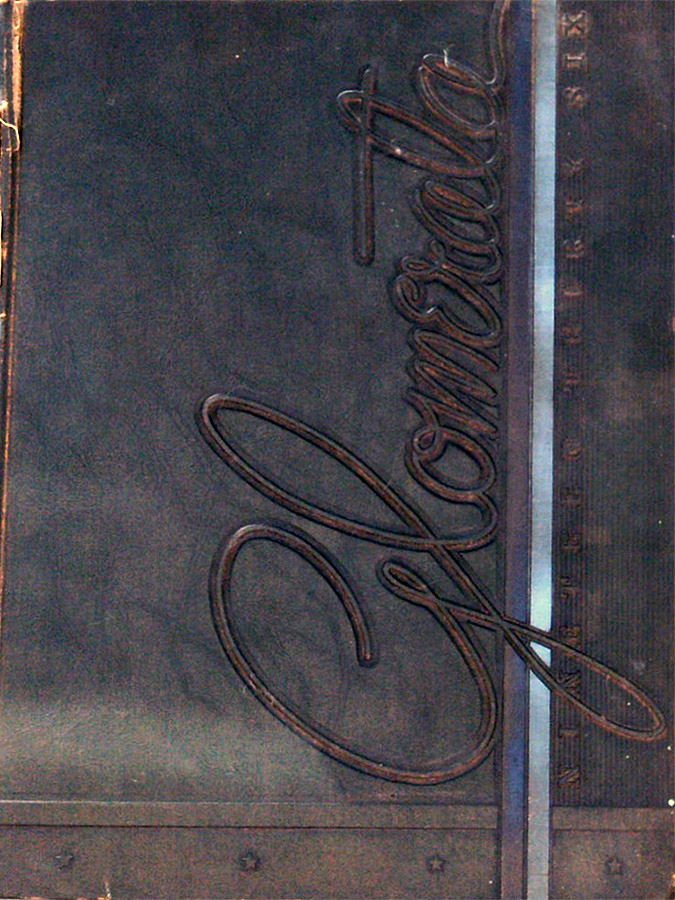
Here’s the cover of the 1936 Glom.
This is Jane Slack, who we’ve already met. She was Miss Auburn, a pageant vote contest that doesn’t mean much off campus, but nevertheless sits prominently on the school calendar. It got a few mentions for her in newspapers, all using a contributed headshot. Not this photo, though.
She was studying English. In 1937 she married her college sweetheart, Bobbie Blake another big shot on campus, who we have also met. They’d been married for 60 years when she died. They had five children, seven grandchildren and six great-grandchildren when she passed. That she was Miss Auburn is in the second sentence of her obituary. They’d retired to Florida, where she died. While she was born, and buried, in Birmingham, the memorial service was held in her college town. One of her children lived there, and another close by.
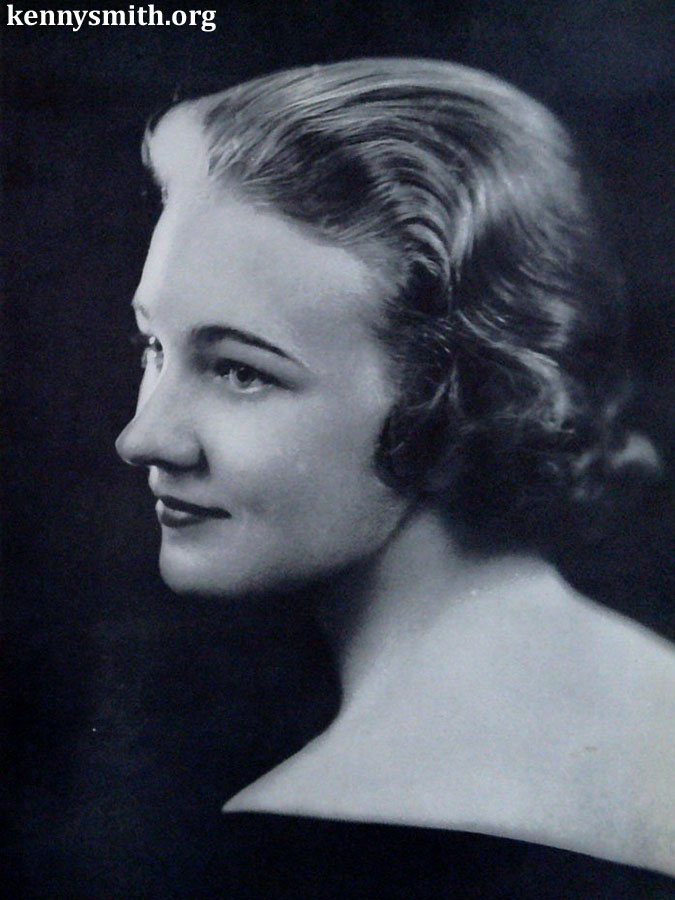
You wonder if she knew when she posed for this photo, what would be ahead of her, and how this town would have such a hold on her.
This is Miss Mary Hall Van Pelt. She was from Montgomery. She was an education major. She was an education major at the University of Alabama. She’s in this yearbook, from the rival school, because she had a situationship with a prominent Auburn student. It didn’t last.
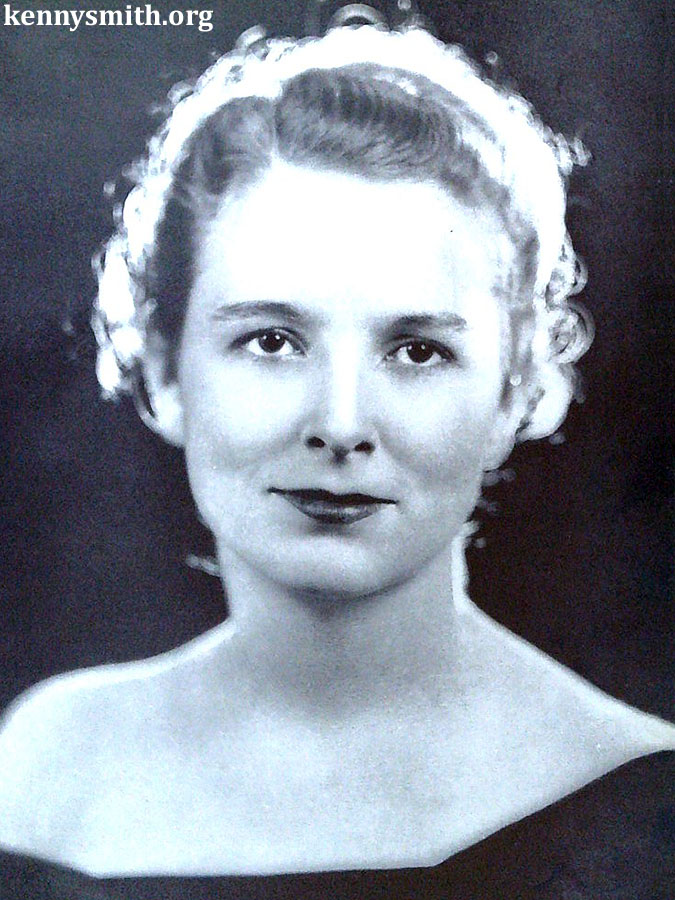
At Auburn, having already graduated from college, Van Pelt was named the queen of the Senior Honor Societies ball. She was used to the high profile things. She’d been named Miss Alabama one year. She was also tapped as honorary cadet colonel of the ROTC unit. You got a uniform as the honorary cadet colonel, and she looked so sharp in the promotional headshot they ran the photo in newspapers in Texas and Illinois. There’s a mention of her in a North Carolina newspaper, where she appeared in some sort of historical theatrical festival event. She was pronounced “the most beautiful in Alabama.”
Robert M. Lee, of New Hampshire, must have thought so. He’d graduated from West Point in 1931 and was an Army Air Corps captain stationed at Fort Knox when the couple married in 1940. He had a successful career in the service, finding himself in France in 1944, and getting his first star in 1945. He was on the fast track by then, getting some plumb assignments and becoming a major general in just two more years. After stints in Virginia, D.C., and elsewhere, they went back to Europe, where he commanded the Twelfth Air Force, which was at that time the largest tactical air force in Allied Europe. In 1958 he became a lieutenant general, and was named chief of staff of the UN Command and US Forces, Korea. Later, he supervised the construction of NORAD’s command in Colorado. He got us into space surveillance. He became a full general in 1963 and went back to Europe for another high profile role. He retired in Paris in 1966, with a chest full of medals and 9,000 hours of flying time. Mary was there for all of that, but she died in 1973. The couple had three sons (including one that went to the Air Force Academy. She was laid to rest in Colorado.
Miss Jean Beeland was a multi-time pageant queen from Greenville, in south Alabama. That’d get you in a lot of newspapers around the region in the 1930s. But then, she attended spring dances at the university in 1934 and that made the paper, too. (Greenville is a small, sleepy place. Some 4,000 people lived there back then. She was the mayor’s daughter.) She would go to Millsaps, a small private college in Mississippi, and then Huntingdon College, a private Methodist college in nearby Montgomery. What her tie to Auburn is escapes me. Her hometown paper notes this photo’s inclusion in The Glom and tells us she is most popular at Auburn, and that she often visits the loveliest village. Must have been been a reason, right?
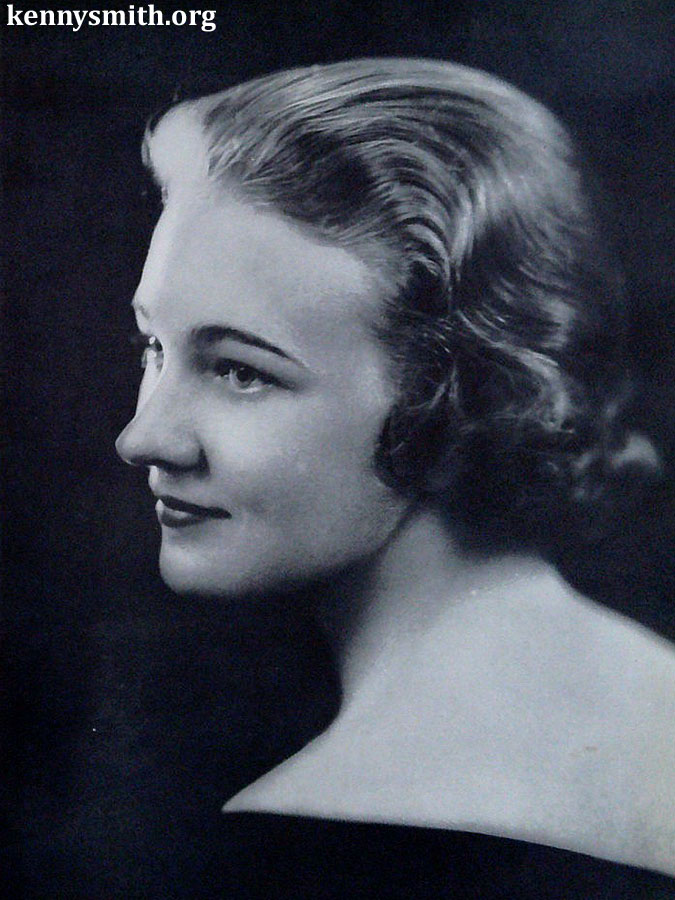
The next year she was enrolled at Alabama. One wonders where she found the time to study. Soon after she was included as a feature in their yearbook, The Corolla. Her hometown rag, The Advocate, reckons she was probably the first to be in both. By 1940, all three of the Beeland girls had become pageant winners, and you’re kidding yourself if you don’t think that was important.
She would marry Frank Kenneth Noojin in a small ceremony in 1939. He also attended Alabama, presumably they met there, but she was everyone as a young woman, so they could met anywhere. They settled in Huntsville, where he owned a few different small businesses and was an early suburban real estate and apartment developer. She worked in her later years at a magazine. That’s where she raised a family, and died in her early 50s, in 1970. She was survived by her husband and their three sons. When Kenneth died in 1993 they had eight grandchildren.
This is Miss Mary Wood, and I think she’s yet another person who didn’t actually study at Auburn. She doesn’t appear elsewhere in The Glom. And believe me when I tell you I tried for some time to find out more about her, but “Mary Wood” is a comically common name.
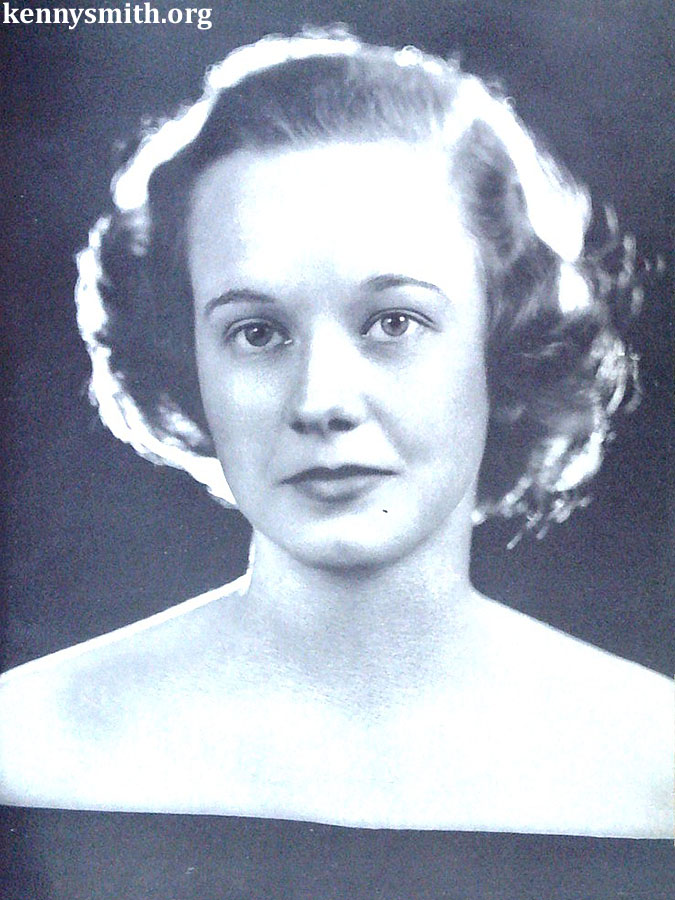
Which brings us, finally, to Miss Netty Murphey. She actually attended this university! She was a business student, a junior, from an east Tennessee town that is so small it didn’t even show up in the Census data until 1950. (No one could find it, prior.)
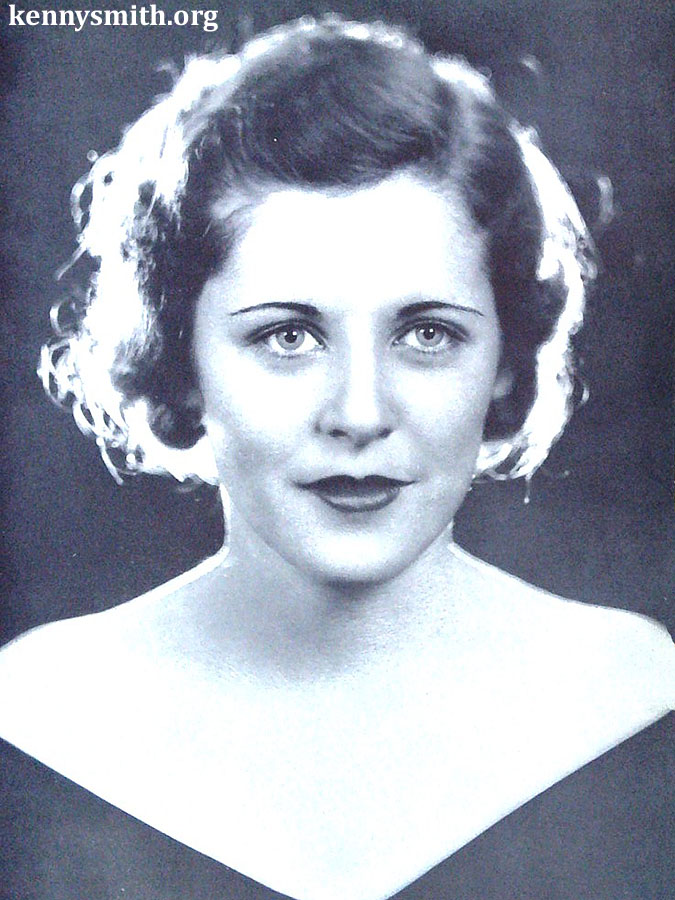
She would be named Miss Auburn in her senior year, and after she graduated she became a teacher in nearby Columbus, Georgia, worked a few other jobs in that area and devoted a lot of energy to her many volunteer projects — through her church, the Red Cross, a local library, Callaway Gardens, and more. She buried two husbands, had two sons, a granddaughter and four great-grandchildren when she died, at 90, in 2005. No 20-year-old can see all of that ahead of her, but you can tell, her eyes are looking confidently ahead.
All of this will wind up in the Glomerata section (eventually). You can see others, here. Or maybe you’d like to click through to see all the covers. The university hosts their collection here.

