


I’ve mentioned this and, if you’ve been reading along, you’ve seen some or all of these photos. But it seemed important to put them all in one place.
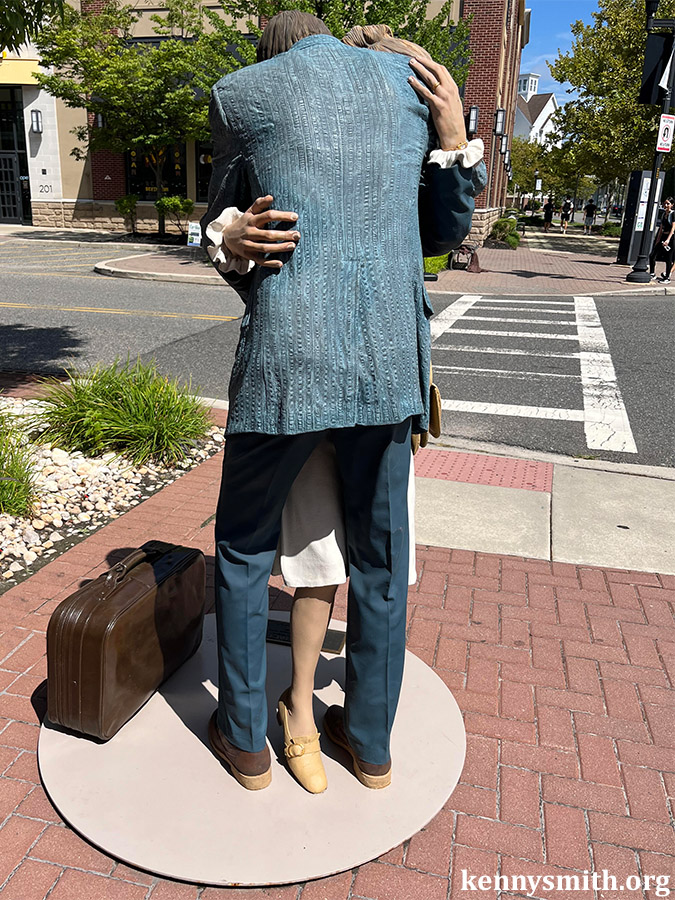
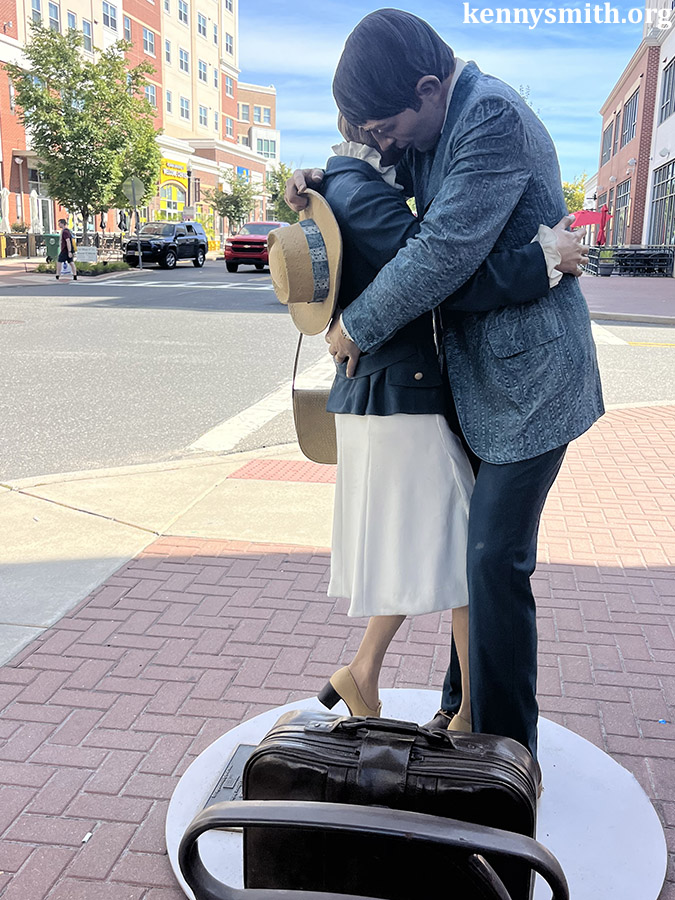
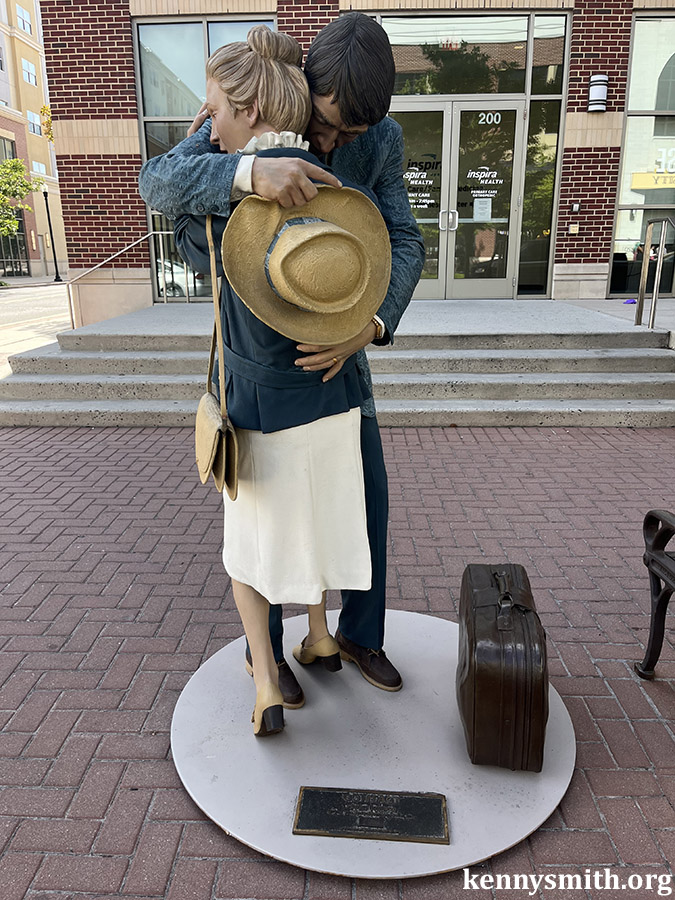
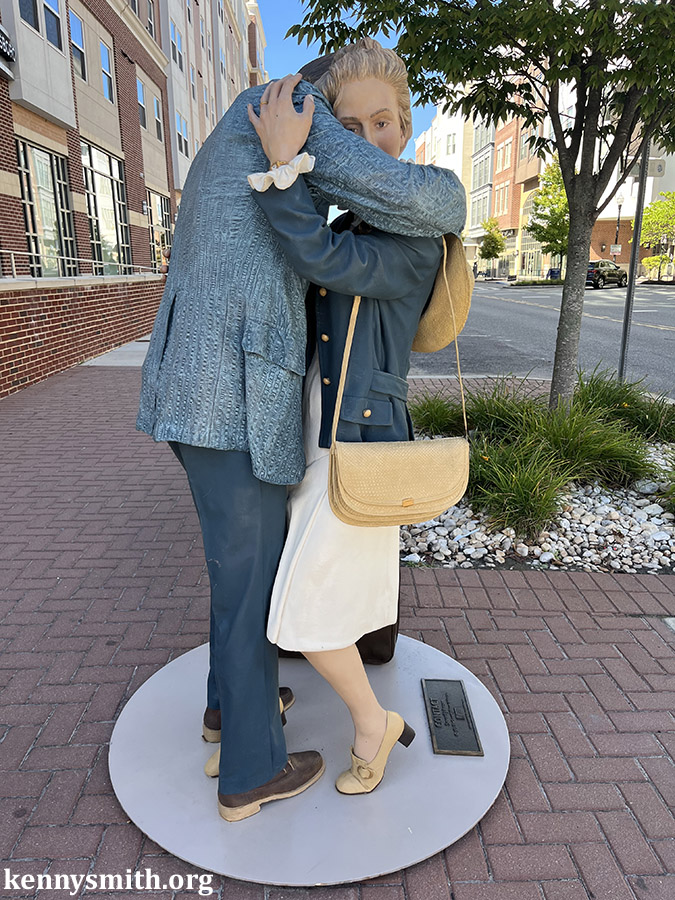
To teach one of my classes I must leave my building, turn right, walk to the end of the block, turn left and do another block. There, you run into this statue. And now I know it is coming, but it still catches me off guard somehow. So I’ve been taking these photographs, because it seems interesting enough. Next week we’ll start looking more closely at some of the details, but here we have the same work from four different sides.
This installation is called “Contact.” The artist is Seward Johnson. He was born in 1930, lived all over by the time he was old enough to go to school. He knew Georgia O’Keeffe. Served in the Navy during Korea. Did some sailing of his own, of a sort, taking a 2,000 mile canoe trip from western Alberta to the upper edge of the Northwest Territories on the Arctic Ocean.
He worked for Johnson & Johnson, which was the family business. He was also fired from the family business.
There’s a great anecdote about the man that makes him perfect for a college campus. In search of a career to support his young family he took a sculpture class. He left the class because the instructor talked theory.
He would learn his craft in other ways, and eventually he found metal work, which was what really clicked. Now he’s this world renowned artist with a huge body of work of large and life-sized sculptures.
Somewhere along the way he decided to find a way to help other sculptors, and in 1974 he opened the Johnson Atelier Technical Institute of Sculpture. This place works with artists on retaining control over their artwork and opening doors to learning previously mysterious production techniques, becoming a place where the art and technology advanced because of it. Artists from all over the world have been a part of the Johnson Atelier.
This is a trompe-l’œil painted bronze statue. That’s French for “deceive the eye,” Wikipedia tells me. The paint used here is a heavy-duty coating that is also used by the aeronautic and automotive industries. Seems to be holding up pretty well, compared to earlier photos. The blues aren’t quite as dark, perhaps, but that only adds heft to whatever story you’re about to imagine here.
Johnson died in 2020. There are several of his other statues around town and I’ll have to explore them all, but, first, we’ll take closer looks at this one, starting next week.

