


Got up this morning and drove to the train station. It’s about an hour drive to where we wanted to be and for the first half hour we were right on the cusp of arriving in time to catch our train, or miss it. But after that first bit the road opened up and we made good time, arriving with four whole minutes to spare. Destination: the big city.

The adidas Foundation was holding a series of presentations that they called “The Power of Sport Talks.” It was an ideas forum, in the United States with a wide array of speakers focusing on how sport can drive “meaningful social change.” They put together a nice program of nine speakers. It was well done. Here are a few highlights.
Renata Simril, president and CEO of the LA84 Foundation which funds youth sport programs, infrastructure projects, commissions research, and creates educational initiatives. The power of the playground, and sport, are great equalizers, she said, but it is at risk for today’s youth. That power, she said, is only transformational if ALL kids can access it. If children continue to play, she said, they can learn the lessons and skills that the game provides. That, she said, was how children can “develop the habits of civic life.”
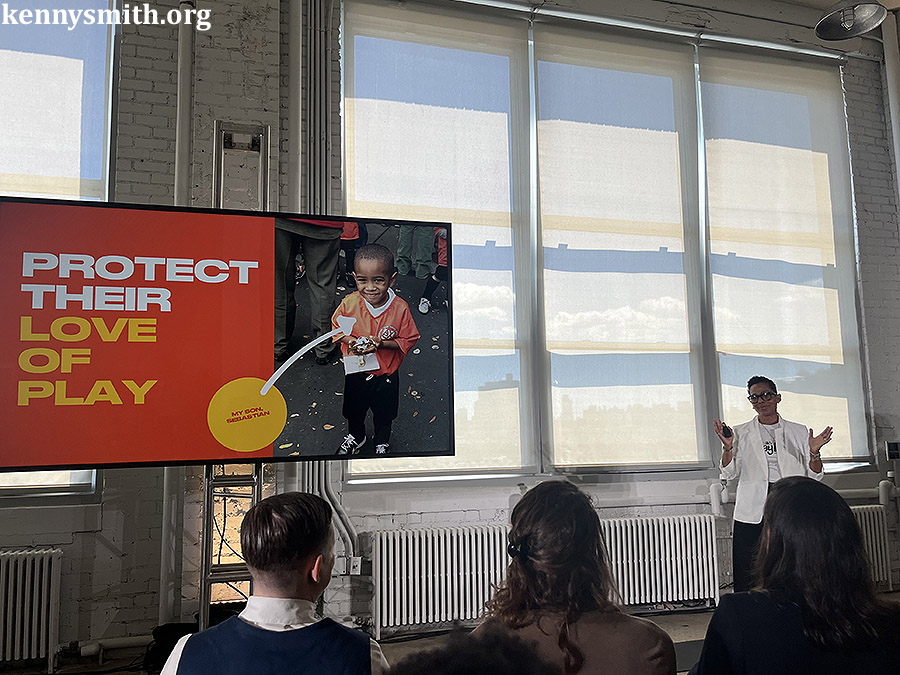
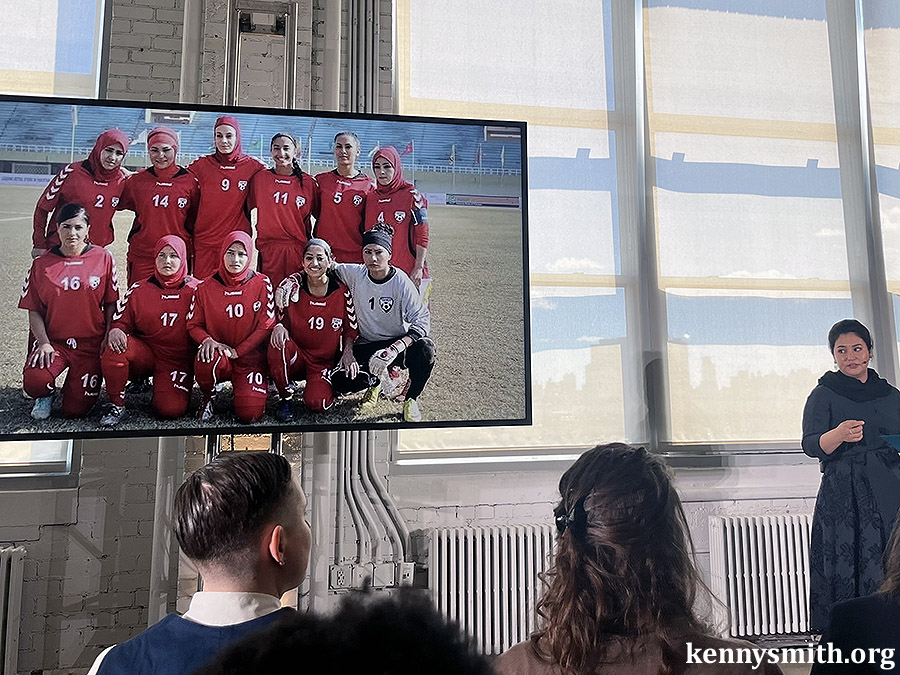
Dr. Hajar Abulfazl‘s talk approached youth sport from a different perspective. She grew up playing soccer player in Kabul. Playing as a little girl in Afghanistan, she says, was an act of defiance, and her purpose. She made the national team, and became the captain, but ultimately saw the squad dissolved by national policy and her teammates fleeing the country. Abulfazl then led a national program for youth soccer, going door-to-door, creating a new league, enrolling thousands of girls across seven provinces. The success, she said, was watching teenaged girls walk onto the pitch, knowing they belonged there. It was a fight she’d waged within her own family, as well. She moved to the US in 2017, discovered Soccer Without Borders and now works with immigrants and refugees from more than a dozen nations.
Tom Farrey, from The Aspen Institute, talk about the power of sport to do nothing less than save democracy. Government, he notes, is the ultimate form of “We.” Farrey points out that sport teaches people to collaborate across differences, teaches competition, rules, consequences, develop people capable of leading, and as venues to learn how to bring people together and develop shared solutions.
He touches on The Playground Movement that led to thousands of municipal playgrounds, many still open today across the country. He also talked about the negatives that we can encounter in youth sport, tribalism ultimately leading to nationalism, financial inequities and so on. Here, he points out that sport is not guaranteed to do the things we’d like, it’s how we use them.
“Democracy is about relationships and sport is about relationships in action,” Farrey said.
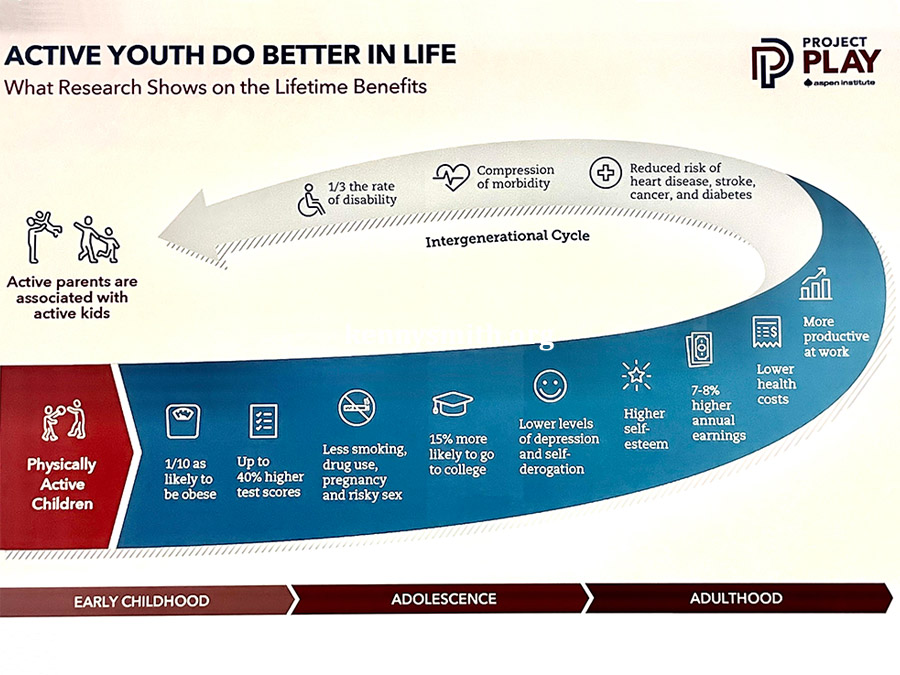
Mary Connor, a former first round WUSA draft pick, told a poignant and powerful story about a non-profit failure, and how it changed her personal life and her work ever since. Connor, now the CEO of Common Goal, a nonprofit using soccer to shape a world where every young person has the opportunity to play, learn, and thrive. Her challenge: to turn toward hard things.
“Are you designing for belonging? Or are you just hoping it shows up? It won’t show up on its own.”
It was a powerful presentation. The adidas Foundation said they’ll be publishing these talks soon. That means you’ll also hear from Jasmyne Spencer, who spent 12 years in the NWSL and last year won the inaugural Northern Super League Championship with the Vancouver Rise. She talked about togetherness as “the real beauty of sport,” which perhaps we all have some inkling of, even if only in enjoying a win in a crowd.
Carly Heinz, director of development at Beyond Sport talked about discovering tennis during Serena Williams’ first grand slam run. After moving on from competitive collegiate tennis, and the identity that comes with being an athlete, Heinz realized that the lessons from sport can apply to all of the seasons of life, that sport has a power to draw things out of us and can provide safe spaces for people to grow.
Sport, Heinz says, shows us the value of authenticity, “and gives us the opportunity to return to ourselves, fully, courageously, and honestly.”
Melissa Otterbein, director of fitness and healthy lifestyles for Special Olympics International discussed the health disparities of people with intellectual disabilities (shorter life, higher risk of diabetes, heart health and depression) and encouraged participation.
Rachele Pojednic, of Stanford University and also the Chief Science Officer at Restore, studies longevity, and talks about how we live, how we die, and what the heart really is.
“Muscle is the tissue of longevity,” she said. “The question isn’t whether you’ll lose it, you will. The question is whether you’re building reserve now.”
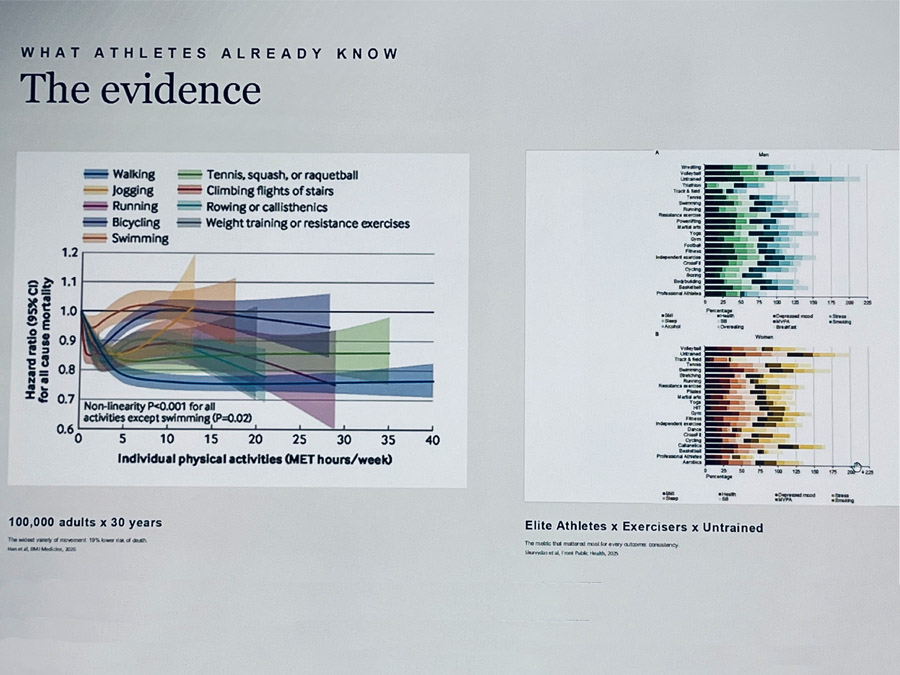
Pojednic said muscle buys you time, and the ability to move through your own life on your terms. Pojednic talked about scholarship that shows “The most important metric for heart muscle outcomes, not heavy weights, not Pilates, not Zone 2 … consistency. Consistency, diligence is the whole game. None of this requires you are an athlete. It requires you act like one.”
“You need the discipline of a sport,” Pojednic said.
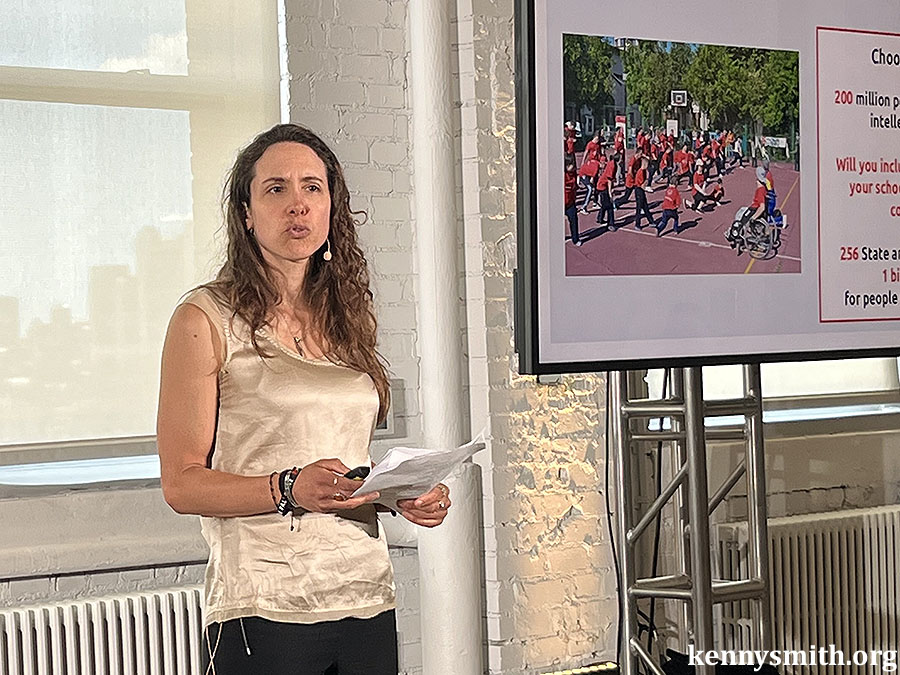
This was the adidas Foundation’s first such effort in the United States, and it was a terrific program beyond these few highlights, but there is always a lot more to discuss – and a lot more to move us – in these areas. Hopefully the next “Power of Sport Talks” isn’t too far away.
After the event we got to go on the roof to take in a nice view of the city. We met some of the speakers, some other sport leaders and other scholars.

It was a nice event, and we’re lucky to have gone to it. After, we sought out a place to watch some of the World Cup. I chose the World Cup on the Terrace, at the Perelman Performing Arts Center. They promised two screens and their view did not disappoint.
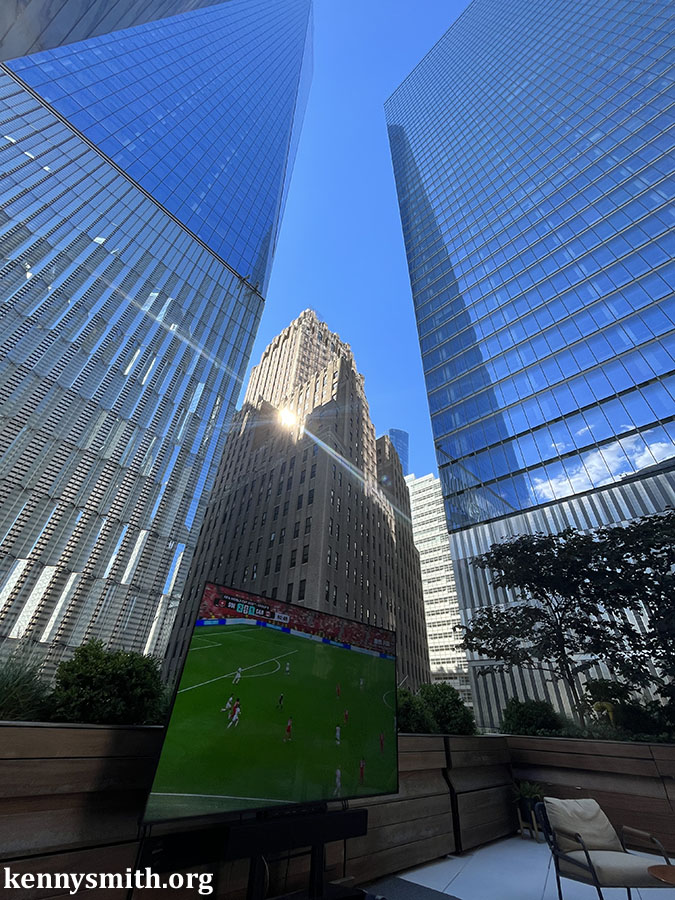
Food and drinks from a welcoming staff and you could look up at this during lulls in the game. Who needs two big screens when you’ve got this to stare at?

We watched two games and a bit of a third one there, enjoyed over-cooked hamburgers and the company of a small crowd of people also there to enjoy a perfect and low key evening.
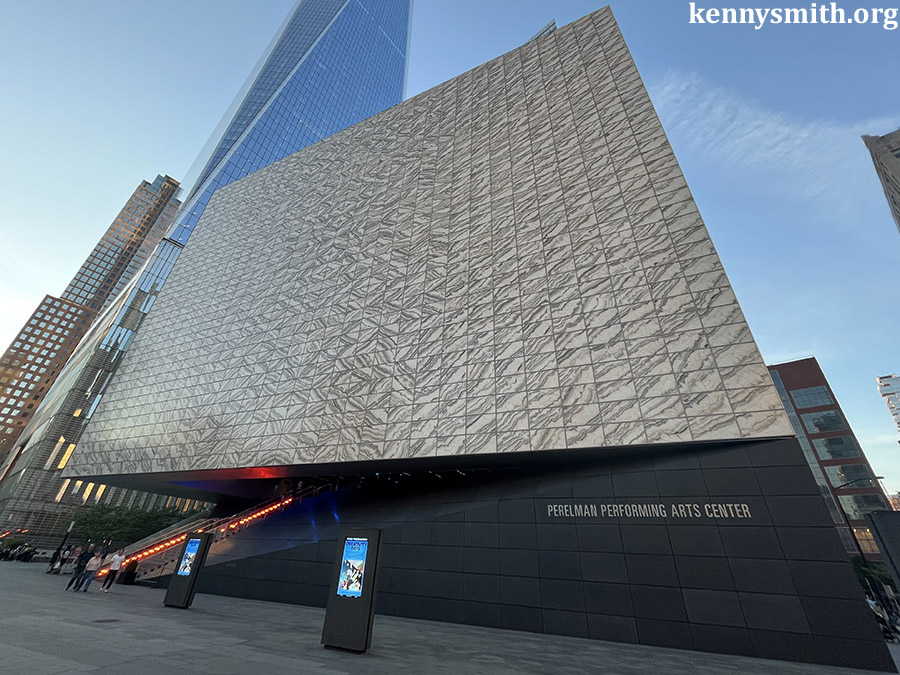
Caught the subway to the train, the train to the car, and the car home.
By which point I was itchy. Couldn’t wait to get off my sports coat. Couldn’t wait to pull off my long sleeved button down. Couldn’t wait to see the poison ivy. I grabbed some yesterday while weeding. Didn’t realize it until it was too late. Didn’t wash it all off well, or quickly enough, or both. And now I’ll itch for a few weeks.
I’m not going to dwell on it here, I’m just going to be miserable, or pitiful, or both.

