


It was bright, sunny, and warm today. I lingered outside for a bit because the forecasts suggest we might be coming to the last of the very warm days. We got up to 81 degrees today. It’ll be in the 50s by the weekend.
But even with the seasonally reduced sunlight I managed to get some sun on my face. Tonight I looked in the mirror and surprised myself to see a little redness on my cheeks. Doesn’t take much, even with the earth tilting us further and further away from that big burning orb.
Let’s check on the hydrangea, which sits in the shade of the northeastern corner of the house and thrives beyond all expectation. It was cut back dramatically last fall, and I wasn’t sure what it would do this year in response. What it did was grow so much we had to trim it away from the chimney. And it’s considerably taller than I am.
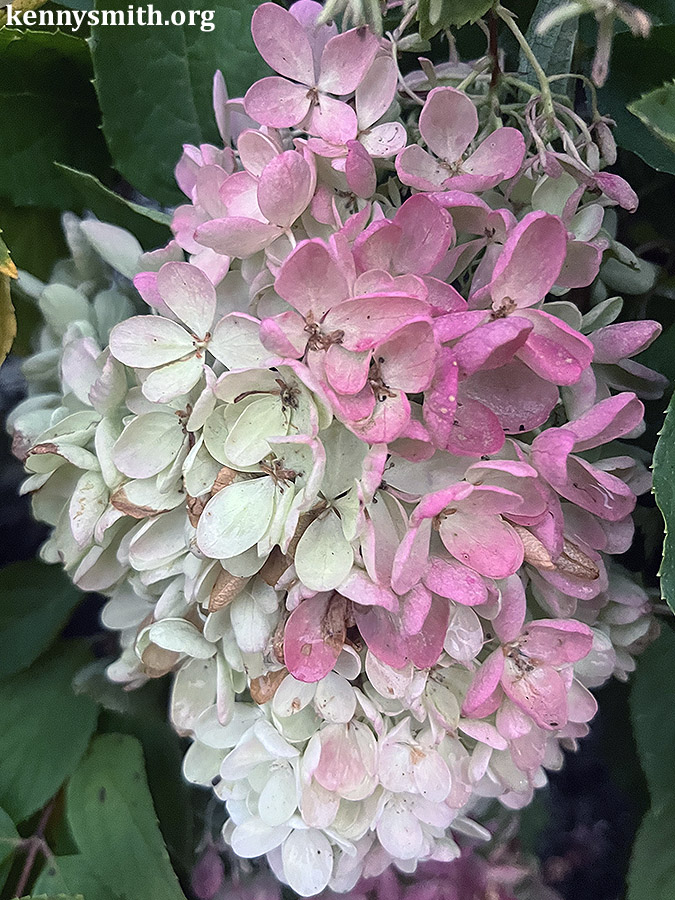
Our two previous years here late summer rains bent the thing over, but it stood up quite well to the seasonal deluge this time around. It’s a pleasant thing to look at, even in this season of change. Maybe I like it more right now. It seems a helpful visual cue, even as I am not one for the changing of the seasons, and generally in denial about the passage of time.
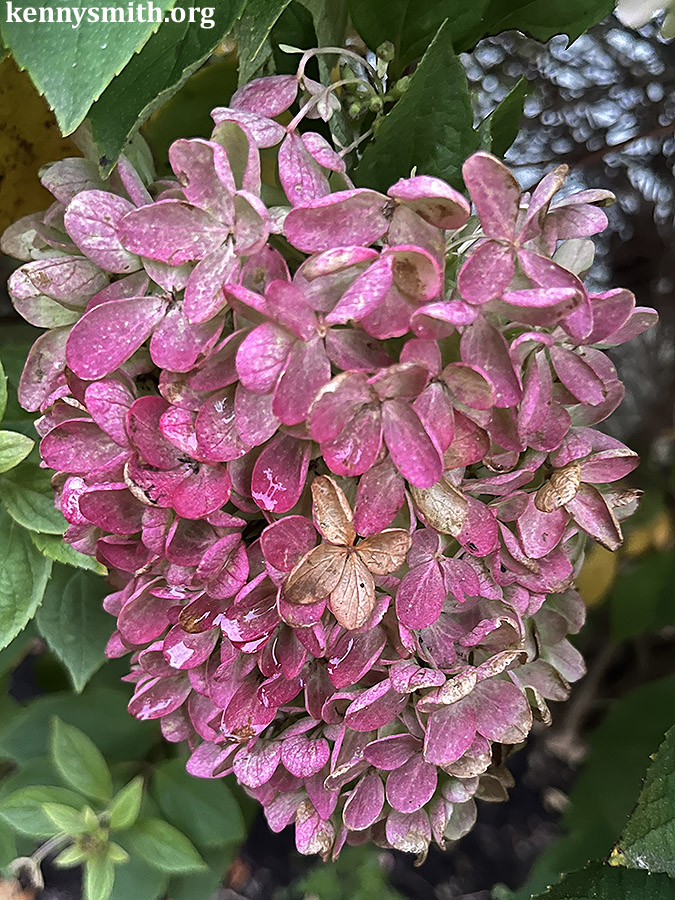
But the blooms on this hydrangea show me, or remind me, that there is beauty in more than just perfection. Maybe we always know that. Maybe it only takes a few seconds, a quick glance, to re-learn that. Maybe that’s what stopping and smelling the roses is about. Maybe you just have to think of the beauty of things to see the beauty of things.
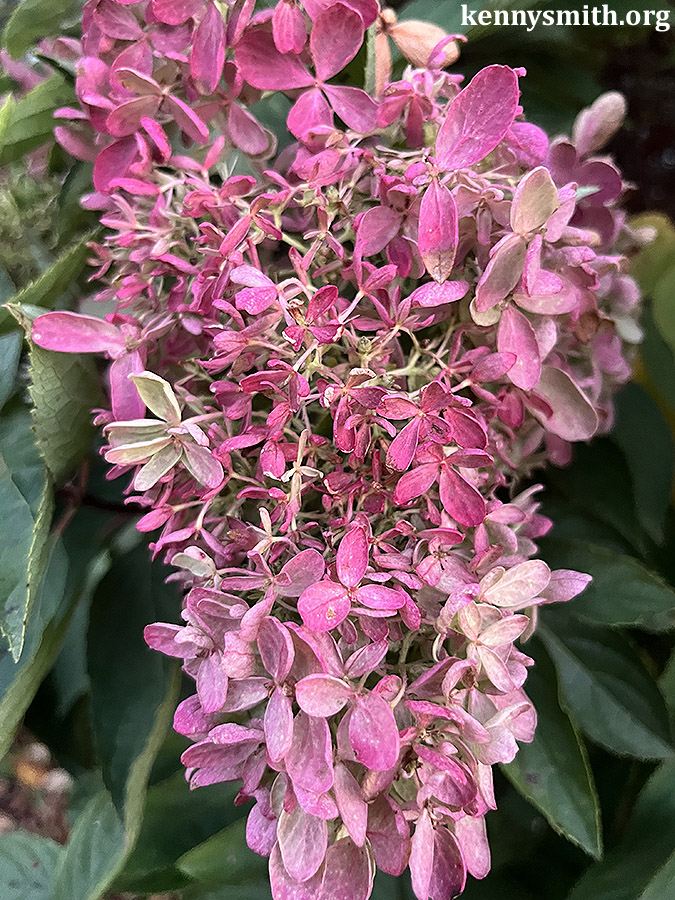
One year, when I’m not busy, I’m going to document this shrub daily. Who knows what else it can teach me.

In class today we watched an episode of Black Mirror. It’s now 15 years old, and starting to show its age just a little. I’ve also seen it four or five times with various versions of this class. The themes, however, still work. If anything, it might resonate more today than it did in 2011.
We talked about the episode after it finished. I had a bunch of questions to offer and my students gamely went along with the conversation, which steers us back to one of our foundational conversations of what it means to be human, live a techno-social life, and both. I did not ask them if they wanted to be cyborgs, but they were clearly troubled by the story this episode told. I don’t think that’s necessarily a real reading, though. The characters here were troubled to say the least, but then you have to decide if it was them, or the technology, or both.
Therein lies the cautionary tale, one supposes.
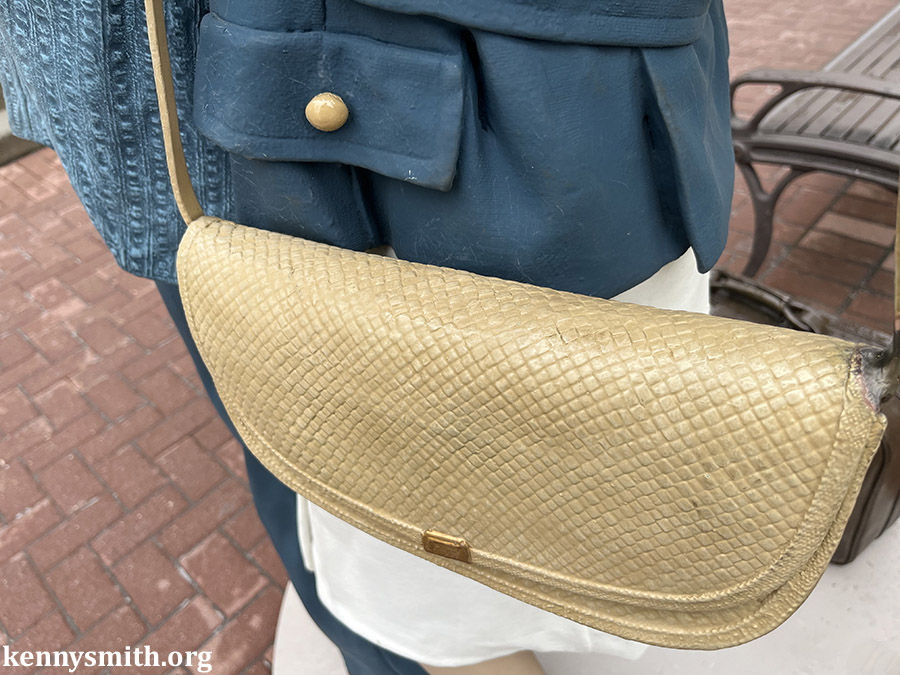
I walked by the statue Contact. I wrote about it here, by Seward Johnson. Then, three weeks ago, we looked a bit more closely at the couple’s hands. Two weeks back, I offered a closer look at some of the textures. Today, we’ll give it one last look, focusing on a few more of the illusions of textures of the trompe-l’œil painted bronze statue.
Have a look at the woman’s purse. It looks like a nice addition to a summer collection, doesn’t it?
The man in the statue has a hat. He’s taken it off for this hug. And it’s another lightweight addition to his ensemble. And aside from trying to make us think it is a high quality bit of headwear, I’d like to point out that the artist took great pains to give it some wear and, also, reshapes it with the man’s grip. These are the little details I’m interested in. In his grasp, in this hug, he’s also warping his hat.
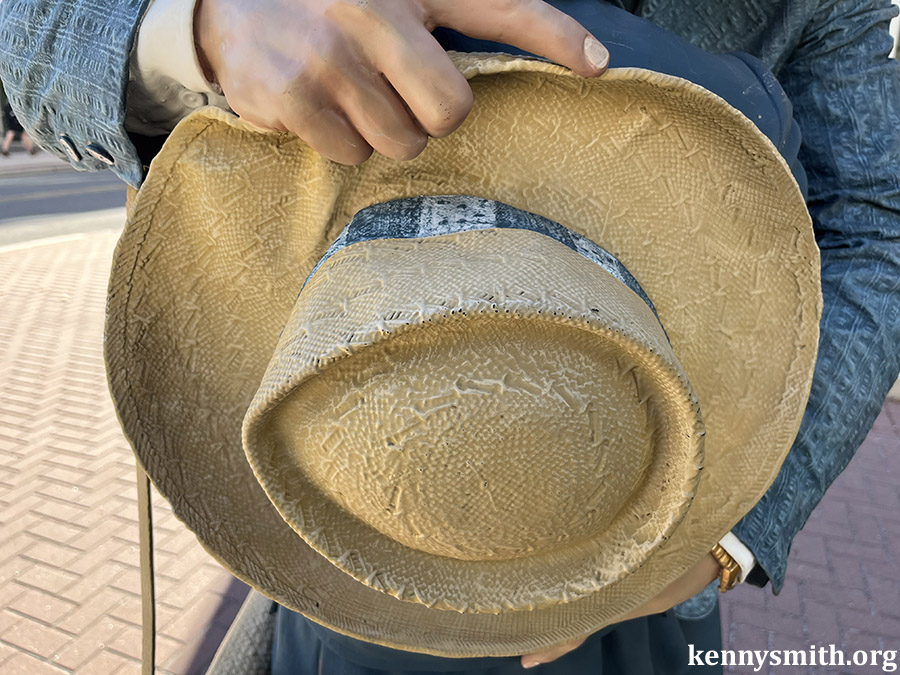
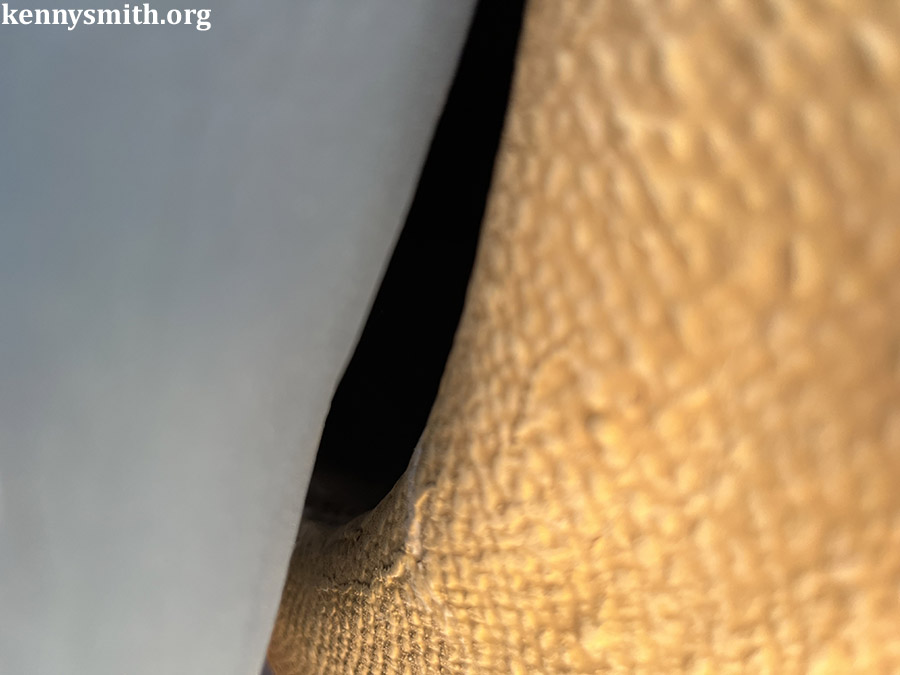
You can almost see inside of it. You can almost see inside of the thing. I wonder if the hat was made separately, at least in the shape of a real hat, and then put in the hand.
He’s carrying a pretty hefty bag. At least we’re meant to think it is his, based on where it is placed, just past the woman in the statue, as if she has walked into his arms. His hat is in his right hand, the suitcase is placed to his left. He’s leaving, or he’s coming home.
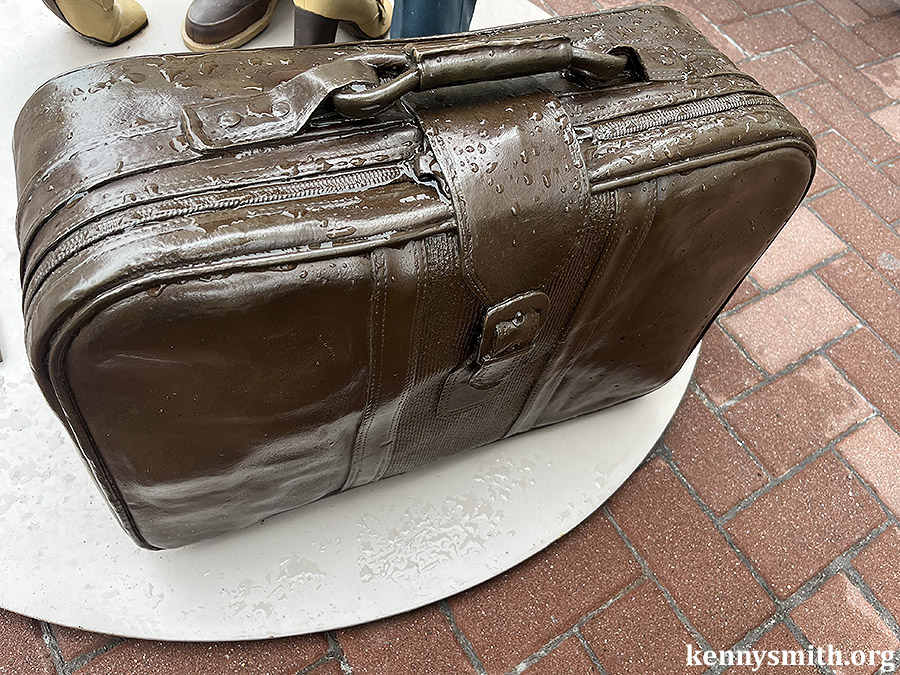
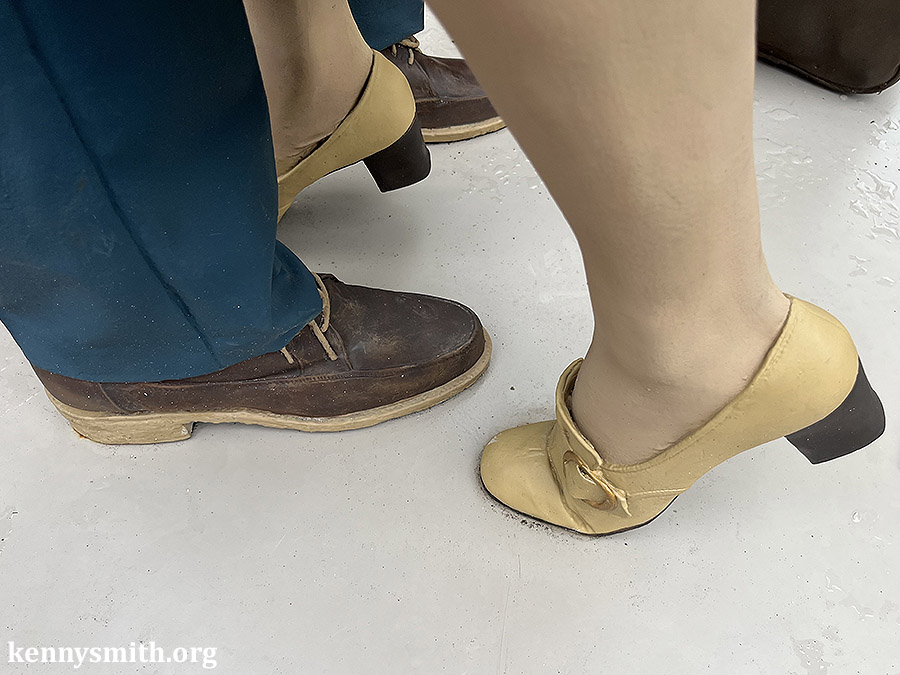
Also, the angle of the suitcase suggest he has an ulnar deviation. A radial deviation for her seems unlikely. Finally, he has chosen his wardrobe well, and his shoes match the suitcase, The luggage, then, is his.
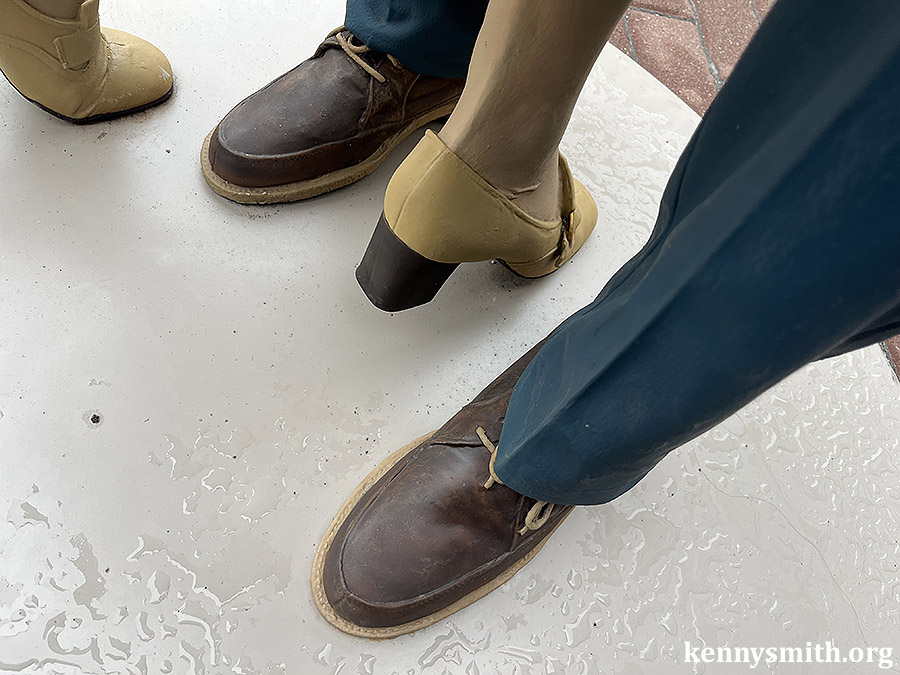
I’ve been studying this statue thinking that the man and the woman are sad. Something has happened or one of them, the man it would seem, is leaving. But then as we look at her feet. Something about the way she’s rising up in to him. You tell me, does a sad person stand on their tiptoes when sad?
Anyway, that’s the Seward Johnson statue, Contact. There are four more of his works near that one. We’ll check them all out in the weeks ahead. Pay attention for that. You’re going to have to decide on a favorite.

