
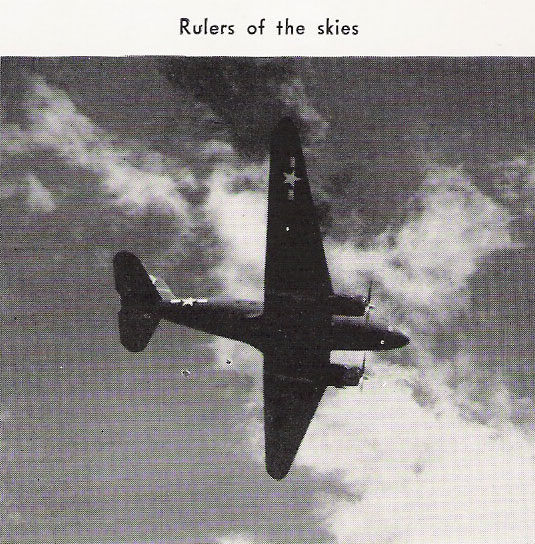
Ah, the B-23. Those must have been the days, craning your neck to see planes thundering overhead. Professors trembled: "Good grades or else!" the engines rumbled.
The else being 4,000 pounds of bombs that the B-23 could deliver.
Flight training isn't unusual. Maxwell Air Force Base is 50 miles away. The Rangers learned to plummet from the sky just across the border at Georgia's Ft. Benning. The Tuskegee Airmen, of WWII fame, were based just down a long quiet country road. Students and faculty were used to seeing these hulking intimidators soaring through the sky.
When I was on campus in the '90s, when the parade ground got buzzed. That became a big deal for a few days. Someone got a little too cavalier and showed off the underside of his bomber seemingly just feet off the treeline. That plane was a little more advanced than the B-23, but this was also built with an average price of $133,000. Here's your bomber trivia: the B-23 was never used for bombing, but did see a lot of reconnaissance, transport and training work.
Interestingly enough, at least two men graduated from API, served during Korea and ultimately retired as generals. First, there's Lt. Gen. Robert Joseph Friedman, '36, who earned the Legion of Merit (with cluster) for airpower deployment in the Korean War. And, also, Brig. Gen. Charles E. Williams, Jr., '48, who commanded a training squadron in Texas during the war, but would earn the Legion of Merit with four clusters before retirement.
Previous | Next | Glomerata Index | Home